• STACKED
  • About Us
  • Categories
    • Audiobooks
    • Book Lists
      • Debut YA Novels
      • Get Genrefied
      • On The Radar
    • Cover Designs
      • Cover Doubles
      • Cover Redesigns
      • Cover Trends
    • Feminism
      • Feminism For The Real World Anthology
      • Size Acceptance
    • In The Library
      • Challenges & Censorship
      • Collection Development
      • Discussion and Resource Guides
      • Readers Advisory
    • Professional Development
      • Book Awards
      • Conferences
    • The Publishing World
      • Data & Stats
    • Reading Life and Habits
    • Romance
    • Young Adult
  • Reviews + Features
    • About The Girls Series
    • Author Interviews
    • Contemporary YA Series
      • Contemporary Week 2012
      • Contemporary Week 2013
      • Contemporary Week 2014
    • Guest Posts
    • Link Round-Ups
      • Book Riot
    • Readers Advisory Week
    • Reviews
      • Adult
      • Audiobooks
      • Graphic Novels
      • Non-Fiction
      • Picture Books
      • YA Fiction
    • So You Want to Read YA Series
  • Review Policy

STACKED

books

  • STACKED
  • About Us
  • Categories
    • Audiobooks
    • Book Lists
      • Debut YA Novels
      • Get Genrefied
      • On The Radar
    • Cover Designs
      • Cover Doubles
      • Cover Redesigns
      • Cover Trends
    • Feminism
      • Feminism For The Real World Anthology
      • Size Acceptance
    • In The Library
      • Challenges & Censorship
      • Collection Development
      • Discussion and Resource Guides
      • Readers Advisory
    • Professional Development
      • Book Awards
      • Conferences
    • The Publishing World
      • Data & Stats
    • Reading Life and Habits
    • Romance
    • Young Adult
  • Reviews + Features
    • About The Girls Series
    • Author Interviews
    • Contemporary YA Series
      • Contemporary Week 2012
      • Contemporary Week 2013
      • Contemporary Week 2014
    • Guest Posts
    • Link Round-Ups
      • Book Riot
    • Readers Advisory Week
    • Reviews
      • Adult
      • Audiobooks
      • Graphic Novels
      • Non-Fiction
      • Picture Books
      • YA Fiction
    • So You Want to Read YA Series
  • Review Policy

Stories About Refugees: A YA Reading List

October 12, 2015 |

ya refugee stories


I admit a lot of ignorance in regards to the refugee crisis in Syria. I’ve been trying to get a handle on it by reading the news and understanding what, exactly, is going on in that country that is making people flee in ways that are horrifying to even think about, let alone see in images and on video.

In an attempt to get some sort of understanding, I’ve been reading and watching what I can. A couple of the most valuable and insightful pieces I’ve experienced might be useful for others grappling with what’s going on:


  • The Syrian Conflict & The European Refugee Crisis Explained in an Animated Primer


  • Years of Living Dangerously


Of course, these pieces are only the beginning and they’re not giving a full picture of the scope. It’s difficult to admit to ignorance, and it’s worse to not know where to begin educating yourself.

One way to delve into the lives and stories of refugees, though, is through fiction. I thought it’d be worthwhile to round-up some of the YA and upper middle grade offerings that highlight refugee stories. While not all refugee stories are the same — and not every issue going on in each country is identical nor even close to similar — the thing that matters most, or at least the part that’s easiest to think, talk about, and grapple with, is the human element. That’s what’s in these stories.

All descriptions are from WorldCat, and I would love any additional suggestions in the comments. I’m sticking to fiction, but feel free to recommend solid non-fiction titles, too. I’d love this to be a valuable resource for YA readers, educators, and librarians who are asked questions or want to highlight these stories today and in the future. Likewise, any worthwhile online resources would be welcome.


refugee fiction 1


90 Miles to Havana by Enrique Flores-Galbis: When unrest hits the streets of Havana, Cuba, Julian’s parents must make the heartbreaking decision to send him and his two brothers away to Miami via the Pedro Pan operation. But when the boys get to Miami, they are thrust into a world where bullies seem to run rampant and it’s not always clear how best to protect themselves.


A Long Walk to Water by Linda Sue Park: When the Sudanese civil war reaches his village in 1985, eleven-year-old Salva becomes separated from his family and must walk with other Dinka tribe members through southern Sudan, Ethiopia, and Kenya in search of safe haven. Based on the life of Salva Dut, who, after emigrating to America in 1996, began a project to dig water wells in Sudan.


A Time of Miracles by Anne-Laure Bondoux: In the early 1990s, a boy with a mysterious past and the woman who cares for him endure a five-year journey across the war-torn Caucasus and Europe, weathering hardships and welcoming unforgettable encounters with other refugees searching for a better life.


Bamboo People by Mitali Perkins: Two Burmese boys, one a Karenni refugee and the other the son of an imprisoned Burmese doctor, meet in the jungle and in order to survive they must learn to trust each other.


The Day of the Pelican by Katherine Paterson: In 1998 when the Kosovo hostilities escalate, thirteen-year-old Meli’s life as an ethnic Albanian, changes forever after her brother escapes his Serbian captors and the entire family flees from one refugee camp to another until they are able to immigrate to America.


Deep Sea by Annika Thor: Nearly four years after leaving Vienna to escape the Nazis, Stephie Steiner, now sixteen, and her sister Nellie, eleven, are still living in Sweden, worrying about their parents and striving to succeed in school, and at odds with each other despite their mutual love.


refugee fiction 2


The Good Braider by Terry Farish: Told in spare free verse, the book follows Viola as she survives brutality in war-torn Sudan, makes a perilous journey, lives as a refugee in Egypt, and finally reaches Portland, Maine, where her quest for freedom and security is hampered by memories of past horrors and the traditions her mother and other Sudanese adults hold dear. With unforgettable images, the author’s voice sings out the story of her family’s journey, and tells the universal tale of a young immigrant’s struggle to build a life on the cusp of two cultures. Includes historical facts and a map of Sudan.


I Lived On Butterfly Hill by Marjorie Agosin: Eleven-year-old Celeste Marconi is a dreamer, a writer, a collector of words. But then a new whispered word trickles into her life: “Subversives.” Her beloved country of Chile has been taken over by a military dictatorship, and subversives–people considered a threat to the new government–are in increasing danger. Celeste’s doctor-parents must go into hiding to remain safe, and Celeste, heartsick, must say good-bye to them. But the situation continues to worsen. More and more people are “disappearing,” and soon Celeste herself is sent thousands of miles away, all the way to the coast of Maine–where she doesn’t have a single friend or know a word of English. How can she possibly call another country–a country where people eat breakfast out of a box, where the cold grays of winter mirror the fears that envelope her–home? WIll she ever see Chile again? And if she does–what, and who, will she find there?


Now Is The Time For Running by Michael Williams: When soldiers attack a small village in Zimbabwe, Deo goes on the run with Innocent, his older, mentally disabled brother, carrying little but a leather soccer ball filled with money, and after facing prejudice, poverty, and tragedy, it is in soccer that Deo finds renewed hope.


Out of Nowhere by Maria Padian: Performing community service for pulling a stupid prank against a rival high school, soccer star Tom tutors a Somali refugee with soccer dreams of his own.


Sequins, Secrets, and Silver Linings by Sophia Bennett: Three fourteen-year-old friends with very different interests befriend a twelve-year-old Ugandan refugee whose gift for design takes off in the high-fashion world of twenty-first-century London.


Shooting Kabul by NH Senzai: Escaping from Taliban-controlled Afghanistan in the summer of 2001, eleven-year-old Fadi and his family immigrate to the San Francisco Bay Area, where Fadi schemes to return to the Pakistani refugee camp where his little sister was accidentally left behind.


refugee fiction 3


Tangled Threads by Pegi Dietz Shea: After ten years in a refugee camp in Thailand, thirteen-year-old Mai Yang travels to Providence, Rhode Island, where her Americanized cousins introduce her to pizza, shopping, and beer, while her grandmother and new friends keep her connected to her Hmong heritage.

** Readers who want a non-fiction look at Hmong refugee life in America will want to pick up The Spirit Catches You And You Fall Down. It’s an adult read but it should have teen appeal.


The Milk of Birds by Sylvia Whitman: When a nonprofit organization called Save the Girls pairs a fourteen-year-old Sudanese refugee with an American teenager from Richmond, Virginia, the pen pals teach each other compassion and share a bond that bridges two continents.


The Red Pencil by Andrea Davis Pinkney: After her tribal village is attacked by militants, Amira, a young Sudanese girl, must flee to safety at a refugee camp, where she finds hope and the chance to pursue an education in the form of a single red pencil and the friendship and encouragement of a wise elder


Trouble by Gary D. Schmidt: Fourteen-year-old Henry, wishing to honor his brother Franklin’s dying wish, sets out to hike Maine’s Mount Katahdin with his best friend and dog. But fate adds another companion–the Cambodian refugee accused of fatally injuring Franklin–and reveals troubles that predate the accident.


Where I Belong by Gillian Cross: Thirteen-year-old Khadija, a Somali refugee, becomes a model for a famous fashion designer to help her family back home, while the designer’s daughter Freya and fourteen-year-old Abdi, whose family Khadija lives with in London, try to protect her.


Filed Under: book lists, Discussion and Resource Guides, middle grade, readers advisory, Young Adult

Guess The YA Book By Its Subject Headings

August 24, 2015 |

Library catalog subject headings are amazing to me. For the most part, they are useful to librarians who are trying to locate books for patrons. Out of context, though, they can make little or no sense. Because their purpose is to organize information contained within a book (or movie or tv show or anything else being cataloged), they distill something complex into something much more simplistic. They’re also constrained — there are designated subject headings, meaning that cataloging is consistent across libraries, rather than tagged by individuals who may choose to describe the contents of an item in a different way. There are other tools within individual catalogs to do that.

I used to play a game on Twitter periodically, where I’d share a handful of a television show’s subject headings from WorldCat and ask people to guess what it was. It’s not as easy as it sounds, since it requires thinking about a piece of art differently than you normally would. I thought I’d try doing this game on STACKED, but with YA. So without further ado, how good are you at identifying a YA book from its library subject headings? I’ll copy and paste the screen shot of the catalog headings from WorldCat and you’ll try your best at guessing what book is being described.  I’m sticking with more well-known books, since even those aren’t easily recognized by their headings only. Answers are at the bottom of the post, so don’t scroll down unless you’re ready to get your answers.

I’d love to know how you do, too, so feel free to share in the comments which ones you got right away and which ones were challenging.

1. guess 1


2. guess 2


3. guess 3


4. guess 4


5. guess 5


6. guess 6


7. guess 7


8. guess 8


9. guess 9


10. guess 10


1. Forever . . . by Judy Blume, 2. The Perks of Being A Wallflower by Stephen Chbosky, 3. Feed by M. T. Anderson,  4. The Summer I Turned Pretty by Jenny Han, 5. Shadow and Bone by Leigh Bardugo, 6. Legend by Marie Lu, 7. Miss Peregrine’s Home for Peculiar Children by Ransom Riggs,  8. Speak by Laurie Halse Anderson, 9. The Raven Boys by Maggie Stiefvater, 10. Monster by Walter Dean Myers


Filed Under: readers advisory, ya, ya fiction, young adult fiction

Suicide and Depression in YA: A Discussion and Book List

August 28, 2014 |

“So I guess that’s why it doesn’t feel like talking about my mental health is tantamount to airing my dirty laundry. Instead, to extend the metaphor, it feels like I’m just hanging my regular old laundry out to dry. And I’m hanging it somewhere visible, like a laundry line strung up between two buildings or something. And everything – absolutely everything – that I wear is on that line. My cute little sundresses are there, as well as my jeans, my shorts, and a variety of tops. But my underwear is also hung up there – even the big old comfy granny panties – and my bras and thongs are there too, waving like flags in the wind. Because we all wear underwear. Everyone knows that people wear underwear. Everyone knows that underwear needs to be washed and dried before you wear it again. So why should it be embarrassing to hang it outside?
Everyone knows that mental illness exists; everyone knows the devastating effect that it can have, both on the people suffering from it and their friends and families. This is not new information – it’s something that we’ve known forever and ever. But the hush-hush way we’ve developed of discussing it and dealing with it clearly aren’t working. So let’s finally start talking about it, because that’s the only chance that we have of beating it.” — from Airing My Dirty Laundry by Anne Theriault

The two final paragraphs from this blog post really resonated with me last week when I read them. Everyone knows mental illness exists, everyone knows that the effects of mental illness can be terrible, and yet, people don’t want to talk about it. It’s not a pleasant topic, but it’s one that needs to be addressed and needs to be approached with more honesty and compassion. 

Over the last year, depression and suicide have seen more time in the spotlight. Ned Vizzini’s suicide, followed by Robin Williams’s — and the near 40,000 suicides that happen per year in the US — make it clear we need to be talking about this more. Suicide is the 10th leading cause of death in America. While depression is not indicative of suicide, the two are linked together in a way that makes talking about them in tandem make sense.

There’s a mythology that surrounds depression and suicide, particularly when it comes to creative types. It’s a mythology that’s exceptionally destructive and belittling to all those who suffer from mental illness, and it’s this: that that anguish is what causes the best work to happen. 

Following Williams’s death, I read the comment far too often that creative people are most likely to suffer because that suffering is where art is born. It tends to be the complete opposite. Creative types don’t see depression as what drives them. The best work isn’t made when they’re down, but rather, when artists are up. When down and the work isn’t coming together, it actually further fuels the depression/anxiety cycle, making it even more difficult to create and engage in a healthy way. Myra McEntire and Stephanie Perkins have both written about this and the ways that depression has impacted not just their careers, but their personal lives, as well. 

Part of why people believe and engage in this myth telling is because it’s easier than trying to make sense of an illness that often doesn’t appear to have a root cause. How could someone talented or successful be depressed? How can someone who seems to have it all together find it difficult to get out of bed, to take a shower, to want to talk with the people who love and care about them? When people choose to look at an illness through that set of lenses, they blame the victim, rather than educate themselves on the disease. 

When we do that, we further stigmatize those who are suffering from depression, making them less likely to seek treatment or practice necessary self-care and preservation. 

One of the most memorable moments of my career in librarianship came at the very end. I’ve worked with teens for many years, and one of the reasons I like working with them and advocating for them is because they’re far more likely to be open minded and receptive to ideas and tough discussions than adults can be. But nothing really got to me and emphasized the importance of having resources available — and being a resource myself through listening, advocating, and being in tune with the array of challenges teens face — than when a teen got up during one of our programs and delivered a piece of slam poetry about a friend. 

She’d been quiet during the event. Her cousin had been urging her to get up in front of the (small) group of mostly adults and some teens who’d come to the program. She’d written something while listening to other performances, and her cousin really hoped she’d share. 

After she performed the piece, she stood at the front and accepted the audience applause shyly. But she didn’t leave the front of the room. She stood there, as if she needed to say more or explain what her piece was about. With more encouragement from her family, she explained that her friend had committed suicide just days ago, and the piece was a tribute to her friend. 

The room went silent. People didn’t try to distract themselves. They sat. They’d heard exactly what she said and took it in, thinking about not just what that meant on a grand level, but what it meant right here and right now for a young teen girl to get up and express her feelings about the situation while the wounds were so fresh. What do you do with that? What can you do with that? 

When the event was over, there wasn’t a single person who didn’t approach her, offering kind words or a hug. Many had said something after they’d collected themselves, encouraging her never to stop working through her feelings with words like she’d just done. And that she’d done so openly. 

I put together a display in the teen area the next day of books about “tough issues”: realistic fiction tackling mental illness and suicide. I knew if one girl who was hurting, others were, too. The books did not last long on the display. People were looking for these stories. And as I saw again on social media in the wake of Williams’s suicide, people were asking for books about depression and suicide. Books and art, of course, are ways into talking about mental illness and suicide, as they allow a space for thinking, for considering, and for making sense of them privately. 

That’s why hearing a teen girl sharing a poem about it left such an impact. She shared. 

With that, here’s a thick list of YA titles that explore depression and/or suicide. Again, these aren’t inextricably linked: one can be depressed and never suicidal, while one can be suicidal and it’s not borne of depression. Likewise, depression is often linked to other mental illness, but I’ve tried to focus on those stories where depression is the primary force. I’ve limited myself to realistic fiction, but feel free to offer up additional titles within any genre of YA in the comments. These stories focus on depression and/or suicide from a wide array of perspectives. 

All descriptions are from WorldCat. A handful of additional titles, which I’ve not included on my list, can be found at Disability in KidLit. 


I Swear by Lane Davis: After Leslie Gatlin kills herself, her bullies reflect on how things got so far.

Thirteen Reasons Why by Jay Asher: When high school student Clay Jenkins receives a box in the mail containing thirteen cassette tapes recorded by his classmate Hannah, who committed suicide, he spends a bewildering and heartbreaking night crisscrossing their town, listening to Hannah’s voice recounting the events leading up to her death.

Saving Francesca by Melina Marchetta: Sixteen-year-old Francesca could use her outspoken mother’s help with the problems of being one of a handful of girls at a parochial school that has just turned co-ed, but her mother has suddenly become severely depressed.

Fat Kid Rules The World by K. L. Going: Seventeen-year-old Troy, depressed, suicidal, and weighing nearly 300 pounds, gets a new perspective on life when a homeless teenager who is a genius on guitar wants Troy to be the drummer in his rock band.

Hold Still by Nina LaCour: Ingrid didn’t leave a note. Three months after her best friend’s suicide, Caitlin finds what she left instead: a journal, hidden under Caitlin’s bed.

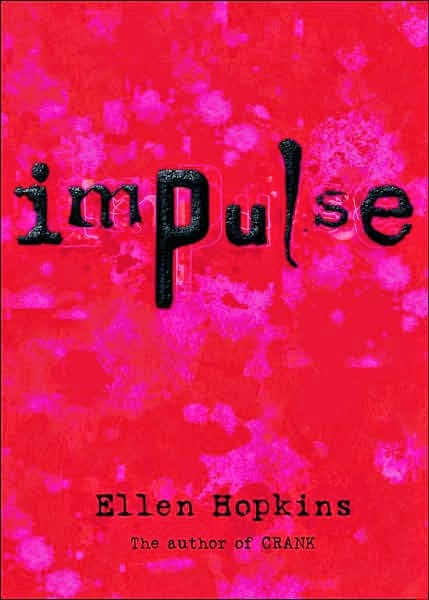
Impulse by Ellen Hopkins: Three teens who meet at Reno, Nevada’s Aspen Springs mental hospital after each has attempted suicide connect with each other in a way they never have with their parents or anyone else in their lives.

By The Time You Read This, I’ll Be Dead by Julie Anne Peters: High school student Daelyn Rice, who’s been bullied throughout her school career and has more than once attempted suicide, again makes plans to kill herself, in spite of the persistent attempts of an unusual boy to draw her out.

Forgive Me, Leonard Peacock by Matthew Quick: A day in the life of a suicidal teen boy saying good-bye to the four people who matter most to him.

This Song Will Save Your Life by Leila Sales: Nearly a year after a failed suicide attempt, sixteen-year-old Elise discovers that she has the passion, and the talent, to be a disc jockey.

The Death of Jayson Porter by Jaime Adoff: In the Florida projects, sixteen-year-old Jayson struggles with the harsh realities of his life which include an abusive mother, a drug-addicted father, and not fitting in at his predominately white school, and bring him to the brink of suicide.

Survive by Alex Morel: A troubled girl is stranded in an arctic winter terrain after a plane crash and must fight for survival with the only other boy left alive.

Try Not to Breathe by Jennifer R. Hubbard: The summer Ryan is released from a mental hospital following his suicide attempt, he meets Nicki, who gets him to share his darkest secrets while hiding secrets of her own. 

And We Stay by Jenny Hubbard: Sent to an Amherst, Massachusetts, boarding school after her ex-boyfriend shoots himself, seventeen-year-old Emily expresses herself through poetry as she relives their relationship, copes with her guilt, and begins to heal.

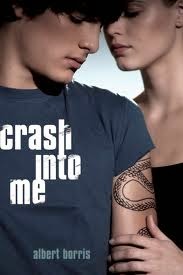
Crash Into Me by Albert Borris: Four suicidal teenagers go on a “celebrity suicide road trip,” visiting the graves of famous people who have killed themselves, with the intention of ending their lives in Death Valley, California.

Glimpse by Carol Lynch Williams: Living with their mother who earns money as a prostitute, two sisters take care of each other and when the older one attempts suicide, the younger one tries to uncover the reason.

Fall For Anything by Courtney Summers: As she searches for clues that would explain the suicide of her successful photographer father, Eddie Reeves meets the strangely compelling Culler Evans who seems to know a great deal about her father and could hold the key to the mystery surrounding his death.

Saving June by Hannah Harrington: After her sister’s suicide, Harper Scott takes off for California with her best friend Laney to scatter her sister’s ashes in the Pacific Ocean.

Suicide Notes by Michael Thomas Ford: Brimming with sarcasm, fifteen-year-old Jeff describes his stay in a psychiatric ward after attempting to commit suicide.

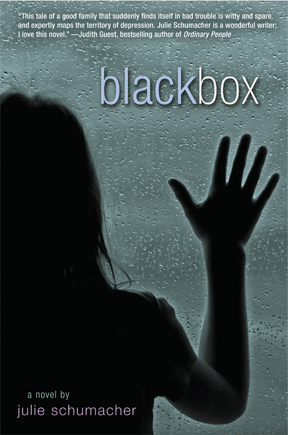
Blackbox by Julie Schumacher: When Dora, Elena’s older sister, is diagnosed with depression and has to be admitted to the hospital, Elena can’t seem to make sense of their lives anymore. At school, the only people who acknowledge Elena are Dora’s friends and Jimmy Zenk–who failed at least one grade and wears black every day of the week. And at home, Elena’s parents keep arguing with each other. Elena will do anything to help her sister get better and get their lives back to normal–even when the responsibility becomes too much to bear. 

Everything Is Fine by Ann Dee Ellis: When her father leaves for a job out of town, Mazzy is left at home to try to cope with her mother, who has been severely depressed since the death of Mazzy’s baby sister.

Silhouetted By The Blue by Traci L. Jones: After the death of her mother in an automobile accident, seventh-grader Serena, who has gotten the lead in her middle school play, is left to handle the day-to-day challenges of caring for herself and her younger brother when their father cannot pull himself out of his depression.

Drowning Instinct by Ilsa J. Bick: An emotionally damaged sixteen-year-old girl begins a relationship with a deeply troubled older man.

Get Well Soon by Julie Halpern: When her parents confine her to a mental hospital, an overweight teenaged girl, who suffers from panic attacks, describes her experiences in a series of letters to a friend.

Wild Awake by Hilary T. Smith: The discovery of a startling family secret leads seventeen-year-old Kiri Byrd from a protected and naive life into a summer of mental illness, first love, and profound self-discovery. *Read Hilary’s guest post on mental illness in YA fiction, too, while you’re at it. 

Crazy by Amy Reed: Connor and Izzy, two teens who met at a summer art camp in the Pacific Northwest where they were counselors, share a series of emails in which they confide in one another, eventually causing Connor to become worried when he realizes that Izzy’s emotional highs and lows are too extreme. This book deals with bipolar disorder. 

Falling Into Place by Amy Zhang (September 9): One cold fall day, high school junior Liz Emerson steers her car into a tree. This haunting and heartbreaking story is told by a surprising and unexpected narrator and unfolds in nonlinear flashbacks even as Liz’s friends, foes, and family gather at the hospital and Liz clings to life.

Filed Under: book lists, contemporary ya fiction, depression, Discussion and Resource Guides, In The Library, readers advisory, suicide, Uncategorized, Young Adult

How to Talk Tough Books to Teens

February 18, 2014 |

How do adults read books for teens?

This is one of the questions that Liz Burns explores in a post she wrote last week over at Tea Cozy. I talked about this a little bit in a piece I wrote up on Tumblr last week, too, in light of how important it is to respect teenagers.

How do readers sometimes react when they read books for teens?

This is one of the things that Carrie Mesrobian ponders in an excellent post over at Teen Librarian Tool box. More than that, she delves into separating fiction from artist and how depiction of an action isn’t condoning that action. The next day, she and the ladies of YA Highway kicked off a hash tag discussion on Twitter, #SensibleYA, which generated a good piece over at Bustle worth reading.

Both of these questions and the respective responses are worth thinking about when you work with teenagers, and they’re as important if you work with teenagers and are responsible for helping guide their reading in some capacity or other. Whether you buy books for a library, work with teens in writing workshops, teach teens in the classroom, write novels, or otherwise connect teens with books and words, it’s valuable to regularly step back and reflect upon not just what you’re doing but how and why you’re doing it. It’s really easy to put your adult mindset and experiences and expectations on those teenagers and what it is they’re doing and experiencing and forget that they’re teenagers — not miniature adults.

Last week, on one of the librarian listservs, a librarian emailed asking two things: whether anyone had read Carrie Mesrobian’s Sex & Violence and/or any other YA books with a proliferation of sex in them and whether anyone had a good argument for changing her mind about recommending those books to teens. Woven into the email was the uncomfortableness with which the librarian felt about reading and recommending books like those.

Stepping back from the fact that Mesrobian’s title doesn’t feature very much sex — there’s a lot more talking about it than doing it on page — it was interesting to watch what people had to say about this. Many responses said they’d read the title, and then a separate string of responses noted that there were a number of great YA novels featuring positive and empowering sexual experiences.

What was never answered, though, was the second part of the question and perhaps the part of the question that was most important: how to talk about and recommend these books to teen readers.

When we’re put into the position as adults to be responsible for working with teenagers, there are times we’re going to be uncomfortable with what we’re asked to do or talk about. The thing is, when you work with adults, you’re put into a lot of uncomfortable positions, too, but it seems much less world-changing than it does when faced with teens. For some reason, it’s easier to guide adults who are asking about health-related topics toward resources than it is to guide teens who are asking similar questions. I think part of this has to do with feeling more like a peer than an advocate/guardian, and I think part of it is that sometimes, we’re plain scared to talk with teenagers about really heavy stuff.

Maybe it’s that we’re being protective. Maybe it’s that we’re worried about what the parents may do or say or think if they knew you gave that teen a book or talked with them about a topic that’s tougher to broach. Maybe it’s that sometimes it’s what Liz and Carrie got at in their posts: we are too invested in our own adult worlds and beliefs about the adult world that we forget being a teenager can be damn hard in and of itself.

Sometimes, too, it’s just that it can be uncomfortable to talk to a teenager about big things. If we aren’t comfortable with it, whether consciously or unconsciously, then there’s no way we can be comfortable talking about it with someone who can be really influenced by what we say or suggest (that opens up more about influence, too, which I also believe plays a role in our comfort levels — how much of a role do we REALLY play in the lives and futures of teens is the kind of question that’s easily tangled in your head, even if you have a clear picture of what your mission is in working with or for teens).

But back to the question: how? HOW do you talk about these sorts of books with teen readers? Whether your reading skews toward preferring tough topics or avoids it all together, being aware of what books are out there and what content they may or may not contain is important to doing a job of being an advocate for readers and for books themselves.

We read reviews of books in order to make purchase selections in the library, and many readers who work with teens read reviews of books because they enjoy reading reviews — it gives perspective and depth to what a book is about and can save time and energy in the event that book won’t be read. I don’t read a lot of speculative fiction personally, but I certainly read a lot of reviews, both in trade journals and around the blogging world, because I need to have an idea what the books are about in order to not only buy them, but to best match them with future readers. The same mentality goes and should go for books which are on these “tougher” topics.

What are “tougher” topics? It’s going to depend on each person, but I suspect there are a few everyone would agree on: sex, drugs, drinking, and, trailing way off in the distance, violence.

In many ways, we find talking about and thinking about books about murder easier than we do talking about or thinking about books tackling sex. Dead bodies are easier, for some reason, than ones that are alive and active. It’s easier to stand in front of a room of teenagers and talk about a serial killer or a murder mystery than it is to talk about a book about sex and the consequences therein. It’s part hook — it’s just easier TO talk about a serial killer than it is to talk about a teen figuring out lines of comfort in sexual situations — but it’s also part culture and fear.

Some of that fear can and should be broached. You should push yourself to talk about books that make you as a reader uncomfortable talking about. It’s how you grow professionally, but even more than that, it’s how you show yourself an advocate for teens and for reading. If you have the guts and courage to stand in front of a classroom and talk about Mesrobian’s book — hitting that yes, there’s sex and yes, there’s violence but at heart, it’s about a boy learning about consequences related to making decisions — you show teens that you’re not only mature, but that you’re willing to discuss heavier topics.

While it may not seem like you’re saying that, since you’re not using those words, in many ways it’s by not saying those words you’re sending the message. Plus, teenagers are going to clamor for a book that may have sex in it, period. You could skip the talk all together and just read the title of the book for Mesrobian’s and have more willing takers than copies of the title.

Saying “sex” in front of teens shouldn’t be a challenge. It’s not about being gratuitous. It’s about laying things out as they are and owning that. Teens who are ready for it will be ready for it; those who aren’t ready for it will tune you out.

A good book talk isn’t about the gritty details. It’s about the big picture and about selling the book on that. If the book is about sex, that should come up. If sex is but a detail within the book, it doesn’t need to be brought up, unless you need to address that there are topics within the book best suited for older readers (and not as a means of censorship nor barring readers — rather, as a means of covering yourself if confronted about a scene or two in the book which could make more sensitive readers unhappy to discover). Good book talks are a fine dance between giving just enough information to entice a reader and leaving out the big reveals and revelations so that reader can discover them on his or her own.

That said, perhaps the truth is a lot of these “tougher” books aren’t best suited for traditional book talking. Maybe it’s worthwhile to remember that a lot of these books that can be uncomfortable to talk about are perfect candidates for not just displays, but for shelf talkers, for book lists, and for other means of passive reader’s advisory.

Build lists of books together that handle tough topics, being mindful of the language used to present them. These aren’t “issue” books — “issue” and “problem” books went out of vogue decades ago. These are books that tackle tough or sensitive or mature or real life topics instead.

Use the words.

If you’re writing a book list about teens who have substance abuse problems, use those words. If you’re writing a description for Tim Tharp’s The Spectacular Now, don’t tiptoe around the fact Sutter has a substance abuse problem. If you’re writing a description for a book where the character is sexually abused or raped, note that there is sexual violence in the book. If noting any of these things is going to be a spoiler on the book itself (and many times it can be), then do a good job of being descriptive and thoughtful in creating an introduction to a book list on a topic and listing the titles beneath it well enough that it’s clear the books tackle hard topics and don’t do so meekly.

Pool together book displays when appropriate and there’s a bigger tie-in possible. Although I think doing displays on tougher topics is worthwhile any time, in many ways, it’s easier to justify and advocate for them when there’s a larger way to marry those books into something else. As I noted last week, February is teen dating violence month — you have ample opportunity to not just put out a display of books on the topic, but you have opportunities to also present information for local and national/international resources on the topic. An awesome example is this display by Danielle Fortin for sexual assault awareness month in April, which combined books on the topic with resources for teens who may need them.

Use the words.

Make shelf talkers for those tougher books in your collection and don’t shy away from calling them what they are. Teens are excellent self-censors and will know whether that book is for them or not if they’re able to read what it’s about. Likewise, offering shelf talkers and displays that use the words for situations that may arise within the book is a safety net for the parents, too: if they are browsing with their teens for books, there’s not going to be a surprise. And the more you feature a combination of books that do include tougher topics, the more it becomes clear these are topics that exist in the books because they also exist in teen lives.

Which isn’t, of course, to say you only feature those books on shelf talkers or on displays. You incorporate them with other books, showcasing the breadth and range of titles out there.

Advocating for teens means allowing yourself discomfort. It’s unavoidable, even for those who don’t shy away from much. The trick is not showing that discomfort unless doing so is advantageous — and sometimes it can be. Perhaps there are times acknowledging your discomfort during a reading experience can be what sells the title. Did reading Sex & Violence make you uncomfortable? Unpack that in a one-on-one reader’s advisory interaction with a teen if it seems like that book might be a good fit for him or her. That not only sells the book to the reader, but it also shows the reader you’re not a robot. Even though you’re an adult, you, too, find things uncomfortable or funny or weird or strange (any of those words you could attribute to that book or the content within in — use those words and use the words “sex” and “violence” and “consequences,” too).

Respect books geared toward a teen readership. Respect that the teen years are a range of experiences, maturities, needs, and wants. Respect that often those books reflect that, either by taking on hard subjects in an unflinching manner or by showcasing stories meant for those who are 17 or 18 and seeking heavy literary works or by going the opposite and providing light hearted reads, books that are meant simply to be funny or are meant for those 12 and 13 year old readers just entering some of the hardest, most frustrating, and most confusing years of their lives as they’re coming into their own.

What it comes down to is being honest and being thoughtful with that honesty. Use the right words. Don’t shy away from using them and don’t shy away from discussing them. What you may find yourself wincing at within a teen book may be the very thing a teen needs to read or the very thing that also makes a teen wince. The more you work with books tackling tough topics and the more you put those things out there in an accessible, honest manner, the easier it becomes to incorporate them into reader’s advisory, into recommendations, into book talks, and the easier it becomes to understand not just the books, but the teens who are seeking them out.

The easier it becomes, too, to be a better ally for those teens because you begin seeing them as teens.

Filed Under: librarianship, readers advisory, Uncategorized

A Roundup of Our Reader’s Advisory Posts

October 19, 2013 |

We’ve done a number of reader’s advisory related posts at STACKED, and I thought instead of reiterating the value of RA and how much it matters, I’d round some of our older posts up in one place for easy access. I’ll include some of our RA guides, as well as some of the visuals of reader’s advisory projects I’ve done in my libraries, too. I’d like to show the practical, applicable stuff, too. We’ll be back with our Saturday Links of Note post next week.

If you’ve done any reader’s advisory posts or have links to displays, book lists, shelf readers, or any other tools you use as a reader’s advisor, I’d be happy to see them. Leave ’em in the comments — the more that are shared, the bigger a resource this becomes.

~

“Why does good readers’ advisory matter? Because getting a list of random books that you might like based on arbitrary qualities like publication date stinks. Because there are millions of books out there, and each one has a reader. Each reader has something they want from a book. Because reading matters, and being able to connecting the reader to his/her book and that book to his/her reader only furthers that. Because there is nothing better than seeing a 14-year-old boy walking out of a library with exactly the kind of book he wants to read because you took the time to listen to what he likes and offer him something that makes him excited about reading.” — from Why Good Reader’s Advisory Matters, September 2012.  

~

I’m a big proponent of passive reader’s advisory. One of the projects I finally got to finish recently at my own library are shelf talkers. They began as a collaborative effort with a former coworker, and together, we wrote short “hooky” descriptions of ten books, and it’s my goal to swap the books out every couple of months. I like to think of this as “surprise” and “delight” reader’s advisory; readers discover them when they’re browsing and maybe pick up something they didn’t know they were looking for. You can read more about the project, including what holders I purchased, over here. 
And then you can read some more about passive reader’s advisory and the value of it in the piece I wrote with Jackie Parker about passive programming.  

~
Maybe my favorite part of librarianship — or at least one of them — is making displays on whatever topic strikes my fancy. I tend to swap them out about once a month and I try to stick to something thematic to the month, though I don’t make it a requirement. The library I’m at now has space for teen displays. It’s the first library I’ve worked at that has had such dedicated space, and I use it to my advantage. Here’s a look at a handful of displays I’ve done at my current library and at a former one. 

This display was from March this year and one of my favorites: it’s a display of dynamic and interesting girls in YA fiction. In honor of women’s history month, of course.

At the end of summer, I borrowed an idea from a tumblr librarian and made a display of books for fans of Supernatural. You can see the idea and the subsequent booklist over here.

This display was at a library I used to work at, in a space I had to carve out. The theme is simply yellow covers, and I made the signage a smily face to mimic the book beside it.

Before I carved out the space above for displays, this is what I was working with. This display was one I loved because the topic was fun — books featuring bands or music — and because I got a teen volunteer to decorate those old albums for me to jazz up the look of it. She got to have a bit of ownership in the display, too. 
Don’t have a space to do displays in your library? I’ve utilized bulletin boards to make it happen, too. This was my favorite, a bulletin board reader’s advisory tool all about the Cybils:

If you want to see some of the other displays I’ve done — I’m trying to take a photo every month and update it for my own records — you can check them out over here.

~
Want reading guides to YA fiction by genre? You probably know about our “Get Genrified” series. Kim’s post this month about dystopia has links to our prior guides and reading lists, which include horror, romance, science fiction, high fantasy, contemporary, novels in verse, mysteries and thrillers, and graphic novels. 
Since passive RA matters to me as much as active RA, I’ve made it a goal to develop reader guides to various topics and genres at the library. You can check out out my most recent ones, as well as ones that are a few years old, over at Scribd. You’re welcome to adapt and modify as you wish. (Yes indeed, I have made lists “for boys” and “for girls” in the past, but note that aren’t labeled as such. I took the idea and spun it a bit. I don’t think I’d do that now — I made those lists over three years ago — but there’s one way to take a twist on the problematic trope.)
~
“Sure, know those best sellers. Know the books that your readers are asking for. But it’s as important — if not more important — to know about those other books. The ones that aren’t getting a lot of press for them or that are backlist titles and have sort of fallen out of the sphere of memory in light of those shiny new titles and those easy reaches. It’s important to go beyond the end cap titles and explore the shelves. To browse. To discover.


Readers who become the best reader’s advisors and the strongest advocates for reading and books are those who seek out the books which aren’t the easy reaches. They’re the ones who can see the value in those titles and know that they’re the books which WILL reach many readers because of their strengths or accolades or the endorsement from well-knowns (Oprah, for example, or in the YA field it’s someone like John Green). That’s not to discredit the books or those speaking on their behalf.

It’s just that they are easy reaches.” 

 — From Getting Past the Easy Reach, perhaps my favorite thing I’ve written on the topic of reader’s advisory. Of course, this ties back into about everything said all week long both by myself and those who wrote guest posts about their work and RA philosophies. 

Filed Under: readers advisory, readers advisory week, Uncategorized

  • « Previous Page
  • 1
  • 2
  • 3
  • 4
  • 5
  • 6
  • Next Page »
  • Facebook
  • Instagram
  • Pinterest
  • Twitter

Search

Archives

We dig the CYBILS

STACKED has participated in the annual CYBILS awards since 2009. Click the image to learn more.

© Copyright 2015 STACKED · All Rights Reserved · Site Designed by Designer Blogs