• STACKED
  • About Us
  • Categories
    • Audiobooks
    • Book Lists
      • Debut YA Novels
      • Get Genrefied
      • On The Radar
    • Cover Designs
      • Cover Doubles
      • Cover Redesigns
      • Cover Trends
    • Feminism
      • Feminism For The Real World Anthology
      • Size Acceptance
    • In The Library
      • Challenges & Censorship
      • Collection Development
      • Discussion and Resource Guides
      • Readers Advisory
    • Professional Development
      • Book Awards
      • Conferences
    • The Publishing World
      • Data & Stats
    • Reading Life and Habits
    • Romance
    • Young Adult
  • Reviews + Features
    • About The Girls Series
    • Author Interviews
    • Contemporary YA Series
      • Contemporary Week 2012
      • Contemporary Week 2013
      • Contemporary Week 2014
    • Guest Posts
    • Link Round-Ups
      • Book Riot
    • Readers Advisory Week
    • Reviews
      • Adult
      • Audiobooks
      • Graphic Novels
      • Non-Fiction
      • Picture Books
      • YA Fiction
    • So You Want to Read YA Series
  • Review Policy

STACKED

books

  • STACKED
  • About Us
  • Categories
    • Audiobooks
    • Book Lists
      • Debut YA Novels
      • Get Genrefied
      • On The Radar
    • Cover Designs
      • Cover Doubles
      • Cover Redesigns
      • Cover Trends
    • Feminism
      • Feminism For The Real World Anthology
      • Size Acceptance
    • In The Library
      • Challenges & Censorship
      • Collection Development
      • Discussion and Resource Guides
      • Readers Advisory
    • Professional Development
      • Book Awards
      • Conferences
    • The Publishing World
      • Data & Stats
    • Reading Life and Habits
    • Romance
    • Young Adult
  • Reviews + Features
    • About The Girls Series
    • Author Interviews
    • Contemporary YA Series
      • Contemporary Week 2012
      • Contemporary Week 2013
      • Contemporary Week 2014
    • Guest Posts
    • Link Round-Ups
      • Book Riot
    • Readers Advisory Week
    • Reviews
      • Adult
      • Audiobooks
      • Graphic Novels
      • Non-Fiction
      • Picture Books
      • YA Fiction
    • So You Want to Read YA Series
  • Review Policy

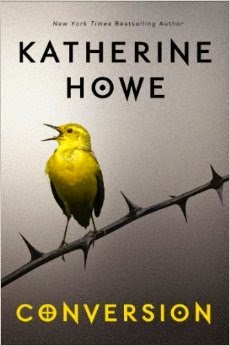
Conversion by Katherine Howe

July 9, 2014 |

I loved Conversion, Katherine Howe’s first foray into young adult territory, more than most of what I’ve read so far this year. The parallels she draws are insightful without hitting the reader over the head with them. She’s also done a fine job of getting at what it’s like to be under the kind of extraordinary pressure that might cause conversion disorder in these teenage girls.

Colleen Rowley is a senior at an elite all-girls private Catholic school in Danvers, Massachusetts, the site of the former Salem Village. She’s in competition with another classmate for valedictorian, is interviewing for admittance to Harvard, and has just started a flirtation-maybe-something-more with a boy who goes to a nearby school. She’s under a lot of pressure, but she feels like she can handle it.

Then her classmates start getting sick. One of them exhibits strange verbal tics. Another loses all of her hair. Another – one of Colleen’s close friends – coughs up pins. There doesn’t seem to be a common thread among their symptoms. More and more girls begin getting sick, and the situation quickly snowballs. Different diagnoses are given, some girls go on television to share their stories, and the media is a constant presence at the school. In her author’s note, Howe explains that the succession of hypotheses she describes in her book for the illnesses (from Tourette’s to PANDAS to environmental causes) very closely mirrors the case of Le Roy, NY from 2011.

Scattered throughout the book are chapters set in early 1700s Salem, narrated by Ann Putnam as she gives her confession for her part in the Salem witch trials several years earlier. (Putnam was the only person involved to confess.) It’s clear that the bulk of the story belongs to Colleen, but these sections set in the past are made more powerful for their brevity. Ann describes her initial reticence to go along with the girls who first started making accusations, but slowly, slowly, she gets caught up and becomes a primary accuser, even legitimately experiencing some of the physical symptoms she only pretended to have before. It’s easy for the reader, too, to become caught up. We read about the heady feeling Ann gets when she realizes that this time, the adults – the men, mostly, but the women too – are listening to her, really listening. That this time, her words have power.
             
And this is where the story holds its real power, too: what will teenage girls do when faced with the pressure they experience? When they’re pressured to excel academically, spiritually, and socially, but also told to be “good” and “pure” and given no power to act on their own or be heard with their own voices? It’s easy to say that we’ve come a long way since the 17th/18th centuries in the way teen girls are treated, but that type of pressure? Girls – and particularly girls – in the here and now experience it just as Howe’s version of Ann Putnam did 300 years ago. When written in this way, the parallel is obvious.

It was easy for me to relate to Colleen, which is unusual for me to write. There are many reasons I tend not to read contemporary realistic YA, but one of the primary ones is that I don’t find many that are authentic to my experience. Not that they need to be – I certainly want to read about people different from me. But there’s something to be said for reading about an experience similar to yours, and I could easily relate to Colleen’s, even though I didn’t attend a Catholic high school and never interviewed at Harvard. I felt the same kind of intense academic pressure to succeed, even finding myself in competition for a top ranking. These things matter very little now, but at the time, they held paramount importance. I felt tremendous academic pressure while at the same time worrying about my hair, my skin, my weight, and yes, my inability to speak and be heard about any of it, my feelings that my words were lesser and my concerns were lesser.

The full impact of the story is weakened slightly by a detail at the very end, involving the yellow bird from the cover. I feel like it undermines the parallels Howe draws between the two events and adds a hint of manufactured creepiness that isn’t necessary. I’m being deliberately vague since I know most of you won’t have read the book yet, but I’d be interested to hear if those of who have read it agree with me in this respect. Events wrap up fairly quickly near the end, too – Colleen tells us which college she’s going to, who made valedictorian, and so on. It feels rushed, almost like Howe was checking things off her list.

Those things aren’t huge problems, though, and they don’t prevent the book from being a standout. Howe’s author’s note is a must-read, if only for the reason that she explains she used some of Ann Putnam’s own words in the story. It adds historical authenticity and drives home the point that the girls then and the girls now aren’t that different – and that we don’t treat them all that differently.


Review copy picked up at TLA. Conversion is available now.

Filed Under: Reviews, Uncategorized, Young Adult

Dirty Wings by Sarah McCarry

July 8, 2014 |

Maia and Cass’s friendship happens by chance. Their worlds should have never collided, but they did, and now that they have, the girls are inseparable.

Maia’s adopted, “lucky” to be living in a home where everything she ever needs is handed to her — as long as she’s proper, behaves, doesn’t get out of line, and pursues that talent she has playing piano. She’s Vietnamese, and has no knowledge of her birth lineage or how she ended up in this home, with this strict, powerful mother and a father who is more absent, more hung over, than he is present.

Cass is a street girl. She lives in a squat house, wears the kinds of things you’d expect of a girl who doesn’t have a home to go back to. It wasn’t her choice, after the abusive step fathers and the mother who couldn’t offer any most stability than she thought she could make for herself. Hers is a tough life, a brutal contrast to Maia’s, but it’s when their paths collide and when Cass gives Maia a taste of the wild freedom she has, that Maia can’t get enough. That Maia wants to experience for and by herself.

Dirty Wings is the second book in Sarah McCarry’s trilogy that begins with All Our Pretty Songs. It can be read alone, as a stand alone, since the events within the first book don’t have any bearing on the events of the second. This is a book about the teen lives of the mothers of the girls in book one, and while it informs All Our Pretty Songs, you could read these books out of order (though I will say that one of the revelations that comes at the end of Dirty Wings was so powerful, it made me go back and reread the first book because I put together some of the pieces of mistruth betrayed by the unnamed narrator in that story).

In Dirty Wings, an intense, life-changing friendship unravels, but it’s not a pretty, glossy kind of friendship. It’s rough and it’s dirty, and it’s transformative for both girls.

The narrative in this story moves back and forth between the present “Now” and the past “Then.” We begin in the now, as one girl stands on the edge of a cliff, ready to throw herself down and end her life. The other girl pulls her back. It is here we see the immediacy — the necessity — of their friendship. We flash back, then, to the moment they met, and then further back to the moments where they realized how much they needed one another even then. Maia needed Cass to help her come to her own, and Cass, despite later insistency that she never changed, needed Maia to help show her what a fulfilling, loving friendship could be.

Because what Maia and Cass have for one another is love. It’s a phrase they’ll open themselves up to saying. A phrase that, for neither of them, had been empty before they found one another. A phrase that didn’t have the heart behind it. A phrase that comes with actual tender feelings that neither had allowed themselves to have.

It’s about intimacy that’s not physical and not romantic.

Not until near the end of the story do we understand how the “Then” and the “Now” intersect. Because in the now, Cass and Maia are on the road. They’re in California, then Mexico, then heading toward Seattle. In the “Then,” both girls are deeply in Seattle and in their respective lives — Cass in the squat home and Maia in her pristine home, her hours split between her piano teacher Oscar’s home practicing and her own home practicing even more. Cass’s future is never talked about because her future is the day-by-day. Maia’s, on the other hand, is clear. She’s going to an audition at a major, prestigious school in New York City and if she gets in (when she gets in), her life will be on the exact right path. Or will it be? Is this her path or the path her parents and Oscar so desperately want for her?

When Maia and Cass are out together in the “Then,” talking about the future, about their lives, about how they do and don’t have the capacity to mold it to their liking, they decide it’s time to get on the road. Maia steals her father’s car, and that’s when they enter the “Now.”

Before they get to that point, it becomes clear there’s something going on in the “Now” that doesn’t make Cass all that happy. His name is Jason, and he’s the leader in a band the girls went to see on one of their stops. He’s nothing special, according to Cass, but the moment Maia sees him she falls desperately, hopelessly In Love, and the girls decide to follow him down to Mexico. It’s an all-or-nothing romance Maia flings herself into, and Jason does nothing to stop her from falling for him. He encourages it even because he, too, enjoys what attention Maia puts upon him. It is no time before the two announce their engagement, and Cass is left to feel lost and alone in a way she never felt before. In a way that made her question her own future, now that she’s lost her best friend to a boy who won her with pretty songs and pretty promises of a rock and roll future.

There is so much to dig into here. This is a rich, layered story with characters who are so deeply flawed and yet incredibly fascinating and compelling because of these very flaws. Cass and Maia’s love for one another is palpable, and because McCarry’s story is written from a third person point of view, it’s clear that even when Jason enters the picture, Maia’s love for her best friend doesn’t go away. It’s influenced and strained because of Jason and because of the excitement there is in chasing something new, but the feelings she has for Cass don’t change because she recognizes that it’s with Cass she was best able to think about who she is. Even if how she pursues it — how she chases it — how she names it — is wrong. At the end of the book, there’s a great line where Cass talks about how much she’s seen Maia change and grow over the course of their friendship but that she herself will always be the kind of girl she is. This line, seemingly simple, tells us as readers just how much Cass herself has changed, too.

We do end the story knowing Maia’s pregnant.

We end the story knowing Jason’s not going to be around much.

And we also end the story knowing something happened between Cass and Jason that unlocks a million answers to All Our Pretty Songs. Or at least, perhaps it unlocks a million answers — Cass’s reliability is always up for question.

Woven into the story is the fantastical element. Dirty Wings takes from the myth of Persephone, but in no way is it a retelling nor is knowledge of the myth necessary to appreciate the story. Readers who do know it will get it and those who do not will see those elements as wholly part of the story itself. Both Maia and Cass are haunted by images of a man in a dark robe, and both of the girls have their own interpretations and expectations of this vision, and how each of them chooses to interact with it not only illuminates who they are as individuals, but also gives depth to what their relationship becomes at the end. This is fantasy light: there’s not a world being built, and even with the interweaving of the Persephone myth, the question remains up in the air of whether what happened “actually” happened in the story or whether both girls suffer from something more internal. For me, it was a little bit of both, especially because of how Cass chose to pursue and compartmentalize these visions. Perhaps, too, it was symbolic of what could come between two girls who are best friends.

Dirty Wings will appeal to readers who want a challenging, literary story about friendship that pulses with music and gorgeous prose. It’s not for the faint of heart readers — drugs, alcohol, partying, and sex are all part of this world, but by virtue of the way the girls are written and characterized, it’s clear none of what they do or engage in is glamorized. Their choices impact them greatly. This is the kind of book perfect for those who identify as goth or alternative or who believe they don’t ever see themselves present in books. They are here in this book and in a way that’s authentic, thoughtful, and full of depth.

If you want to know a bit more about Dirty Wings or Sarah McCarry’s writing, as well as enter to win copies of her books, check out this great interview.

Dirty Wings will be available next Tuesday, July 15  from St. Martin’s Press. Review copy received from the publisher. In full disclosure, Sarah and I both write for Book Riot. 

Filed Under: review, Reviews, Uncategorized, Young Adult

High and Dry by Sarah Skilton

July 1, 2014 |

Sarah Skilton’s sophomore novel High and Dry, a follow-up to her acclaimed debut Bruised, takes her writing in a new direction. It’s a noir-ish mystery set in high school; I’ve discovered that people will give me confused looks when I state this. Apparently the words “noir” and “high school” don’t tend to go together in most people’s minds. Skilton makes it work, though – for the most part.

Charlie Dixon is a senior in high school, a star (of sorts) of his school’s soccer team, and hopelessly in love with Ellie Chen, who dumped him last week. When the book starts off, we find Charlie feeling very depressed, drinking his sadness away. He’s determined to get Ellie back, though she rebuffs him and won’t tell him exactly why she decided they shouldn’t see each other anymore.

Charlie decides to go to a party where he knows Ellie will be. He gets drunk while there, and after being rejected again, his other ex-girlfriend Bridget gives him a ride home. The next day, Charlie is shocked to learn that a girl from his school is critically ill. She got sick while at the party, and someone driving Charlie’s car is the one who dropped her off at the hospital – and then left the scene. It appears Charlie is being framed.

Bridget complicates the situation. She says she left a flash drive in one of the computers at the school library and needs Charlie to help find out who took it, since Charlie sometimes works there. If he doesn’t help her, she’ll reveal incriminating texts that she set up the night she drove him home while he was passed out. She claims the flash drive has a scholarship essay on it, but Charlie knows there’s more to the story.

This book is probably a horror novel for parents who don’t realize all the nasty and unsafe stuff their teenagers get up to. It opens with Charlie drinking heavily. There’s a big subplot about drug manufacture, use, and sale by teens. There’s a cheating scandal and lots of bullying, with some violence. Charlie also gets involved in a soccer match-throwing scheme. There’s a lot of dirty stuff going on, which contributes to the noir-ish feel of the story. Charlie’s voice, which is the standout of the story, carries the reader through it. He’s depressed and hopeful at the same time. He thinks little things are huge deals and reduces important stuff to trivia. He walks a fine line between being likeable and unlikeable, often falling on the wrong side of that line. He’s smart about handling the mystery but stupid about handling his relationships with his ex-girlfriends and his friends. His voice is pure teen. It makes him an interesting character, even if as a reader I couldn’t root for him to succeed in all his endeavors. This is a fairly short book, but Skilton has created a fully-formed, unique character in Charlie.

As a mystery, the novel is very, very good. It’s one of the more complex and interesting mysteries aimed at teens I’ve read in years. Skilton juggles multiple moving parts successfully, transforming what seems at first to be a simple Encyclopedia Brown-style mystery about a stolen flash drive into an absorbing, multi-faceted mystery that touches on teen alcohol and drug use, mandated standardized testing, fixing soccer matches, friendship, bullying, and even a few problems of teachers and parents. Ultimately, there’s not just one thing Charlie needs to figure out – there are several, including what his former best friend is hiding. Skilton skillfully places clues throughout the novel, giving us multiple suspects and a fair few twists and turns. The ultimate payoff is quite satisfying. 

As a snapshot of high school life, I think it’s less successful. As a way of avoiding the rampant bullying that plagued the high school, all students willingly choose a formal group to be a part of, and their fellow group-mates then protect each other. I don’t mean they align themselves with the so-called jocks or nerds; I mean they join an extracurricular sport or club and call themselves a slang term that describes it. The soccer players are the beckhams, for example. There are rules associated with this set-up, too: upperclassmen can’t even talk to lowerclassmen without a formal introduction by another upperclassman who knows them both.

I think Skilton is probably making a comment on how we pigeonhole ourselves and others (in high school and beyond), but she didn’t sell it well enough for me to buy it. I guess I just found it very difficult to believe that everyone would willingly join something extracurricular. A lot of kids I went to high school with just wanted to go home at the end of the day. It seems like casual gangs would have been more realistic. This is a relatively unimportant thing for most of the story, but a big part of the plot hinges on this aspect of social organization near the end. My inability to suspend my disbelief in this regard lessens the impact of an otherwise very successful story.

Hand this one to your readers who like their mysteries a little hard-boiled. While not nearly as horrifying as Barry Lyga’s I Hunt Killers, it’s a bit more intense than Todd Strasser’s thrillogy (beginning with Wish You Were Dead), despite the fact that there’s no real murder here. It’s the lifestyle of the teens and Charlie’s voice that gives it that edge.

Review copy received from the publisher at TLA. High and Dry is available now.

Filed Under: Mystery, Reviews, Uncategorized, Young Adult

The Kiss of Deception by Mary E. Pearson

June 25, 2014 |

Pearson’s latest, a high fantasy kick-off to a series set in a pseudo-medieval world, is a big departure from her previous novels. She’s mostly known for the futuristic SF Jenna Fox Chronicles and a number of standalone realistic contemporaries. The Kiss of Deception proves her ability to write beautifully in any of these genres, and I wouldn’t be surprised if this series – called the Remnant Chronicles – surpasses her previous titles in popularity and acclaim.

Lia is a princess, the first daughter born to the king and queen of her country, which means she should have the sight (the ability to see or predict future events). She doesn’t. Her parents are sure it will appear, so they arrange a marriage between her and the prince of a neighboring country, based in part on her nonexistent ability. The two countries’ relations are tense, and this marriage would go a long way toward smoothing things over. But Lia knows her parents are manufacturing a deception, and she’s sure it will end in disaster, not to mention the fact she’s never met this man she’s supposed to marry. So she flees, along with her maid and friend Pauline.

They travel to a distant town, where Pauline has a relative who will set them up with jobs at her inn. Lia and Pauline are no longer princess and maid; they’re two common girls working honest jobs. Unbeknownst to Lia, the two young men who show up in the same town soon afterward are not who they appear either – one is the prince whom Lia jilted, and the other is an assassin sent to kill her. Lia must navigate her new life as well as the attentions of these two young men/boys – attentions which may appear friendly or romantic, but are potentially anything but. As a reader, I was right there alongside Lia, knowing just a touch more than her, but having to figure out most of it as she does.

It sounds a bit generic, and that’s a fair claim to make, actually. The basic plot is one you’ve likely read before, if you read much high fantasy at all (princess runs away from home to escape arranged marriage, encounters adventure). But the way the book is crafted – how the story unfolds – is what makes it special. Pearson juggles multiple narrators (Lia, the prince, and the assassin), all of them unreliable to some degree, revealing just enough at certain points to keep us reading further. When readers finally learn a big truth late in the story, it will send them flipping the pages back to spot the clues Pearson dropped for them – and they’re all there.

Writing a book with a “twist” (though I hesitate to call it that here, since it implies trickery) can be tough. Some readers love the feeling of surprise, while others may feel deliberately misled or lied to – manipulated, in other words. I suppose all fiction writing can be called manipulation, but it didn’t feel like that in Kiss of Deception. Rather, I felt that Pearson was challenging my assumptions, both as a reader and simply as a person who regularly interacts with other humans. Specifically, she’s telling her readers not to make assumptions about the people we come across – for good or ill. I also think it equally likely that many readers will not be fooled by the red herrings along the way and will easily see the truth from the outset, which is part of what makes the crafting of the story so good. These readers may even be surprised to learn that others were fooled into thinking something entirely different.

The Kiss of Deception is great not only because of this particular plot point. For much of the story, the pace is slow, leisurely, but it’s far from boring. It’s a bit of a world-building lovers’ dream: we see Lia settling into her life at the inn, learning her job and how to interact with people on their own level rather than as a royal. It’s a cultural shock of sorts, but Lia’s up to it. Sometimes she falters; sometimes she triumphs. She grows and comes into her own as a young woman. It’s interesting and quite literally builds character (just not in the way your mom tells you scrubbing the toilet will). By the time the plot really gets rolling a bit later on, I felt like I knew Lia well and saw things clearly through her eyes.

There’s romance here, and it’s lovely, but this is also a story about friendship. While Lia is clearly the protagonist, Pauline gets quite a lot of page time. She’s the best friend, yes, but she’s also a person in her own right, with her own dreams and disappointments. As her former maid, Pauline’s relationship with Lia could have suffered mightily once they started relating to each other in a different capacity. Instead, their friendship deepens. They continue to trust one another, comfort one another, and help each other past the rocky times, even if they do sometimes disagree. I was so glad Pearson didn’t manufacture jealousy and spite to end their friendship, as I’ve seen done in other similar stories before.

I read a lot of YA that feels a bit unfinished or just not as good as it could have been. Maybe the novel is the author’s debut, or the editing is a bit poor, or ideas are hazy or the writing a bit sloppy. That’s not the case here. It’s a beautifully crafted, sophisticated novel with fully-fleshed characters and an original way of telling the story. It’s perfect for any high fantasy fan, but especially good for those who loved Graceling and other fantasy novels that tackle the idea that your life should be your own to make, not anyone else’s.

Review copy provided by the publisher. The Kiss of Deception will be available July 8.

Filed Under: Fantasy, Reviews, Uncategorized, Young Adult

Covers Through the Years: The Golden Compass

June 19, 2014 |

Long-time readers of Stacked may remember our inaugural post where we discussed our favorite books. Easily occupying my top spot is The Golden Compass by Philip Pullman, which meant a great deal to me when I first read it as a young teen and still holds immense power over me today. It continues to be popular and highly-regarded among today’s readers and critics, meaning that its cover has gone through several incarnations since I first read it. I thought it might be interesting to review these various covers through time as Kelly has done for other books and authors previously. The His Dark Materials trilogy, beginning with The Golden Compass, is a curious case study for me, as a battle has raged since its publication over the “proper” age of its audience, ranging from middle grade to adult.

The book was first published as Northern Lights in the United Kingdom in 1995 by Scholastic. The US edition, retitled The Golden Compass, followed in 1996 from Alfred A. Knopf. For this post, I’ll focus mostly on the US covers throughout the years since then – the covers I’ve come across in my own reading and collecting. Otherwise, the scope would be too large for me to cover adequately, especially since the book has since been published in many more countries.

Here are the original US hardback covers of all three books in the trilogy. One of these things is not like the others. While the first two books were published very close to each other (1996 and 1997), the third wasn’t published until 2000, three years later (not a huge wait, but notable considering the small gap between the other two). This, including the tremendous acclaim for the first two novels, probably accounts for the design change for the third book, which is much more sophisticated and expensive to produce (if you can’t tell from the image, the gold portion is a cut-out).

I believe the series was always marketed to youth in the US, but the delineation between middle grade and young adult wasn’t as clear then (some would claim it’s not even clear now). It wasn’t unusual, at least to my recollection, to find covers featuring illustrated characters on novels aimed for teens in the mid-90s. These days, you usually find illustrated covers on middle grade novels, not YA novels. Our 2014 eyes would probably peg these books as middle grade, which is accurate – Amazon lists the suggested age as 10 and up, and the first two were in my middle school library (I assume the third made it in when it was published). The books are also meant for teens (and appeal to them), but most teens of today would probably pass these by as too juvenile.

These paperback versions were published in 1997, 1998, and 2001 by Del Rey. Again, the third book looks different. I couldn’t find an image of the third book that matches the first two more closely, so I’m assuming there isn’t one. These do look like they’re geared for a slightly older audience, but they’re still dated.

In 2001, Alfred A. Knopf gave us these lovely paperback editions of all three novels. With the images of the daemons and children in the background, I think they still demonstrate that they’re for teens (though perhaps older teens), but they look more modern and a bit more sophisticated. The gold foil portion in the center is raised and gives a deluxe feel to the covers. Also worth noting, this is the first time all three books completely match each other.

Yearling published a few more paperback editions in 2001 (the first two) and 2003 (the third). These are definitely geared for the younger end of the target audience (10-12). They actually remind me a little of the new Animorphs covers. I’m not a huge fan of them personally, but if it widens the audience, I’m for it. These are the paperbacks currently in print and the ones you’re prompted to purchase when you visit an online retailer such as Amazon or Barnes and Noble. They’re also the first editions with bonus content. Since these came out around the same time as the Knopf versions above, I think they’re interesting to compare – they’re each going for very different readers.

Laurel Leaf released these mass market versions in 2003. These are unrecognizable from adult mass market fantasy titles. I like the design; it’s above average for mass market books. The image doesn’t clearly show that the middle illustrations are actually cut-outs, showing through from the pages behind. It seems the publishers were going for as broad an audience as possible with these, if they weren’t marketing to adults specifically. I own these versions and I’m pretty sure I purchased them from the adult section of the bookstore.

In 2006 (and 2007), we get the deluxe tenth anniversary editions from Knopf. They’re lovely and very appealing for adults. These are covers to attract established fans and collectors. They also have a tremendous amount of new material, including new illustrations, spot art from Pullman, and a lot of “archival” documents from the characters’ lives. They’re hardback with a deckle edge and a ribbon bookmark. Note that the same background images have been used in three editions so far (paperbacks of 2001, mass markets of 2003, and these).

These deluxe editions are no longer in print – I couldn’t find them to purchase from any usual retailer. If you want a hardback edition of any book in the series, you’re pretty much out of luck unless you want to buy used or from a re-seller. The only editions (of any format) currently in print that I could find were the Yearling paperbacks from 2001/2003. I don’t own those, but they appear to be mass market rather than full-size trade versions. (I’m able to purchase the original 1996 hardcover from Ingram, but they have limited quantities and I suspect the books are leftovers from many years ago.)

A US omnibus edition was published in 2007 by Knopf prior to the release of the Golden Compass film adaptation (which isn’t a good adaptation, but I like it anyway). It’s….a little retro, in my opinion. This is as close as I could find to a US movie tie-in edition, which I don’t normally care for anyway. I do like the cover’s colors, which are reminiscent of the aurora borealis, an important part of the plot.

Selected UK Editions

Here we get a true movie tie-in edition, though it’s from Scholastic UK. It looks a bit like a movie poster, which I suppose is the point. The second image above is a 2011 omnibus edition from Everyman’s Library, another UK publisher. It’s so different from anything else, which is part of why I like it. I think that’s supposed to be Iorek on the cover, but it looks more like a wolf than a bear, so I’m not sure.

The first picture above is specifically called an “adult edition.” It’s from Scholastic Press (UK), published in 2001. I think it’s pretty terrible. I’m not really sure what they were going for. None of the imagery seems relevant to the story at all. It seems like it might be a historical painting, but I wouldn’t be able to place it. (Anyone have any ideas?) I’m not a fan, but I do find it interesting that an adult version, marketed as such, exists, especially since there are plenty of other versions out there that don’t scream “I’m reading a kids’ book!”

The second cover is a Scholastic (UK) paperback from 2011. I think it’s lovely and all ages friendly in its appeal. When I visited London last year, I picked up a copy of this version.

These are images from a special Scholastic (UK) edition published in 2008. I own this one, which comes in a lovely blue and silver box (shiny!) and looks even more deluxe than the US special edition.

Selected International Editions

Most of the international versions actually use a lot of the same imagery as the UK and US versions. The image of the alethiometer reflected in the above covers is the one used by the initial paperback UK version. The background and typefaces are different, but the basic design is the same. The first cover is Greek and the second is Persian. You’ll find many other international covers that look very similar to these.

Here are two very different international versions. The first is the Danish cover, which takes the title literally and puts an actual compass on it. The second is the Spanish cover, which takes the common image of Lyra on Iorek, but draws it in a different style.

These are the Slovak and Italian versions, both nice in their own way, though I really like the Italian cover (it might have something to do with the language as well). I think it’s also interesting to consider which countries opted to translate the original UK title (Northern Lights) and which ones chose to translate the US title (The Golden Compass).

Filed Under: cover designs, Uncategorized, Young Adult

  • « Previous Page
  • 1
  • …
  • 95
  • 96
  • 97
  • 98
  • 99
  • …
  • 237
  • Next Page »
  • Facebook
  • Instagram
  • Pinterest
  • Twitter

Search

Archives

We dig the CYBILS

STACKED has participated in the annual CYBILS awards since 2009. Click the image to learn more.

© Copyright 2015 STACKED · All Rights Reserved · Site Designed by Designer Blogs