• STACKED
  • About Us
  • Categories
    • Audiobooks
    • Book Lists
      • Debut YA Novels
      • Get Genrefied
      • On The Radar
    • Cover Designs
      • Cover Doubles
      • Cover Redesigns
      • Cover Trends
    • Feminism
      • Feminism For The Real World Anthology
      • Size Acceptance
    • In The Library
      • Challenges & Censorship
      • Collection Development
      • Discussion and Resource Guides
      • Readers Advisory
    • Professional Development
      • Book Awards
      • Conferences
    • The Publishing World
      • Data & Stats
    • Reading Life and Habits
    • Romance
    • Young Adult
  • Reviews + Features
    • About The Girls Series
    • Author Interviews
    • Contemporary YA Series
      • Contemporary Week 2012
      • Contemporary Week 2013
      • Contemporary Week 2014
    • Guest Posts
    • Link Round-Ups
      • Book Riot
    • Readers Advisory Week
    • Reviews
      • Adult
      • Audiobooks
      • Graphic Novels
      • Non-Fiction
      • Picture Books
      • YA Fiction
    • So You Want to Read YA Series
  • Review Policy

STACKED

books

  • STACKED
  • About Us
  • Categories
    • Audiobooks
    • Book Lists
      • Debut YA Novels
      • Get Genrefied
      • On The Radar
    • Cover Designs
      • Cover Doubles
      • Cover Redesigns
      • Cover Trends
    • Feminism
      • Feminism For The Real World Anthology
      • Size Acceptance
    • In The Library
      • Challenges & Censorship
      • Collection Development
      • Discussion and Resource Guides
      • Readers Advisory
    • Professional Development
      • Book Awards
      • Conferences
    • The Publishing World
      • Data & Stats
    • Reading Life and Habits
    • Romance
    • Young Adult
  • Reviews + Features
    • About The Girls Series
    • Author Interviews
    • Contemporary YA Series
      • Contemporary Week 2012
      • Contemporary Week 2013
      • Contemporary Week 2014
    • Guest Posts
    • Link Round-Ups
      • Book Riot
    • Readers Advisory Week
    • Reviews
      • Adult
      • Audiobooks
      • Graphic Novels
      • Non-Fiction
      • Picture Books
      • YA Fiction
    • So You Want to Read YA Series
  • Review Policy

The Vault of Dreamers by Caragh O’Brien

September 9, 2014 |

The year is 2066. Rosie Sinclair attends the Forge School, the premier place for creative teenagers to hone their skills and get ahead in subject areas like filmmaking, acting, dancing, and fine art. Graduation from the Forge School is a guaranteed ticket to the good life.

But the Forge School is also a reality television series. All students who attend are on camera for twelve hours of the day. The other twelve hours, they’re put into a drugged sleep, a sleep they’re told will enhance their creativity. As any reader of dystopias (and this is a sort of micro-dystopia, if we consider the school to be its own community) will realize right away, everything is not as it seems at Forge.

Vault of Dreamers opens with Rosie fretting over the “fifty cuts,” the point in the television series (and the school year) at which the fifty students with the lowest “blip rank” (meaning popularity with the viewers at home) will be cut and sent home. Rosie is nearly number 100 (out of only 100 students), and she’s pretty resigned to not making it past the cuts. But it wouldn’t be much of a story if it ended with her going home, so I’ll give a grand non-spoiler and tell you that she makes it.

Rosie is a bit of a rebel, and because she figured she had nothing to lose, she decided to forgo her sleeping pill one night before the fifty cuts. She pretends to swallow it, then sneaks out of her sleeping pod and goes up to the roof, just for kicks. She also sees one of the doctors putting an IV in the arm of a sleeping classmate, which alarms her. Sneaking out one night is a relatively small act of rebellion, but it kicks off a series of similar acts. She starts skipping her pill more frequently, meeting up with a non-student who works in the cafeteria, and planting her own cameras around the school to determine what exactly is going on at Forge – because she knows the school administrators are not simply encouraging creativity in the students by making them sleep 12 hours at night.

This is an odd duck of a book. The premise is actually quite creative, particularly when the sci-fi reason behind the existence of the school and its enforced sleep is fully discovered (the title is kind of a spoiler, but it’s fairly complex, so there’s lots to puzzle out even if you already know it involves dreaming). At the same time, its creativity hampers it a bit. Because the explanation is strange, it’s harder for the reader to grasp, and I left the book feeling a bit confused still. The last pages – and I do mean the very last ones – take the book to a new realm entirely, and that’s where it finally lost me. I don’t need my endings tied up with a neat bow (nor do I need them to be happy, which this one isn’t), but I do think it’s important that the reader is not left saying “huh?” after she turns the final page.

2066 is probably still considered the near future, at least in terms of SF writing, but it’s far enough in the future that the references to Youtube and Facebook sprinkled throughout the book are jarring. They seem very out of place mixed in with references to new and unusual technology we’ve never heard of, and I think teens will rightly question O’Brien’s assumption that such things will still be around 50 years from now. Won’t they be replaced by something newer and shinier? How long did MySpace’s popularity last?

Those were my two biggest hangups with the book, one pretty major and the other relatively minor. There’s a lot this book does right. Rosie’s voice is done very well; she sounds like a teen, not like a world-weary adult (a lot of teens in futuristic sci-fi seem middle-aged cynical to me). This doesn’t mean she’s bright-eyed and bushy-tailed all the time, it just means she sounds her age: young. She’s naive, and even when it’s clear that the adults aren’t looking out for her best interests, she clings to the idea that they are still the ones to be trusted. It’s heartbreaking.

The fact that the school is also a reality series is an intriguing twist. There’s an explanation given for it partway through – at least an explanation for the public, not necessarily the real reason. The concept is relevant for today’s teens and explored fairly well. The students are encouraged to speak directly to the camera, and viewers at home can pull up their favorite students’ feeds whenever they like (there’s not a single camera creating a single story; each student can help shape their own story). Students use the cameras to their advantage in various ways, particularly as the fifty cuts approach, to gain popularity with viewers, which is also directly to “banner ads” that make them money they can cash upon graduation. There’s also the claustrophobic feel the cameras create: Rosie is sure she’s always being watched, but she can’t let that stop her from her quest. It just means she has to get more creative with it.

This is a thrilling read, fast-paced, with a lot of secrets for our protagonist to unearth. There’s a small dash of romance and a couple of subplots (a strange fight with a friend, Rosie’s rough home life) that add layers. The unsuccessful ending notwithstanding, this is a worthwhile read for fans of near-future SF and would make a good readalike for Lauren Miller’s Free to Fall or Rae Mariz’s The Unidentified, both also tech-heavy books set in highly-monitored schools where the adults turn the students into consumable products.

Review copy received from the publisher. The Vault of Dreamers will be published September 16.

Filed Under: review, Reviews, Science Fiction, Uncategorized, Young Adult

Girls Like Us by Gail Giles

September 4, 2014 |

Biddy and Quincy are two special education students. Or at least, they were special education students until they graduated from high school. Now, they’ve been placed together in an apartment that sits behind a home of an older woman who they’re responsible for helping out. She’s almost like their overseer, but she’s really not (or at least, she’s not hugely invested in that role).

The two girls were placed together following graduation for legal reasons, but the caseworker who paired them together did so for very specific reasons. Ones which Quincy can’t make sense of and ones which leave her more frustrated than content.

See, Quincy is a rough-around-the-edges kind of girl. She’s got a facial scar, thanks to a horrific young home life, and she wears her hurt, her anger, and her defenses like armor. When she’s moved into this apartment, she’s given a job to work outside the home, at a local store. She’s capable of doing it, despite what others might think of or perceive of her skills because of her education. Though Quincy’s told she and Biddy are to share their home responsibilities — it’s a way for the two of them to both acquire new skills — Quincy is a good cook and takes on the cooking for all meals, rather than splitting the task with Biddy. In return, Biddy cleans.

Biddy is almost the polar opposite of Quincy. She’s exceptionally sweet and kind, with a large heart. This is despite her own rough past, one which comes through periodically in the story but isn’t fully exposed until it needs to be. Unlike Quincy, Biddy wears her scars internally, and her external persona is that gentle nature. She’s not rough. She’s not tough. She mothers a duck and ducklings that appear in her garden, taking extreme efforts to protect and nurture them, to ensure that the babies and mom survive in their out-of-place home. But Biddy is scared, and that scared comes out in somewhat unexpected ways.

Girls Like Us by Gail Giles is a dual-voiced novel, written with short chapters and in a style that reflects the authentic voices of these two girls. They don’t speak or think in entirely perfect sentences or use proper grammar — but it’s never once distracting nor is it belittling. In many ways, this choice in style is exceptionally respectful of these girls, how they think, and why seeing how they think this way matters. Never does it feel like the girls are being made fun of nor that their special education status makes them anything less than fully human.

This isn’t an easy read, though, despite the fact it is fast paced. It’s engaging, but the horrors both girls experience are unbelievable. Biddy, who is sweet on the outside, has been raped in the past. Not only had she been raped, but she had become pregnant and her caretaker at the time forced her to give up the baby for adoption. Though Quincy thinks of her as a slutty kind of girl initially — and Quincy is quick to judge the fact she’s fat to seeing her once with candy and snacks tucked inside her clothes — but as Biddy opens up to Quincy following something horrific that happens to her (spoiler: Quincy is also a victim of sexual violence, at the hands of a coworker who we know early on is suspicious), Quincy begins to see that Biddy’s exterior isn’t the whole of her.

There’s a lot to mine here in terms of armor and how we wear our scars. This is a realization Quincy comes to, too: she’s biting and tough in her words, and her scar becomes quite representative of how she feels on the inside. Biddy wears her wounds with her body. She eats — or did eat — for comfort and solace. While many times this character trait can be problematic in books, as it’s such an easy way to explain why a character is fat, rather than allowing them to be fat, Giles does a great job not doing that here. She’s giving an explanation, but she’s not making Biddy’s life about her body. Where it once was what Quincy saw as what defined Biddy, Quincy is the one who realizes what a crummy way it is to judge someone. She knows she wouldn’t want people to judge her by her exterior. Perhaps, too, it’s worth mentioning here that Quincy is a person of color, and that becomes a topic she broaches in her side of the story.

Girls Like Us isn’t perfect, despite how many things it does right. At times the format and the pacing mean that huge plot points are rushed over or shoehorned in in a way that doesn’t feel authentic. There’s a moment when — spoiler — the woman who Biddy and Quincy work for tries to reunite Biddy with the child she’d given up for adoption. This entire scene felt uncomfortable because it wasn’t fleshed out well, and while that is part of the point (Lizabeth hadn’t thought this through when she decided to pursue this), it felt like one thing too many in a story that had been handling a lot of issues very well.

That said, one of the best parts of this book, and why I keep thinking about it long after finishing it, is that Giles wrote a book about girls. There’s not a romance here, and even when boys become a problem within the story, they’re not turned into enemies — Biddy’s fearful of them, but she’s not hateful toward them. More importantly, girls aren’t enemies, either. There aren’t “other girls” in this book. There aren’t girls who are special or more valuable or more different than others. These are two girls who learn how to work with one another and who come to love one another for their strengths and for their flaws. These are two girls who, despite being so different, have a shared core to them. Quincy and Biddy build one another up and they are there for one another through some really tough stuff in a way that empowers their relationship and in a way that empowers them individually. They’re not saved and they’re not saving. They’re respecting each other and learning how to grow and become individuals. This is a powerful and all-too-rare message in YA. Though these girls have been a part of special education, they aren’t any less human than anyone else.

Giles respects these girls so much, and it’s through Quincy and Biddy’s voices that we begin to understand how labels such as “differently abled” and “special education” or any other euphemism can be useful and can be hurtful. As Quincy says to one of her coworkers, she’s not dumb. She’s just been given a different education because some things are hard for her to grasp. It doesn’t mean she’s unable to function in the world; she just has to adjust her functioning to suit her strengths and accommodate her weaknesses.

Pass Girls Like Us off to readers who like gritty novels, as well as those who like a fast-paced book. This will appeal to reluctant readers, as well as more advanced readers, and it certainly should be given to those who are seeking stories set after high school and not in college. These girls are part of the working class, and Giles knocks the economics of this out of the park. Likewise, readers who are looking for books about girls, about friendship, about tolerance, and about how those with learning challenges operate in the real world will find so much to enjoy here. By far, my favorite Gail Giles read.

Girls Like Us is available now. Copy picked up from the library. 

Filed Under: gail giles, review, Reviews, Uncategorized, Young Adult

Palace of Spies by Sarah Zettel

September 2, 2014 |

I love historical mysteries set in palaces, particularly when the sleuth is a girl spy masquerading as a servant or lady in waiting. I feel like there are enough books fitting this particular mold out now that it can almost be considered its own subgenre within YA: historical female spy palace mysteries? Over the weekend, I read Sarah Zettel’s excellent Palace of Spies, which kicks off her series of the same name. I read these sorts of books for the palace intrigue, the historical details of court life, and the intelligence of the amateur sleuth; Zettel’s book did not disappoint in any of these aspects.

One of the hallmarks of these stories is the teenage sleuth thrown into a life of espionage through desperation or blackmail – it doesn’t usually happen by choice. Such is the case with our protagonist, Peggy Fitzroy, an orphan who decided to refuse marriage to the wealthy jerk her rich uncle had picked our for her. Kicked out of said uncle’s home and with nowhere to turn, Peggy decides to accept an offer from the dubiously-named Mr. Tinderflint. He convinces her to pose as Lady Francesca Wallingham, who was very recently a lady in waiting to Princess Catherine (wife of George, the Prince of Wales, who would go on to be George II) – until her unfortunate death of a fever several weeks ago.

As Peggy bears more than a passing resemblance to Francesca, the deception isn’t difficult to pull off. She’s instated at Hampton Court Palace with no one the wiser, instructed to observe and report back. What precisely she is to look for isn’t deemed knowledge she needs to know, though she is told she must pay careful attention to the games of cards that the noble men and women entertain themselves with nightly.

Peggy is a smart girl. It doesn’t take her long to realize that not only is Mr. Tinderflint hiding something from her, but so is nearly everyone else at court. But the truly alarming realization is that Francesca did not die of a fever; she was murdered. It only follows that the murderer may come after Peggy next, thinking to finish the job.

As with any good palace mystery, there are a lot of threads to the story. The main mystery involves a Jacobite plot to instate the Stuart King James II to the throne of England, removing the Hanover King George I. It’s up to the reader (and Peggy) to puzzle out which subplots are integral to this central mystery and which are distractions (but interesting distractions nonetheless). Mixed up in this is the mystery of Peggy’s own past – her mother may have been a spy herself, and her father left them when Peggy was a young child. And of course, there’s plenty of court gossip to keep the reader entertained as well.

Peggy’s voice makes this an above average mystery. She’s sharply observant and learns quickly, making her ideally suited to her deception. She’s got a bit of a wry sense of humor, too, and sometimes lets her desire to one-up her court rivals get her into hot water. Watching Peggy try to puzzle out Francesca’s life without letting Francesca’s acquaintances catch on brings its own share of amusement, too, particularly when Peggy is greeted by what appears to be Francesca’s secret paramour in her bedchamber.

Zettel’s writing is confident and the story is well-plotted. Mysteries often hinge strongly on the final reveal at the end, and Palace of Spies has a great one, speaking to the way society underestimates the will and intelligence of teenage girls (both in the 1700s and today). Like all good mystery series, it also leaves a few questions about Peggy’s family’s past unanswered, giving Zettel fodder for future installments.

Hand this to readers who have enjoyed similar books in this historical female spy palace mystery subgenre (I’m gonna go with it) like Jennifer McGowan’s Maid of Secrets, Michaela MacColl’s Prisoners in the Palace, or Y. S. Lee’s The Traitor in the Tunnel. It’s also a great choice for readers interested in learning more about this period in England’s history – there aren’t many books that tackle the early 18th century and I know Jacobitism would fascinate many teen historical fiction junkies.

Filed Under: Historical Fiction, Mystery, review, Reviews, Uncategorized, Young Adult

Suicide and Depression in YA: A Discussion and Book List

August 28, 2014 |

“So I guess that’s why it doesn’t feel like talking about my mental health is tantamount to airing my dirty laundry. Instead, to extend the metaphor, it feels like I’m just hanging my regular old laundry out to dry. And I’m hanging it somewhere visible, like a laundry line strung up between two buildings or something. And everything – absolutely everything – that I wear is on that line. My cute little sundresses are there, as well as my jeans, my shorts, and a variety of tops. But my underwear is also hung up there – even the big old comfy granny panties – and my bras and thongs are there too, waving like flags in the wind. Because we all wear underwear. Everyone knows that people wear underwear. Everyone knows that underwear needs to be washed and dried before you wear it again. So why should it be embarrassing to hang it outside?
Everyone knows that mental illness exists; everyone knows the devastating effect that it can have, both on the people suffering from it and their friends and families. This is not new information – it’s something that we’ve known forever and ever. But the hush-hush way we’ve developed of discussing it and dealing with it clearly aren’t working. So let’s finally start talking about it, because that’s the only chance that we have of beating it.” — from Airing My Dirty Laundry by Anne Theriault

The two final paragraphs from this blog post really resonated with me last week when I read them. Everyone knows mental illness exists, everyone knows that the effects of mental illness can be terrible, and yet, people don’t want to talk about it. It’s not a pleasant topic, but it’s one that needs to be addressed and needs to be approached with more honesty and compassion. 

Over the last year, depression and suicide have seen more time in the spotlight. Ned Vizzini’s suicide, followed by Robin Williams’s — and the near 40,000 suicides that happen per year in the US — make it clear we need to be talking about this more. Suicide is the 10th leading cause of death in America. While depression is not indicative of suicide, the two are linked together in a way that makes talking about them in tandem make sense.

There’s a mythology that surrounds depression and suicide, particularly when it comes to creative types. It’s a mythology that’s exceptionally destructive and belittling to all those who suffer from mental illness, and it’s this: that that anguish is what causes the best work to happen. 

Following Williams’s death, I read the comment far too often that creative people are most likely to suffer because that suffering is where art is born. It tends to be the complete opposite. Creative types don’t see depression as what drives them. The best work isn’t made when they’re down, but rather, when artists are up. When down and the work isn’t coming together, it actually further fuels the depression/anxiety cycle, making it even more difficult to create and engage in a healthy way. Myra McEntire and Stephanie Perkins have both written about this and the ways that depression has impacted not just their careers, but their personal lives, as well. 

Part of why people believe and engage in this myth telling is because it’s easier than trying to make sense of an illness that often doesn’t appear to have a root cause. How could someone talented or successful be depressed? How can someone who seems to have it all together find it difficult to get out of bed, to take a shower, to want to talk with the people who love and care about them? When people choose to look at an illness through that set of lenses, they blame the victim, rather than educate themselves on the disease. 

When we do that, we further stigmatize those who are suffering from depression, making them less likely to seek treatment or practice necessary self-care and preservation. 

One of the most memorable moments of my career in librarianship came at the very end. I’ve worked with teens for many years, and one of the reasons I like working with them and advocating for them is because they’re far more likely to be open minded and receptive to ideas and tough discussions than adults can be. But nothing really got to me and emphasized the importance of having resources available — and being a resource myself through listening, advocating, and being in tune with the array of challenges teens face — than when a teen got up during one of our programs and delivered a piece of slam poetry about a friend. 

She’d been quiet during the event. Her cousin had been urging her to get up in front of the (small) group of mostly adults and some teens who’d come to the program. She’d written something while listening to other performances, and her cousin really hoped she’d share. 

After she performed the piece, she stood at the front and accepted the audience applause shyly. But she didn’t leave the front of the room. She stood there, as if she needed to say more or explain what her piece was about. With more encouragement from her family, she explained that her friend had committed suicide just days ago, and the piece was a tribute to her friend. 

The room went silent. People didn’t try to distract themselves. They sat. They’d heard exactly what she said and took it in, thinking about not just what that meant on a grand level, but what it meant right here and right now for a young teen girl to get up and express her feelings about the situation while the wounds were so fresh. What do you do with that? What can you do with that? 

When the event was over, there wasn’t a single person who didn’t approach her, offering kind words or a hug. Many had said something after they’d collected themselves, encouraging her never to stop working through her feelings with words like she’d just done. And that she’d done so openly. 

I put together a display in the teen area the next day of books about “tough issues”: realistic fiction tackling mental illness and suicide. I knew if one girl who was hurting, others were, too. The books did not last long on the display. People were looking for these stories. And as I saw again on social media in the wake of Williams’s suicide, people were asking for books about depression and suicide. Books and art, of course, are ways into talking about mental illness and suicide, as they allow a space for thinking, for considering, and for making sense of them privately. 

That’s why hearing a teen girl sharing a poem about it left such an impact. She shared. 

With that, here’s a thick list of YA titles that explore depression and/or suicide. Again, these aren’t inextricably linked: one can be depressed and never suicidal, while one can be suicidal and it’s not borne of depression. Likewise, depression is often linked to other mental illness, but I’ve tried to focus on those stories where depression is the primary force. I’ve limited myself to realistic fiction, but feel free to offer up additional titles within any genre of YA in the comments. These stories focus on depression and/or suicide from a wide array of perspectives. 

All descriptions are from WorldCat. A handful of additional titles, which I’ve not included on my list, can be found at Disability in KidLit. 


I Swear by Lane Davis: After Leslie Gatlin kills herself, her bullies reflect on how things got so far.

Thirteen Reasons Why by Jay Asher: When high school student Clay Jenkins receives a box in the mail containing thirteen cassette tapes recorded by his classmate Hannah, who committed suicide, he spends a bewildering and heartbreaking night crisscrossing their town, listening to Hannah’s voice recounting the events leading up to her death.

Saving Francesca by Melina Marchetta: Sixteen-year-old Francesca could use her outspoken mother’s help with the problems of being one of a handful of girls at a parochial school that has just turned co-ed, but her mother has suddenly become severely depressed.

Fat Kid Rules The World by K. L. Going: Seventeen-year-old Troy, depressed, suicidal, and weighing nearly 300 pounds, gets a new perspective on life when a homeless teenager who is a genius on guitar wants Troy to be the drummer in his rock band.

Hold Still by Nina LaCour: Ingrid didn’t leave a note. Three months after her best friend’s suicide, Caitlin finds what she left instead: a journal, hidden under Caitlin’s bed.

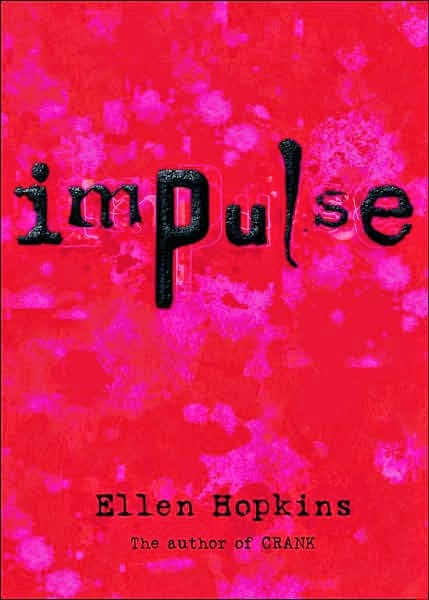
Impulse by Ellen Hopkins: Three teens who meet at Reno, Nevada’s Aspen Springs mental hospital after each has attempted suicide connect with each other in a way they never have with their parents or anyone else in their lives.

By The Time You Read This, I’ll Be Dead by Julie Anne Peters: High school student Daelyn Rice, who’s been bullied throughout her school career and has more than once attempted suicide, again makes plans to kill herself, in spite of the persistent attempts of an unusual boy to draw her out.

Forgive Me, Leonard Peacock by Matthew Quick: A day in the life of a suicidal teen boy saying good-bye to the four people who matter most to him.

This Song Will Save Your Life by Leila Sales: Nearly a year after a failed suicide attempt, sixteen-year-old Elise discovers that she has the passion, and the talent, to be a disc jockey.

The Death of Jayson Porter by Jaime Adoff: In the Florida projects, sixteen-year-old Jayson struggles with the harsh realities of his life which include an abusive mother, a drug-addicted father, and not fitting in at his predominately white school, and bring him to the brink of suicide.

Survive by Alex Morel: A troubled girl is stranded in an arctic winter terrain after a plane crash and must fight for survival with the only other boy left alive.

Try Not to Breathe by Jennifer R. Hubbard: The summer Ryan is released from a mental hospital following his suicide attempt, he meets Nicki, who gets him to share his darkest secrets while hiding secrets of her own. 

And We Stay by Jenny Hubbard: Sent to an Amherst, Massachusetts, boarding school after her ex-boyfriend shoots himself, seventeen-year-old Emily expresses herself through poetry as she relives their relationship, copes with her guilt, and begins to heal.

Crash Into Me by Albert Borris: Four suicidal teenagers go on a “celebrity suicide road trip,” visiting the graves of famous people who have killed themselves, with the intention of ending their lives in Death Valley, California.

Glimpse by Carol Lynch Williams: Living with their mother who earns money as a prostitute, two sisters take care of each other and when the older one attempts suicide, the younger one tries to uncover the reason.

Fall For Anything by Courtney Summers: As she searches for clues that would explain the suicide of her successful photographer father, Eddie Reeves meets the strangely compelling Culler Evans who seems to know a great deal about her father and could hold the key to the mystery surrounding his death.

Saving June by Hannah Harrington: After her sister’s suicide, Harper Scott takes off for California with her best friend Laney to scatter her sister’s ashes in the Pacific Ocean.

Suicide Notes by Michael Thomas Ford: Brimming with sarcasm, fifteen-year-old Jeff describes his stay in a psychiatric ward after attempting to commit suicide.

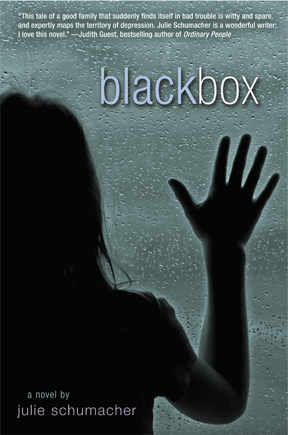
Blackbox by Julie Schumacher: When Dora, Elena’s older sister, is diagnosed with depression and has to be admitted to the hospital, Elena can’t seem to make sense of their lives anymore. At school, the only people who acknowledge Elena are Dora’s friends and Jimmy Zenk–who failed at least one grade and wears black every day of the week. And at home, Elena’s parents keep arguing with each other. Elena will do anything to help her sister get better and get their lives back to normal–even when the responsibility becomes too much to bear. 

Everything Is Fine by Ann Dee Ellis: When her father leaves for a job out of town, Mazzy is left at home to try to cope with her mother, who has been severely depressed since the death of Mazzy’s baby sister.

Silhouetted By The Blue by Traci L. Jones: After the death of her mother in an automobile accident, seventh-grader Serena, who has gotten the lead in her middle school play, is left to handle the day-to-day challenges of caring for herself and her younger brother when their father cannot pull himself out of his depression.

Drowning Instinct by Ilsa J. Bick: An emotionally damaged sixteen-year-old girl begins a relationship with a deeply troubled older man.

Get Well Soon by Julie Halpern: When her parents confine her to a mental hospital, an overweight teenaged girl, who suffers from panic attacks, describes her experiences in a series of letters to a friend.

Wild Awake by Hilary T. Smith: The discovery of a startling family secret leads seventeen-year-old Kiri Byrd from a protected and naive life into a summer of mental illness, first love, and profound self-discovery. *Read Hilary’s guest post on mental illness in YA fiction, too, while you’re at it. 

Crazy by Amy Reed: Connor and Izzy, two teens who met at a summer art camp in the Pacific Northwest where they were counselors, share a series of emails in which they confide in one another, eventually causing Connor to become worried when he realizes that Izzy’s emotional highs and lows are too extreme. This book deals with bipolar disorder. 

Falling Into Place by Amy Zhang (September 9): One cold fall day, high school junior Liz Emerson steers her car into a tree. This haunting and heartbreaking story is told by a surprising and unexpected narrator and unfolds in nonlinear flashbacks even as Liz’s friends, foes, and family gather at the hospital and Liz clings to life.

Filed Under: book lists, contemporary ya fiction, depression, Discussion and Resource Guides, In The Library, readers advisory, suicide, Uncategorized, Young Adult

Tomboy by Liz Prince

August 27, 2014 |

In yesterday’s post, I wrote about how I enjoy getting my nonfiction via graphic novel, and I read two spectacular ones over this past weekend. Coincidentally (or maybe not), they were both graphic memoirs about growing up as a girl in America.

Liz Prince’s Tomboy addresses this topic a bit more bluntly than Telgemeier’s Sisters does. Prince characterizes her identity as a tomboy as something she knew from almost the moment of birth, though she didn’t know how to articulate it right away. She hates wearing dresses, enjoys playing sports, doesn’t play with dolls, and looks down upon the “girly girls” who dress up like princesses and seem obsessed with makeup. The book takes Liz from her infancy up through her adolescence and into her later teen years, tackling friendship, bullying, dating, and other rites of passage. While it focuses primarily on Liz’s struggle with her gender identity, the book is also a story about family and art, much like Sisters is.

Liz’s preferred method of gender expression didn’t make things easy for her. While attending Catholic school, she was forced to wear a dress for monthly mass, and it was tortuous. She was teased a lot, called derogatory names, accused of being a boy or a lesbian (and these were definitely accusations from her tormentors), and never felt she fit in. She wanted so desperately to be “one of the boys,” but the boys wouldn’t ever allow it, and of course, she never felt like she fit in with the girls.

Savvy readers will pick up on the fact that Liz herself pigeonholes people, buying into the very system that she rails against. At one point, she reads about a girl in a magazine who describes herself as a tomboy, but this girl wears a pretty dress to go on a date with a boy, and Liz instantly decides this makes the girl not a real tomboy. Liz puts boys on a pedestal, believing their interests and values are more worthy of respect than girls’ interests and values, and this is part of what drives her desire to not be a girl.

Near the end of the book, Liz meets Harley, a woman who forces her to realize that she’s unwittingly become a part of the problem, too. She’s placed boys in one homogenous group and girls in another. Through Harley’s guidance (plus Harley’s encouragement of Liz’s artistic skills), Liz learns to see herself as a girl and embrace that identity, even if she doesn’t express that identity in traditional ways. This realization opens a door for Liz, allowing her to finally accept herself and settle into a personal identity that brings some happiness rather than discontent.

While both Sisters and Tomboy are about growing up as girls, they’re also about growing up as girls who like comics. These kinds of books are especially important for artistic girls who have a passion for these kinds of things that are often relegated to the field of “boys’ interests.” I can just imagine a pre-teen or teenager becoming inspired by Raina or Liz, seeing them struggle and emerge victorious. After all, the books are proof of the victory!

This should resonate with teens who struggle with gender non-conformity,
even in relatively minor ways, and get them to think more deeply
about the damage caused when we label people as one thing or another. Fitting in is the perennial topic for teens’ books, and for many, it’s a struggle that dominates their lives for years. Finding your place, your people, your passion is hard, especially when it seems everyone is out to stop you from doing it. Even those teens who express their gender in traditional ways usually have trouble fitting in elsewhere, and consequently, they should have no trouble relating in some way to Liz’s story.

Liz’s age through most of the book, the themes addressed, plus some minor swearing and drug use make this a memoir best suited for teens. When Liz finally finds her people near the end and is able to develop her passion for comics, it’s a gratifying moment. I think it’s a moment that happens to a lot of teens right around the time it happened to Liz. It gives the book a nice coming-of-age arc and provides satisfying closure. This is a stellar example of what the graphic format can do – it’s accessible, insightful, and fun to read. Highly recommended.

Finished copy provided by the publisher. Tomboy is available September 2.

Filed Under: Graphic Novels, review, Reviews, Uncategorized, Young Adult

  • « Previous Page
  • 1
  • …
  • 91
  • 92
  • 93
  • 94
  • 95
  • …
  • 237
  • Next Page »
  • Facebook
  • Instagram
  • Pinterest
  • Twitter

Search

Archives

We dig the CYBILS

STACKED has participated in the annual CYBILS awards since 2009. Click the image to learn more.

© Copyright 2015 STACKED · All Rights Reserved · Site Designed by Designer Blogs