• STACKED
  • About Us
  • Categories
    • Audiobooks
    • Book Lists
      • Debut YA Novels
      • Get Genrefied
      • On The Radar
    • Cover Designs
      • Cover Doubles
      • Cover Redesigns
      • Cover Trends
    • Feminism
      • Feminism For The Real World Anthology
      • Size Acceptance
    • In The Library
      • Challenges & Censorship
      • Collection Development
      • Discussion and Resource Guides
      • Readers Advisory
    • Professional Development
      • Book Awards
      • Conferences
    • The Publishing World
      • Data & Stats
    • Reading Life and Habits
    • Romance
    • Young Adult
  • Reviews + Features
    • About The Girls Series
    • Author Interviews
    • Contemporary YA Series
      • Contemporary Week 2012
      • Contemporary Week 2013
      • Contemporary Week 2014
    • Guest Posts
    • Link Round-Ups
      • Book Riot
    • Readers Advisory Week
    • Reviews
      • Adult
      • Audiobooks
      • Graphic Novels
      • Non-Fiction
      • Picture Books
      • YA Fiction
    • So You Want to Read YA Series
  • Review Policy

STACKED

books

  • STACKED
  • About Us
  • Categories
    • Audiobooks
    • Book Lists
      • Debut YA Novels
      • Get Genrefied
      • On The Radar
    • Cover Designs
      • Cover Doubles
      • Cover Redesigns
      • Cover Trends
    • Feminism
      • Feminism For The Real World Anthology
      • Size Acceptance
    • In The Library
      • Challenges & Censorship
      • Collection Development
      • Discussion and Resource Guides
      • Readers Advisory
    • Professional Development
      • Book Awards
      • Conferences
    • The Publishing World
      • Data & Stats
    • Reading Life and Habits
    • Romance
    • Young Adult
  • Reviews + Features
    • About The Girls Series
    • Author Interviews
    • Contemporary YA Series
      • Contemporary Week 2012
      • Contemporary Week 2013
      • Contemporary Week 2014
    • Guest Posts
    • Link Round-Ups
      • Book Riot
    • Readers Advisory Week
    • Reviews
      • Adult
      • Audiobooks
      • Graphic Novels
      • Non-Fiction
      • Picture Books
      • YA Fiction
    • So You Want to Read YA Series
  • Review Policy

Hispanic Heritage Month: A YA Reading List

October 2, 2014 |

While I may live in small town Wisconsin, one of the things that makes this community unique is that roughly 1/3 of the residents are Hispanic. During the month of May, the city swaps out the flags lining downtown to Mexican national flags to celebrate Cinco de Mayo, and during Hispanic Heritage Month — September 15 through October 15 — there are multiple celebrations throughout town.

So why the mid-month beginning and ending to the celebration? Beginning in 1968, Hispanic Heritage Month began as a way to commemorate the anniversary of the independence of five Latin American countries: Costa Rica, El Salvador, Guatemala, Honduras, and Nicaragua. Within this same September 15 to October 15 time frame, Mexico, Chile, and Belize celebrate independence day. More about the history of Hispanic Heritage Month and celebrations that take place can be found here.

In honor of this month of honoring those of Hispanic heritage, I thought it’d be worthwhile to pull together a YA book list. These are titles written by Hispanic authors or books featuring Hispanic main characters. This won’t be comprehensive, so feel free to let me know of other authors and titles to include in the comments. 

I’ve limited my entries to one per author, but I’ve noted authors of Hispanic heritage with a * for further reference, and note that I’ve made those determinations based on information I could find and may miss some. All descriptions are from WorldCat. 

For those seeking even more information about Latino/a authors, it’s worth digging into this excellent resource. 

The Book of Broken Hearts by Sarah Ockler: Jude has learned a lot from her older sisters, but the most important thing is this: The Vargas brothers are notorious heartbreakers. But as Jude begins to fall for Emilio Vargas, she begins to wonder if her sisters were wrong.

It’s Not About the Accent by Caridad Ferrer*: Caroline Darcy decides to explore–and exploit–her distant Cuban ancestry when she goes away to college, claiming to be half-Cuban, calling herself “Carolina,” and dying her blond hair Havana Brown, but soon faces profound consequences.

Sammy & Juliana in Hollywood by Benjamin Alire Saenz*: Sammy Santos and Juliana Rios live amongst the racism, discrimination, and everyday violence during the Vietnam years of the 1960s in a small town in Southern New Mexico.

Mexican Whiteboy by Matt de la Pena*: Sixteen-year-old Danny searches for his identity amidst the confusion of being half-Mexican and half-white while spending a summer with his cousin and new friends on the baseball fields and back alleys of San Diego County, California.

Red Glass by Laura Resau: Sixteen-year-old Sophie has been frail and delicate since her premature birth, but discovers her true strength during a journey through Mexico, where the six-year-old orphan her family hopes to adopt was born, and to Guatemala, where her would-be boyfriend hopes to find his mother and plans to remain.

Yaqui Delgado Wants to Kick Your Ass by Meg Medina*: One morning before school, some girl tells Piddy Sanchez that Yaqui Delgado hates her and wants to kick her ass. Piddy doesn’t even know who Yaqui is, never mind what she’s done to piss her off. Word is that Yaqui thinks Piddy is stuck-up, shakes her stuff when she walks, and isn’t Latin enough with her white skin, good grades, and no accent. And Yaqui isn’t kidding around, so Piddy better watch her back. At first Piddy is more concerned with trying to find out more about the father she’s never met and how to balance honors courses with her weekend job at the neighborhood hair salon. But as the harassment escalates, avoiding Yaqui and her gang starts to take over Piddy’s life. Is there any way for Piddy to survive without closing herself off or running away?

Border Town (series) by Malin Alegria*: When Fabiola’s sister Alexis joins her at Dos Rios High, she warns her away from the troublemaking superjock Dex Andrews, but Alexis does not listen, and soon it is up to Fabiola to make things right, even if it means breaking her sister’s heart. 

**Alegria also wrote Estrella’s Quincenara, which was wildly popular in the local library here. 

Cuba 15 by Nancy Osa*: Violet Paz, a Chicago high school student, reluctantly prepares for her upcoming “quince,” a Spanish nickname for the celebration of an Hispanic girl’s fifteenth birthday.

Under the Mesquite by Guadalupe Garcia McCall*: Throughout her high school years, as her mother battles cancer, Lupita takes on more responsibility for her house and seven younger siblings, while finding refuge in acting and writing poetry.  

Amigas series by Veronica Chambers*: Carmen is turning fifteen and her friends Sarita, Alicia, Jamie, and Gaz plan to throw her a quinceañera; but when the group decides to join a reality show competition, Carmen feels like her party is becoming less important.

The Dead and the Gone by Susan Beth Pfeffer: After a meteor hits the moon and sets off a series of horrific climate changes, seventeen-year-old Alex Morales must take care of his sisters alone in the chaos of New York City.

Sweet 15 by Emily Adler and Alex Echevarria: Shortly before her fifteenth birthday, Destiny Lozada’s traditional Puerto Rican mother and feminist older sister hijack her quinceañera, each pushing her own agenda and ignoring the possibility that Destiny, a skateboarding tomboy, might have her own ideas about the coming-of-age ritual she is about to participate in.

Dark Dude by Oscar Hijuelos*: In the 1960s, Rico Fuentes, a pale-skinned Cuban American teenager, abandons drug-infested New York City for the picket fence and apple pie world of Wisconsin, only to discover that he still feels like an outsider and that violent and judgmental people can be found even in the wholesome Midwest.

The Last Summer of the Death Warriors by Francisco X Stork*: Seventeen-year-old Pancho is bent on avenging the senseless death of his sister, but after he meets D.Q, who is dying of cancer, and Marisol, one of D.Q.’s caregivers, both boys find their lives changed by their interactions.

Return to Sender by Julia Alvarez*: After his family hires migrant Mexican workers to help save their Vermont farm from foreclosure, eleven-year-old Tyler befriends the oldest daughter, but when he discovers they may not be in the country legally, he realizes that real friendship knows no borders.

Chasing the Jaguar by Michele Dominguez Greene*: After having unsettling dreams about the kidnapped daughter of her mother’s employer, fifteen-year-old Martika learns that she is a descendant of a long line of curanderas–Mayan medicine women with special powers.

Cubanita by Gaby Triana*: Seventeen-year-old Isabel, eager to leave Miami to attend the University of Michigan and escape her overprotective Cuban mother, learns some truths about her family’s past and makes important decisions about the type of person she wants to be.

Emily Goldberg Learns to Salsa by Micol Ostow: Forced to stay with her mother in Puerto Rico for weeks after her grandmother’s funeral, half-Jewish Emily, who has just graduated from a Westchester, New York, high school, does not find it easy to connect with her Puerto Rican heritage and relatives she had never met.

Gringolandia by Lyn Miller-Lachman: In 1986, when seventeen-year-old Daniel’s father arrives in Madison, Wisconsin, after five years of torture as a political prisoner in Chile, Daniel and his eighteen-year-old “gringa” girlfriend, Courtney, use different methods to help this bitter, self-destructive stranger who yearns to return home and continue his work.

La Linea by Ann Jaramillo When fifteen-year-old Miguel’s time finally comes to leave his poor Mexican village, cross the border illegally, and join his parents in California, his younger sister’s determination to join him soon imperils them both.

Romiette and Julio by Sharon M. Draper: Romiette, an African-American girl, and Julio, a Hispanic boy, discover that they attend the same high school after falling in love on the Internet, but are harrassed by a gang whose members object to their interracial dating.


City of the Beasts by Isabel Allende*: When fifteen-year-old Alexander Cold accompanies his individualistic grandmother on an expedition to find a humanoid Beast in the Amazon, he experiences ancient wonders and a supernatural world as he tries to avert disaster for the Indians.

When Reason Breaks by Cindy L. Rodriguez* (February 10, 2015): Elizabeth Davis and Emily Daniels seem to have little in common except Ms. Diaz’s English class and the solace they find in the words of Emily Dickinson, but both are struggling with to cope with monumental secrets and tumultuous emotions that will lead one to attempt suicide.

The Vicious Deep (series) by Zoraida Cordova*: After being sucked out to sea in a tidal wave, Tristan Hart returns ashore on Coney Island with no memory of what happened to him–yet he can sense the emotions of others and dreams of a terrifying silver mermaid with razor-sharp teeth.

Carmen by Walter Dean Myers: A policeman’s obsessive love for a tempestuous wig factory worker ends in tragedy in this updated version of Bizet’s Carmen, set in Spanish Harlem, and told in screenplay format.

Illegal by Bettina Restrepo: Nora, a fifteen-year-old Mexican girl, faces the challenges of being an illegal immigrant in Texas when she and her mother cross the border in search of Nora’s father.

Putting Makeup on the Fat Boy by Bil Wright: Sixteen-year-old Carlos Duarte is on the verge of realizing his dream of becoming a famous make-up artist, but first he must face his jealous boss at a Macy’s cosmetics counter, his sister’s abusive boyfriend, and his crush on a punk-rocker classmate.

The Secret Side of Empty by Maria E. Andreu*:  M.T. is a high-achieving high school student who is hiding the fact that she’s an undocumented immigrant in the United States

The Tequila Worm by Viola Canales: Sofia grows up in the close-knit community of the barrio in McAllen, Texas, then finds that her experiences as a scholarship student at an Episcopal boarding school in Austin only strengthen her ties to family and her “comadres.”

What Can(‘t) Wait by Ashley Hope Perez*:Marooned in a broken-down Houston neighborhood–and in a Mexican immigrant family where making ends meet matters much more than making it to college–smart, talented Marissa seeks comfort elsewhere when her home life becomes unbearable.

Accidental Love by Gary Soto*: After unexpectedly falling in love with a “nerdy” boy, fourteen-year-old Marisa works to change her life by transferring to another school, altering some of her behavior, and losing weight.
Down to the Bone by Mayra Lazara Dole: Laura, a seventeen-year-old Cuban American girl, is thrown out of her house when her mother discovers she is a lesbian, but after trying to change her heart and hide from the truth, Laura finally comes to terms with who she is and learns to love and respect herself.
Muchacho by LouAnne Johnson: Living in a neighborhood of drug dealers and gangs in New Mexico, high school junior Eddie Corazon, a juvenile delinquent-in-training, falls in love with a girl who inspires him to rethink his life and his choices. 

The God Box by Alex Sanchez*: When openly gay Manuel transfers to Paul’s high school, Paul, a born-again Christian, begins to question his own sexuality.

Red Hot Salsa: Bilingual Poems on Being Young and Latino in the United States edited by Lori Marie Carlson: “i think in spanish “i write in english “i want to go back to puerto rico, “but i wonder if my kink could live “in ponce, mayaguez and carolina “tengo las venas aculturadas “escribo en spanglish “abraham in espanol “–from “My Graduation Speech,” by Tato Laviera A new collection of bilingual poems from the bestselling editor of “Cool Salsa Ten years after the publication of the acclaimed “Cool Salsa, editor Lori Marie Carlson has brought together a stunning variety of Latino poets for a long-awaited follow-up. Established and familiar names are joined by many new young voices, and Pulitzer Prize-winning novelist Oscar Hijuelos has written the Introduction. The poets collected here illuminate the difficulty of straddling cultures, languages, and identities. They celebrate food, family, love, and triumph. In English, Spanish, and poetic jumbles of both, they tell us who they are, where they are, and what their hopes are for the future.

Silver People by Margarita Engle*: Told in free-verse narratives, Fourteen-year-old Mateo and other Caribbean islanders face discrimination, segregation, and harsh working conditions when American recruiters lure them to the Panamanian rain forest in 1906 to build the great canal.

Gabi, A Girl in Pieces by Isabel Quintero* (October 14): Sixteen-year-old Gabi Hernandez chronicles her senior year in high school as she copes with her friend Cindy’s pregnancy, friend Sebastian’s coming out, her father’s meth habit, her own cravings for food and cute boys, and especially, the poetry that helps forge her identity.

The Girl at Midnight by Melissa Grey* (April 28, 2014): Beneath the streets of New York City live the Avicen, an ancient race of people with feathers for hair and magic running through their veins. Age-old enchantments keep them hidden from humans. All but one. Echo is a runaway pickpocket who survives by selling stolen treasures on the black market, and the Avicen are the only family she’s ever known. Echo is clever and daring, and at times she can be brash, but above all else she’s fiercely loyal. So when a centuries-old war crests on the borders of her home, she decides it’s time to act. Legend has it that there is a way to end the conflict once and for all: find the Firebird, a mythical entity believed to possess power the likes of which the world has never seen. It will be no easy task, but if life as a thief has taught Echo anything, it’s how to hunt down what she wants . . . and how to take it. But some jobs aren’t as straightforward as they seem. And this one might just set the world on fire. (Description via Goodreads).
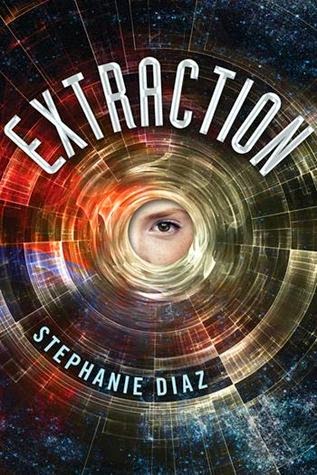
Extraction (series) by Stephanie Diaz*: When she proves Promising enough to be “extracted” from the planet Kiel’s toxic Surface to the much safer Core, sixteen-year-old Clementine learns that the planet’s leaders are planning to exterminate Surface dwellers, including Logan, the boy Clementine loves.
More Happy Than Not by Adam Silvera* (June 16, 2015): When it first gets announced, the Leteo Institute’s memory-alteration procedure seems too good to be true to Aaron Soto – miracle cure-alls don’t tend to pop up in the Bronx projects. Aaron can’t forget how he’s grown up poor, how his friends all seem to shrug him off, and how his father committed suicide in their one bedroom apartment. He has the support of his patient girlfriend, if not necessarily his distant brother and overworked mother, but it’s not enough. Then Thomas shows up. He doesn’t mind Aaron’s obsession over the Scorpius Hawthorne books and has a sweet movie set-up on his roof. There are nicknames. Aaron’s not only able to be himself, but happiness feels easy with Thomas. The love Aaron discovers may cost him what’s left of his life, but since Aaron can’t suddenly stop being gay Leteo may be the only way out. (Description via Goodreads). 

Filed Under: book lists, diversity, hispanic heritage month, Uncategorized, ya fiction, Young Adult

Get Genrefied: Gothic Fiction

October 1, 2014 |

For October’s genre guide, we wanted to tackle something horror-related, and we settled on gothic fiction. This is one of those genres that I think everyone recognizes when they read it, but it’s difficult to say just what it is that makes it gothic. It’s tricky to define.

Goodreads says that gothic fiction “combines elements of both the uncanny and romance” and is a “parent genre” for horror and mystery. While I think the former is true (and it encompasses books that are gothic in feel but aren’t necessarily horror), I don’t quite agree with the latter. I doubt many readers would say that all horror novels are gothic, but the opposite is mostly true – most gothic novels are horror.

The good ol’ dictionary (Random House 2014) gives us a better working definition, I think. Entry seven says that the word gothic means “noting or pertaining to a style of literature characterized by a gloomy setting, grotesque, mysterious, or violent events, and an atmosphere of degeneration and decay.” Entry nine is similar but a bit more specific (and kind of amusing): “being of a genre of contemporary fiction typically relating the experiences of an often ingenuous heroine imperiled, as at an old mansion, where she typically becomes involved with a stern or mysterious but attractive man.” The first definition is used more frequently with the 19th century classic novels, whereas the second one is reserved for more modern novels, but they certainly evoke the same feel.

And this is where I think the true definition lies – it’s the feeling of the novel that makes it gothic. The word brings to mind old castles and churches (built in the Gothic style from which the term for this fiction derives), ghosts, atmospherically foggy nights, monsters (or humans appearing as monsters), tortured heroes and heroines, dangerous secrets, romance, strong emotion. The setting is paramount and is practically a character unto itself. All of these things are hallmarks of modern gothic fiction.

Classic examples of the genre include Frankenstein, Dracula, and of course my favorite, Jane Eyre. The three books are quite different from each other, the former two falling squarely in the horror genre and the latter being spooky at times but not really terrifying like we think horror should be. (Furthermore, Jane Eyre is strictly realistic while Frankenstein and Dracula are science fiction and fantasy, respectively). Gothic fiction of today runs the gamut from terrifying to almost benign, too, though the moody feel of the stories is something they all have in common.

Below are a few worthwhile resources to enhance your knowledge.

  • The Guardian wrote “How to Tell You’re Reading a Gothic Novel – in Pictures” a few months ago. It’s an amusing read, though it does focus mainly on the classics and not YA. It teases out some of the common tropes found in gothic fiction.
  • You can read a lot of gothic novels in the public domain at Project Gutenberg’s Gothic Fiction Bookshelf.
  • YA Books Central has a massive list of 102 gothic books, though they use the term “gothic” pretty loosely for some of the selections.
  • Lancaster University in the UK hosted a Young Adult Gothic Fiction Symposium in September of 2013 (Marcus Sedgwick was one of the authors who spoke), and they have a lot of great resources at their website. The blog is of particular interest; check out the entry on what teen readers think of gothic fiction for a good discussion of appeal factors.
  • The Book Smugglers wrote a guest post at Charing Cross Road on Gothic YA in 2012, including a starter reading list.
  • YA author Eve Marie Mont wrote about the YA Gothic Revival in 2013.
  • Southern gothic is a popular subsection of this genre/subgenre (we’ve included a few Southern gothic titles in our booklist below). This thread at Absolute Write talks more about it and offers some reading suggestions.
  • And of course, Kelly’s article for School Library Journal – Horror in YA Lit is a Staple, Not a Trend – talks some about gothic fictions and mentions a few good gothic reads.

Below are several recent (within the last five years or so) books published that could be called gothic fiction. Descriptions are from Worldcat. Did we leave off any of your favorites?

Dark Companion by Marta Acosta
Brought back to life and orphaned at the age of six, Jane Williams grows
up in a series of foster homes and wins a scholarship to the exclusive
Birch Grove Academy, where dark secrets abound.

The Twin’s Daughter by Lauren Baratz-Logsted
In Victorian London, thirteen-year-old Lucy’s comfortable world with her
loving parents begins slowly to unravel the day that a bedraggled woman
who looks exactly like her mother appears at their door. | Kelly’s review

Long Lankin by Lindsey Barraclough
When Cora and her younger sister, Mimi, are sent to stay with their
great Auntie Ida in an isolated village in 1958, they discover that they
are in danger from a centuries-old evil and, along with village boys
Roger and Peter, strive to uncover the horrifying truth before it is too
late. | Kelly’s review

Servants of the Storm by Delilah S. Dawson
After her best friend dies in a hurricane, high schooler Dovey discovers
something even more devastating–demons in her hometown of Savannah.

Of Metal and Wishes by Sarah Fine
After a Noor humiliates her and a ghost grants an impulsive wish of hers
— brutally — sixteen-year-old Wen befriends the Noor, including the
outspoken leader, a young man named Melik, leading Wen to appease the
ghost, who is determined to protect her against any threat–real or
imagined.

Beautiful Creatures by Kami Garcia and Margaret Stohl
In a small South Carolina town, where it seems little has changed since
the Civil War, sixteen-year-old Ethan is powerfully drawn to Lena, a new
classmate with whom he shares a psychic connection and whose family
hides a dark secret that may be revealed on her sixteenth birthday. | Sequels: Beautiful Darkness, Beautiful Chaos, Beautiful Redemption

Blythewood by Carol Goodman
After a summer locked away in a mental institution, seventeen-year-old
orphan Ava Hall is sent to Blythewood, a finishing school for young
ladies that is anything but ordinary. | Sequel: Ravencliffe (December 2014)

Cuckoo Song by Frances Hardinge
When Triss wakes up
after an accident, she knows that something is very wrong. She is
insatiably hungry; her sister seems scared of her and her parents
whisper behind closed doors. She looks through her diary to try to
remember, but the pages have been ripped out. Soon Triss
discovers that what happened to her is more strange and terrible than
she could ever have imagined, and that she is quite literally not
herself. In a quest find the truth she must travel into the terrifying
Underbelly of the city to meet a twisted architect who has dark designs
on her family – before it’s too late.

Darkness Becomes Her by Kelly Keaton

In post-apocalyptic New Orleans, now a sanctuary for supernatural
beings, a hardened teenager on the run searches for the truth about her
monstrous heritage and discovers a curse that could ignite the ancient
war between gods and monsters. | Sequels: A Beautiful Evil, The Wicked Within

The Beautiful and the Cursed by Page Morgan
Residing in a desolate abbey protected by gargoyles, two beautiful
teenaged sisters in turn-of-the-twentieth-century Paris discover deadly
and otherworldly truths as they search for their missing brother. | Sequels: The Lovely and the Lost, The Wondrous and the Wicked

Strands of Bronze and Gold by Jane Nickerson
After the death of her father in 1855, seventeen-year-old Sophia goes to
live with her wealthy and mysterious godfather at his gothic mansion,
Wyndriven Abbey, in Mississippi, where many secrets lie hidden. | Kimberly’s review

Gothic! Ten Original Dark Tales edited by Deborah Noyes
Drawing on dark fantasy and the fairy tale as well as horror and wild
humor, ten acclaimed authors pay homage to the gothic tale in
wide-ranging stories of the supernatural and surreal.

This Dark Endeavor by Kenneth Oppel
When his twin brother falls ill in the family’s chateau in the
independent republic of Geneva in the eighteenth century,
sixteen-year-old Victor Frankenstein embarks on a dangerous and
uncertain quest to create the forbidden Elixir of Life described in an
ancient text in the family’s secret Biblioteka Obscura. | Sequel: Such Wicked Intent

Miss Peregrine’s Home for Peculiar Children by Ransom Riggs
After a family tragedy, Jacob feels compelled to explore an abandoned
orphanage on an island off the coast of Wales, discovering disturbing
facts about the children who were kept there. | Sequel: Hollow City

Asylum by Madeleine Roux
Three teens at a summer program for gifted students uncover shocking
secets in the sanatorium-turned-dorm where they’re staying–secrets that
link them all to the asylum’s dark past

White Crow by Marcus Sedgwick
Sixteen-year-old Rebecca moves with her father from London to a small,
seaside village, where she befriends another motherless girl and they
spend the summer together exploring the village’s sinister history.

The Madman’s Daughter by Megan Shepherd
Dr. Moreau’s daughter, Juliet, travels to her estranged father’s island,
only to encounter murder, medical horrors, and a love triangle.

In the Shadow of Blackbirds by Cat Winters
In San Diego in 1918, as deadly influenza and World War I take their
toll, sixteen-year-old Mary Shelley Black watches desperate mourners
flock to séances and spirit photographers for comfort and, despite her
scientific leanings, must consider if ghosts are real when her first
love, killed in battle, returns. | Kimberly’s review

The Monstrumologist by Rick Yancey

In 1888, twelve-year-old Will Henry chronicles his apprenticeship
with Dr. Warthrop, a New Escientist who hunts and studies real-life
monsters, as they discover and attempt to destroy a pod of
Anthropophagi. | Sequels: The Curse of the Wendigo, The Isle of Blood, The Final Descent

Filed Under: genre fiction, Get Genrefied, Horror, Uncategorized, Young Adult

Audio Review: Prisoner of Night and Fog by Anne Blankman

September 30, 2014 |

I always think it’s more than a little daring for an author to attempt writing historical fiction featuring real people whose lives are heavily documented. Yet that’s exactly what Anne Blankman does in her novel, Prisoner of Night and Fog, which is also a debut – and all the more impressive for it. Her efforts are resoundingly successful and make for a gripping, devastating audiobook, narrated excellently by Heather Wilds.

The risks in writing this kind of historical novel are many. Because the characters’ lives are so well-known, there could be little room for embellishment or imagination on the part of the author. Yet it’s the embellishment – the filling in of the blanks – that makes historical fiction so enticing to many readers. What can an author do when there aren’t many blanks to fill in? By sticking strictly to the historical record, she tells a story the reader could find by browsing the nonfiction section of the library – and that’s not what historical fiction readers are looking for. But by creating something new, she risks making the story unbelievable for the reader, who would know for a fact that events did not unfold as described.

Blankman’s strategy is to create a wholly fictional character in her protagonist, Gretchen Muller, and surround her with real people from history, most prominently Adolf Hitler. Hitler is not merely a person seen from afar, as happens in many historical novels set in this time and place; he is a vital, terrifying secondary character, one who interacts regularly with Gretchen and helps propel the story forward. To Gretchen, Hitler is her “Uncle Dolf,” a man revered by her whole family. Several years ago, Gretchen’s father died as a martyr to the National Socialists when he jumped in front of a bullet meant for Hitler. Since then, “Uncle Dolf” has looked out for Gretchen and her family, giving them a position of social prominence and a measure of safety in uncertain 1931 Munich.

One day, Gretchen is approached by a young man named Daniel Cohen who tells her that her father’s murder is not what it seems. Initially, Gretchen resists the idea, both because she believes in her father’s sacrifice and because Daniel is a Jew. She is, after all, a good little National Socialist in training.

But her hesitancy doesn’t last long. Gretchen is a sympathetic character, so naturally her aversion to Jewish people erodes until it’s gone completely, and she and Daniel begin a sweet romance that provides a nice subplot to the main story. This puts her in conflict with her “Uncle Dolf” as well as her many friends among the Nazis, but most particularly her older brother, Reinhard, a sadist and sociopath. Reinhart is perhaps even more terrifying than Hitler is, partly because his crimes are more readily apparent (at this point) and partly because he is closer to her. Reinhard’s actions spur Gretchen to learn more about pyschology while investigating her father’s death, and this subplot dovetails nicely with Gretchen’s revelations about her Uncle Dolf.

Other real people make appearances in the story. Eva Braun is Gretchen’s best friend, and Hitler’s real-life niece Geli Raubal is another acquaintance of hers. Hitler’s allies also make frequent appearances and interact with Gretchen, including Ernst Rohm and Rudolf Hess.

This is a dark, moody, and mostly humorless story. It’s frequently terrifying, both overtly when Reinhard commits acts of violence against Jews and against his sister, and less visibly, during Gretchen’s conversations with Hitler, where much is intimated but never spoken plainly. Much of the terror comes from the fact that we as readers know what Gretchen does not: that soon Hitler will conquer much of Europe and act as the catalyst for the massacre of millions of people. Wilds narrates the book’s dialogue with a German accent, which lends authenticity to the story and makes for a truly immersive listening experience.

I was so looking forward to the author’s note at the end of the book, which I hoped would explain exactly where fact met fiction (so essential in historical fiction featuring real people). Alas, the audiobook version did not include it, though I know the print version does. Sure, I can look the people up on Wikipedia, but that’s no match for the research done by the author, which is more in-depth, interesting, and specific to the story being told than an encyclopedia article could ever be. Audiobook producers: We want the author’s note. There’s no harm in including it; if other readers are bored by it, they’ll simply stop the recording and move on with their lives. But I’m certain that would be rare. Readers who seek out historical fiction – teens included – want that extra information, believe me.

Audiobook borrowed from my local library.

Filed Under: audiobooks, Historical Fiction, review, Reviews, Uncategorized, Young Adult

Belzhar by Meg Wolitzer

September 24, 2014 |

I won’t name names, but some adult authors just shouldn’t write books for teens. Thankfully, Meg Wolitzer doesn’t appear to be one of them. Her first YA novel is strong and (almost) never writes down to its audience.

Belzhar is one of the books the people at the TLA Penguin booth talked about in glowing terms, and since I’m a sucker and fall for pitches like that (especially the ones that seem personal like this one did), I gave this one a shot – though it’s not normally up my alley. I’m not a huge fan of magical realism and tend to shy away from the label (usually I think it’s a way to call something fantasy without using that word; just call a spade a spade, please). But I liked this one.

Jam Gallahue has been sent to a special boarding school for highly intelligent, damaged teenagers. Her boyfriend, Reeve, died some months ago, and Jam hasn’t been able to come to terms with her grief and move on with her life. At the school, she discovers she’s been signed up for a class called Special Topics in English. This class only takes a few students each year and it’s known to be more than a bit mysterious – for good reason.

When Jam and her classmates go to the first class, they learn they’ll be studying Sylvia Plath’s writing exclusively. Part of their assignment is to write in a journal each night, but the journals are far from ordinary. Each time Jam writes in hers, she finds herself transported for a short while to a place where Reeve is still alive, giving her the opportunity to experience being with him again in a place where time doesn’t seem to exist. Jam quickly learns that her classmates experience something similar, too – they all travel to a place before their respective traumas. They nickname this place “Belzhar” after Plath’s semi-autobiographical novel The Bell Jar, which they’ve been studying in class.

This is a book about grief, depression, and mental illness in general. It’s about how people – and teenagers specifically – deal with the things life throws at them, and how they heal – or don’t. The book follows Jam’s journey most closely, but through Jam, we also learn about what her classmates have experienced and how these experiences have affected them. The students form bonds with each other, but thankfully it’s never a forced kumbaya moment. Each of the students’ stories are full of pain and grief; they’re all in the class together because they’re battling depression, and sometimes more. Wolitzer’s depiction of the illness is individual to each student and there’s very little moralizing for most of the book.

It’s clear from the beginning that Jam is a slightly unreliable narrator. She’s the last to share her story with her classmates and the story she relates to the reader doesn’t exactly seem right, either. The savvy (and perhaps not so savvy) reader will be able to predict a twist that happens close to the end. It’s not hugely telegraphed, but I did realize most of what was going on. I didn’t feel cheated by it, though. The fact that Jam lies to the reader is tied up with her own mental illness. The story is stronger for the deception because Jam has deceived herself as well.

The metaphor with Plath’s life and writing is obvious, even for teens who haven’t read anything of hers. Wolitzer does take the time to explain a bit about Plath’s life and how it parallels The Bell Jar, but this portion doesn’t feel overly didactic. It’s interesting, actually, particularly for a reader who hasn’t read the source (such as myself). I anticipate it will create a lot of interest in teen readers for Plath and her work.

This is a moving novel that should resonate with sensitive teens – perhaps those who keep journals or write poetry, who know that words are a powerful conduit for self-expression and healing. Wolitzer does falter a bit in the final chapters, writing down just a touch to her audience and misjudging their intelligence, I think, but it doesn’t ruin what is otherwise a nuanced and satisfying story.

Review copy received from the publisher. Belzhar will be available September 30.

Filed Under: review, Reviews, Uncategorized, Young Adult

Firebug by Lish McBride

September 23, 2014 |

I’ve heard a lot of great things about Lish McBride. Her first book, Hold Me Closer Necromancer, won the Morris Award in 2011, and practically every librarian acquaintance I have raves about her writing (in particular her sense of humor). So naturally, when Firebug showed up at my door, I knew I’d have to give it a shot.

Ava is a firebug, meaning she can start fires with her mind. Cool, right? (When I was a teen I would have thought this was so freaking badass. Now it would terrify me.) It’s actually not that awesome for Ava, since she sometimes has a hard time controlling the power. What’s even less cool is that it brought her to the attention of the Coterie, a mafia-type organization (teens seem to be getting involved with the mob in all sorts of ways in YA lately) that forcibly recruits teens like Ava to work for them – or else.

So Ava is under the thumb of the Coterie, led by an evil vampire named Venus. She doesn’t just do petty criminal acts for them; she’s an assassin, and she tries not to think too hard about the people she kills, who are usually not very nice anyway. But then Venus tells her that she has to kill a friend. For no apparent reason. And that’s where Ava draws the line, despite the fact that it means Venus will be after her, despite the fact that it puts her friends in danger, despite the fact that it’s pretty much a death sentence.

Except if it were, we wouldn’t have much of a story. And Ava does have allies – the two boys who work with her in the Coterie who have their own odd powers (one is a werefox and the other is half-dryad), her pseudo-father figure, and a few others who are intent upon bringing Venus down. So perhaps Ava’s refusal isn’t a lost cause after all. Perhaps she and her friends can actually topple the Coterie, ending its threat against herself and other magical beings forever.

I really wanted to like Firebug more than I did. McBride’s writing is very good, as I hoped it would be. There’s a lot of fun repartee between Ava and the other characters. She has a sharp tongue and employs it against friends and enemies alike. Her two closest friends – Ezra the werefox and Lock the half-dryad – were well-drawn and their friendship with Ava was deep and believable. There’s a smattering of romance, too, plus a betrayal that really does tug on the heartstrings, even if you see it coming (I saw it coming and hoped up until the end that I was wrong). And it’s funny, as promised.

So why did I merely like it instead of love it? I wanted more from the plot. Despite how well-developed the characters and their relationships were, the storyline was still very basic. I felt like I had read this story a dozen times before (group of teens with powers take on The Man who has exploited them for years), and no amount of wisecracks would make it fresh for me. There’s a big reveal at the end that was telegraphed too strongly, removing a lot of the tension. The storyline just wasn’t terribly creative.

But hey, I’ve read a heck of a lot of teen fantasy, more of it than most teens (simply because I haven’t been a teen in almost 10 years). I love to champion the stuff that breaks new ground, but there’s definitely space for books that tread the same ground and do it well. This should appeal to teens who like contemporary/urban fantasy and don’t yet feel like they’ve exhausted all the genre has to offer. And there’s something comforting in a familiar story peopled with characters who feel like friends.

Review copy received from the publisher. Firebug is available today!

Filed Under: Fantasy, review, Reviews, Uncategorized, Young Adult

  • « Previous Page
  • 1
  • …
  • 89
  • 90
  • 91
  • 92
  • 93
  • …
  • 237
  • Next Page »
  • Facebook
  • Instagram
  • Pinterest
  • Twitter

Search

Archives

We dig the CYBILS

STACKED has participated in the annual CYBILS awards since 2009. Click the image to learn more.

© Copyright 2015 STACKED · All Rights Reserved · Site Designed by Designer Blogs