• STACKED
  • About Us
  • Categories
    • Audiobooks
    • Book Lists
      • Debut YA Novels
      • Get Genrefied
      • On The Radar
    • Cover Designs
      • Cover Doubles
      • Cover Redesigns
      • Cover Trends
    • Feminism
      • Feminism For The Real World Anthology
      • Size Acceptance
    • In The Library
      • Challenges & Censorship
      • Collection Development
      • Discussion and Resource Guides
      • Readers Advisory
    • Professional Development
      • Book Awards
      • Conferences
    • The Publishing World
      • Data & Stats
    • Reading Life and Habits
    • Romance
    • Young Adult
  • Reviews + Features
    • About The Girls Series
    • Author Interviews
    • Contemporary YA Series
      • Contemporary Week 2012
      • Contemporary Week 2013
      • Contemporary Week 2014
    • Guest Posts
    • Link Round-Ups
      • Book Riot
    • Readers Advisory Week
    • Reviews
      • Adult
      • Audiobooks
      • Graphic Novels
      • Non-Fiction
      • Picture Books
      • YA Fiction
    • So You Want to Read YA Series
  • Review Policy

STACKED

books

  • STACKED
  • About Us
  • Categories
    • Audiobooks
    • Book Lists
      • Debut YA Novels
      • Get Genrefied
      • On The Radar
    • Cover Designs
      • Cover Doubles
      • Cover Redesigns
      • Cover Trends
    • Feminism
      • Feminism For The Real World Anthology
      • Size Acceptance
    • In The Library
      • Challenges & Censorship
      • Collection Development
      • Discussion and Resource Guides
      • Readers Advisory
    • Professional Development
      • Book Awards
      • Conferences
    • The Publishing World
      • Data & Stats
    • Reading Life and Habits
    • Romance
    • Young Adult
  • Reviews + Features
    • About The Girls Series
    • Author Interviews
    • Contemporary YA Series
      • Contemporary Week 2012
      • Contemporary Week 2013
      • Contemporary Week 2014
    • Guest Posts
    • Link Round-Ups
      • Book Riot
    • Readers Advisory Week
    • Reviews
      • Adult
      • Audiobooks
      • Graphic Novels
      • Non-Fiction
      • Picture Books
      • YA Fiction
    • So You Want to Read YA Series
  • Review Policy

Guest Review: The Silence of Six by E. C. Myers

November 5, 2014 |

Frequent guest contributor Matthew Jackson – freelance writer, film & book critic, and professional nerd (plus Kimberly’s cohabitator) – is back with a review of E. C. Myers’ latest book, The Silence of Six. In 2012, Jackson reviewed Myers’ Norton-winning Fair Coin for us. He has also written frequently here at Stacked on the subject of horror.

One minute, 17-year-old Max Stein is sitting in his high school auditorium, watching a live presidential debate. The next, he’s watching – along with everyone else in the room – as his friend Evan hacks into the debate’s live video feed and shoots himself after uttering a very cryptic question: “What is the silence of six, and what are you going to do about it?”

That this is how the new novel from E.C. Myers – the Andre Norton Award-winning author of Fair Coin, which I loved – opens is compelling enough. That it happens within the first 15 pages of the novel is something I found outright gripping. Myers rockets the story from establishing scenario to brutal catalyst almost immediately, trusting his readers to take his hand and follow him on what will be a bullet-train of a techno thriller. Handled clumsily, this kind of set up might make the reader skittish. In Myers’ hands, though, it sends a message: All will be revealed if you just hang on for the ride.

Because Evan made contact with him shortly before his death, Max is suddenly at the center of a government manhunt, and a conspiracy that he can’t possibly begin to comprehend. Reeling from his friend’s drastic act, and desperate for answers, he must dive back into his own previously abandoned hacker identity, and navigate a complex online world of aliases, back doors, secrets and lies, before it’s too late to find out what Evan really gave his life for.

I remember all-too-well the emotionally harrowing feeling that everything when you’re a teenager, even the most mundane thing, is a high-stakes moment, so I’m a sucker for stories that take that all-or-nothing rollercoaster of adolescence and morph it into an adventure where the stakes actually are high. In the world of The Silence of Six, the secrets teenagers harbor really are worth dying and killing for. The government really is out to get you. Every keystroke really can be watched over by someone else. This is a world of whispers and codes and masks, both physical and virtual, a world where you sometimes have to lie and steal to survive another day, a world where the truth could mean permanent silence. It’s got all the trappings of a government conspiracy blockbuster, but instead of a renegade cop or a paranoid reporter, a handful of resourceful teenage hackers are in the driver’s seat, and that makes it all the more engaging.

One of the things I found most impressive about Fair Coin was Myers’ ability to simultaneously deliver the goods we’ve come to expect from a story of that kind, and subvert those expectations. He does it again with The Silence of Six. It’s a techno-conspiracy-cyber-thriller, with everything that implies. It’s a search for the truth, a story about making it to the center of this knot of secrets no matter what, and to that end it’s a breathlessly entertaining page-turner that darts artfully forward from page one and never lets up. But that doesn’t mean Myers won’t to stop play with some of the conventions he’s working in. His hero is not an action star or an always technically precise supergenius. He’s a gifted, scared kid determined to find whatever right he can in a world that’s just gone wrong for him in countless ways. What looks like it could be a romantic subplot evolves into something else entirely, as Max forms a connection with another hacker that’s built more on personal stakes and, perhaps, a mutual sense of mischief than something romantic. The hacking done by the characters isn’t a few quick keystrokes of brilliance, but rather a series of clever, yet often imperfect, ploys to get to the next clue. The hacking in this story is both messy and satisfyingly geeky, giving it a realism that nerdier readers will happily get lost in. Perhaps most importantly for a thriller, though, the solution to this puzzle is both satisfying and surprising. Even if you actually do think you see the end of this book from a mile away, how Myers and his characters arrive at it, and what happens when they do, still manages to defy a few of the rules set forth by so many stories of this kind.

With The Silence of Six, Myers has again proven his gifts as a storyteller who both celebrates the tropes of genre fiction and wants to pick them apart and stitch them back together into a new creature. It’s a lightning-fast thriller with other, darker themes lurking beneath, and even if you think you’ve read books like this before, it will find a way to surprise you.

Review copy received from the publisher. The Silence of Six is available today.

Filed Under: Guest Post, review, Reviews, Science Fiction, Uncategorized, Young Adult

A Few Cybils Reads – Part IV

November 4, 2014 |

Burn Out by Kristi Helvig
Part of the reason I love SFF so much – and always have – is how fun it can be. Authors can really let their creativity fly and not worry so much about trivial things like “Could this actually happen?” Burn Out is probably the most fun Cybils nominee I’ve read so far. It’s set 300 years in our future, after an asteroid that was heading for Earth was deflected and hit the sun instead, causing it to advance much more rapidly through its life cycle. It’s now a red giant, all the oceans on the planet have dried up, it’s too hot to go outside for more than a minute or two at a time, and most humans live underground or in protected pods, using a machine to drag the last bit of moisture out of the air in order to survive. (You could ask me if this could actually happen and I could honestly say I don’t know, but my first guess would be “probably not.”) Tora lives underground, alone, after her mother and sister were killed by the sun and her father was murdered by the people he worked for after he refused to hand over the powerful weapons he built for them.

Tora has resigned herself to probably ending her own life eventually. The air soon won’t have enough water left in it and she figures it will be less painful to overdose on pain pills than die of dehydration. Then an old family “friend,” Markus, comes knocking on her door. He says the Earth’s leaders have found another planet where humanity can live. He can take her there. The price is her dad’s weapons, left in Tora’s safekeeping. Tora knows they were made to be used on other humans, which is why her father refused to give them up in the end. Tora says no. Markus leaves, but he returns, and he brings friends. Not the nice kind.

This is an action-packed story, told in Tora’s funny, sarcastic voice that kept me flipping through the pages. The plot has a hole big enough to drive a truck through, but that didn’t dampen my enjoyment. The setting is unique and the futuristic concepts are interesting, including a gun that can be keyed to a person’s particular vibrations, allowing only that person to use it. Each of the characters have ulterior motives, and Helvig teases these out over the course of the story, providing the plot with plenty of twists and turns. Some questions are answered by the end, and some aren’t, clearly leaving an opening for a sequel. You can bet I’ll be reading it.

The Truth Against the World by Sarah Jamila Stevenson
Olwen Nia Evans, Wyn for short, is moving with her family for a few weeks to Wales, to a little town called Cwm Tawel. The trip is her great-grandmother’s dying wish. She grew up in Cwm Tawel and wants to die there, among the peaceful scenery and familiar surroundings. Before the move, Wyn starts to have strange dreams of her great-gran and a little girl, which she blogs about. Another boy, an English boy with his own family ties to Cwm Tawel, stumbles across Wyn’s blog after a recent visit to his great-grandfather in Wales, where he found a headstone bearing Olwen’s name – and had his own run-in with a strange little girl. The two eventually meet up in Cwm Tawel and set about solving the mystery of the ghost Olwen Nia Evans, which involves digging up painful family history that some residents of the town would prefer stayed buried.

Stevenson’s book is unique for its setting; Wales doesn’t get a lot of love in the YA world, especially compared to its UK counterparts. I can easily see the descriptions of the country’s natural beauty encouraging readers to seek out more information or dreaming about visiting themselves. This is a gentle story, perhaps too gentle, as the stakes never seem very high. The solution to ghost Olwen’s mystery is too simple and will be easily deciphered by readers familiar with ghost stories. This would be a good pick for younger, patient readers who may not guess the connection between the ghost and Wyn’s great-grandmother from the start. (A pronunciation guide would have also been helpful for the nerdy readers.)

Messenger of Fear by Michael Grant
Grant’s latest is a series opener, though it stands on its own easily. Mara wakes up without any knowledge of who she is, other than her name. (Yes, it’s another amnesia book.) She’s greeted by someone who tells her he is the Messenger of Fear, and that before she lost her memories, she agreed to be his apprentice. Their duty is to confront those who have done wrong and present them with a choice: play a game, win it, and go free; or refuse or lose the game and face their worst fear. Messenger starts by showing Mara a teenage girl’s suicide, then rewinds time and shows her the events leading up to it. None of the events can be changed, but they must learn from what happened in order to present an appropriate game – and mete out the appropriate punishment if the wicked person loses.

This is not as much of a horror novel as the title or the cover would have you believe, despite a scene where a person is burned alive (described in detail). Fear is not really its goal. Instead, it’s more of an exploration of guilt and atonement, of the choices we make and how – if – we can make reparations. The idea behind the Messenger is to restore balance to the universe. Those who have not been punished by a human court must suffer a visit from the Messenger of Fear, in hopes of preventing the wicked from committing the same actions in the future. The situations Mara and Messenger view are realistic and presented with shades of grey. More often than not, multiple people are at fault rather than a single individual. It is left up to the reader to determine if the wrongdoer’s interactions with Mara and Messenger have set the balance right – if such punishment is justice or if it’s merely cruelty.

There’s a twist to the story that sharp readers will see coming, though the hints sprinkled throughout start light and grow heavier as the story progresses. It will take a truly eagle-eyed reader to spot the truth from the beginning, keeping tension high through most of the novel. Picking out the twist before the end isn’t always a bad thing, provided it doesn’t happen too soon (as I think it would in the book above). There’s a certain satisfaction in putting the pieces together yourself over several chapters and then learning you were right in the end. At times gruesome, the book is also thought-provoking and smoothly written, easily absorbed in an afternoon.

Filed Under: cybils, Fantasy, review, Reviews, Science Fiction, Uncategorized, Young Adult

Get Genrefied: YA in Translation

November 3, 2014 |

We’ve dabbled in non-genre posts in our “Get Genrefied” series, covering different formats like graphic novels. For this addition to the series, we’re going to dig into a category within YA that doesn’t fit neatly into one genre, since it includes all genres, and one that doesn’t fit nicely into a format, since it can come in a variety of formats. We’re talking YA books in translation. 

Works in translation for YA make up a very small number of titles published each year, and those which are published through major publishers make up an even smaller portion of those titles. While good numbers of English-written books are sold for translation in other languages, the number of titles published in foreign language and translated into English is tiny. On this post about books in translation at The Girl Who Keeps Reading, she cites a study from Publishing Perspectives that notes 3% of the market for books is works in translation — that is inclusive, which suggests that the YA books in translation number is similar, if not smaller. 

There’s also surprisingly little being written about YA works in translation. 

YA works in translation contribute directly to the diversity within this category of literature. It opens up perspectives on story and voice. Even the most expertly translated works are expert for a reason: they allow the original author’s writing and storytelling to shine through. Though the themes or the appeal of the book may be universal, the magic of reading a title in translation is experiencing that universality. And, perhaps, what makes works in translation even more exciting for many readers is that those voices or ideas can be so divergent from the thoughts or ideas offered in what’s published in English. How many of the works in translation in YA dive into a philosophical notion that feels completely foreign or maybe even scary or strange? 

It’s through exposure to those odd-to-us worlds, though, we build bridges among and across cultures. 

In 2006, Roger Sutton posed the question of what makes a good translated book, and publisher Arthur A. Levine weighed in with this:

Wherever they start their lives, we want the books we publish simply to be terrific reads, written by interesting, powerful, affecting writers. And looking overseas (or across borders) is just a matter of making the broadest possible sweep when searching for those talented creators. For me, part of the appeal of looking for great authors to publish in translation is the tantalizing potential in that deep and — for English-language publishers — largely untapped pool of talent out there in the rest of the world. I ask myself, What refreshing new voice, what unique imagination would I find if I could read the very best writers in each country?


One of the interesting elements in this piece is that Levine notes the idea of a book being “too foreign” for an English readership isn’t something he takes into consideration. He notes:

I’ve never found such pronouncements that helpful. They remind me of discussions of what boys like. And what girls like. There’s probably some crumb of truth buried in such a discussion, but it’s not a very interesting truth to me, based as it is on stereotypes and least-common-denominator assumptions. What’s really interesting to me is the experience of the real, complex reader.


Another interesting piece from Horn Book, this time from 1999, looks at the task at hand for those who are translators. Cathy Hirano translated Kazumi Yumoto’s The Friends, which won the Boston Globe-Horn Book award in fiction, and she talked at length about the different elements that she had to keep in mind with not just Yumoto’s book, but what all translators think about when bringing a work into English. It’s far more challenging than a straightforward sentence-by-sentence, word-by-word translation:

I must strive to remain true not only to the essence, but also to the style and tone of the writer in the source language while at the same time render it in a way that is understandable to someone from a very different culture and way of thinking. It is a balancing act, requiring sensitivity and intuition, a combination of humility, vigilance, and arrogance. I say humility because as a translator I must be willing to accept that the author comes first, and that even if I don’t agree, or think that I can say it better, the author is always right. 


Laura Watkinson, a translator whose work has been recognized by the Batchelder Award, did a fascinating interview with Cynthia Leitich Smith, talking about the good and less-than-good parts of the translation process that hint at maybe why we don’t hear as much about YA in translation as we might otherwise:


Reading some reviews, you might think that a book gets magically translated into English at the press of a button in Google Translate.

I think that perhaps the funniest – you have to laugh – review of a translated book I ever saw included a great long list of facts at the beginning, including the name of the author (of course), publisher (yes), price (okay…), number of pages (hmm), font (maybe interesting from a design point of view), and type of paper used (huh?), but neglected entirely to mention the name of the translator, i.e. the person who had written every single word of the book that was being reviewed.

I laughed – and then I wrote a note to point out the critic’s omission. They were very apologetic, but said that it hadn’t actually occurred to them to mention the translator’s name. Sigh.

And then there are the occasions when the perceived weaknesses of a book are blamed on the translator. There’s honestly only so much you can tweak when you’re translating a book. You have various options at word and sentence level and you can spot consistency issues, but plot and character issues are generally out of the translator’s hands.

It’s so frustrating to see that tired old “lost in translation” line trotted out when you know how much work goes into the process of translation and how many tricky issues the translator has to solve.

The whole interview is excellent, and it’s a nice window into the world of translating children’s books for an English audience. 

As noted above, there is an annual recognition for the best work in translation for children, the Mildred A. Batchelder Award. The award honors the most outstanding children’s book originally published in a language other than English, from a country outside of the United States which is then translated into English for publication in the US. One the small print aspects of the Batchelder Award is that it’s limited to books published for an audience of those up to and including 14, meaning that older YA titles — those that would generally be published 14 or older — are not eligible for the award. The Batchelder is an award given from ALSC, the children’s division within ALA, so it makes sense. But it’s interesting there hasn’t been an equivalent award through YALSA or an award that covers the books that would fall under both ALSC and YALSA’s age divisions, as some others do. 

Although works in translation contribute to the variety in YA fiction, it’s not always obvious when a book is a work in translation. Sometimes that gets noted in reviews, typically in the trades, but not always. And as Watkinson noted, rarely do we know about the intermediary who does the work of making the book come alive in English the same way it captured attention in its original language. Perhaps there’s a bias against translated works, as Levine notes in his piece, and perhaps it’s simply not being aware that these books are out there or that they are works in translation. If we don’t know, we can’t spread the word or talk about whether the translation is or isn’t successful. More than the perceived success of the translation, we can’t talk about the bigger, more interesting issues relating to translating, including why stories are or deserve to be translated, what stories we are exposed to through translation, and even the overarching question about what storytelling does for us as humans. 

Another angle of thinking about YA in translation, and maybe what would be most familiar and accessible to teens, is manga. The bulk of manga is translated, and readers who love it have little to no problem diving right in and “getting” it. 

Let’s dive into the world of YA in translation. I’ve not limited my list to recent titles, but have included a span of publication dates. All descriptions are from WorldCat, and I’ve tried to note relevant information about original language or the name of the translator, where I can find it. If you know of more YA novels in translation, I’d love to make this a bigger list, so please feel free to hop in in the comments.


Boy On The Edge by Fridrik Erlings: Henry has a clubfoot and he is the target of relentless bullying. One day, in a violent fit of anger, Henry lashes out at the only family he has– his mother. Sent to live with other troubled boys at the Home of Lesser Brethren, an isolated farm perched in the craggy lava fields along the unforgiving Icelandic coast, Henry finds a precarious contentment among the cows. But it is the people, including the manic preacher who runs the home, who fuel Henry’s frustration and sometimes rage as he yearns for a life and a home. Author Fridrik Erlings offers a young adult novel that explores cruelty and desperation, tenderness and remorse, but most importantly, kindness and friendship.
** This book isn’t technically in translation. Erlings wrote the book in English, based off the original he had written in Icelandic. But I’m including it because it’s too neat not to. 

The Storyteller by Antonia Michaelis, German, translated by Miriam Debbage: Wealthy, seventeen-year-old Anna begins to fall in love with her classmate, Abel, a drug dealer from the wrong side of town, when she hears him tell a story to his six-year-old sister, but when his enemies begin turning up dead, Anna fears she has fallen for a murderer.

Why We Took The Car by Wolfgang Herrndorf, German, translated by Tim Mohr: Mike Klingenberg is a troubled fourteen-year-old from a disfunctional family in Berlin who thinks of himself as boring, so when a Russian juvenile delinquent called Tschick begins to pay attention to him and include Mike in his criminal activities, he is excited–until those activities lead to disaster on the autobahn.

172 Hours On The Moon by Johan Marstad, Norwegian, translated by Tara F. Chace: In 2019, teens Mia, Antoine, and Midori are selected by lottery to join experienced astronauts on a NASA mission to the once top-secret moon base, DARLAH 2, while in a Florida nursing home, a former astronaut struggles to warn someone of the terrible danger there.

are u 4 real? by Sara Kadefors, Swedish, translated by Tara F. Chace: After meeting “online” in an Internet chat room and helping each other deal with family problems, Kyla and Alex, two very different sixteen year olds, decide to meet in person.

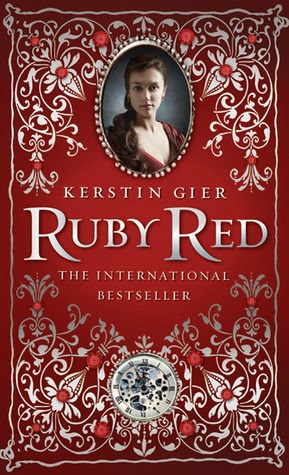
Ruby Red series by Kerstin Gier, German, translated by Anthea Bell: Sixteen-year-old Gwyneth discovers that she, rather than her well-prepared cousin, carries a time-travel gene, and soon she is journeying with Gideon, who shares the gift, through historical London trying to discover whom they can trust.

Arcadia Awakens series by Kai Meyer, German, translated by Anthea Bell: When seventeen-year-old Rosa Alcantara travels from her native Brooklyn to her ancestral home in Sicily, she falls head over heels for Alessandro Carnevare, whose family is the sworn enemy of hers, and must confront both of their families’ criminal–and paranormal–pasts.

Nothing by Janne Teller, Danish, translated by Martin Aitken: When thirteen-year-old Pierre Anthon leaves school to sit in a plum tree and train for becoming part of nothing, his seventh grade classmates set out on a desperate quest for the meaning of life.

The Prince of Mist by Carlos Ruiz Zafon, Spanish, translated by Lucia Graves: In 1943, in a seaside town where their family has gone to be safe from war, thirteen-year-old Max Carver and sister, fifteen-year-old Alicia, with new friend Roland, face off against an evil magician who is striving to complete a bargain made before he died.

God And I Broke Up by Katarina Mazetti, Swedish, translated by Maria Lundin: Linnea is sixteen and when she meets Pia, she feels like she has finally found a friend. But now Pia is dead and Linnea struggles to understand the loss.

Moribito: Guardian of the Spirit series by Nahoko Uehashi, Japanese, translated by Cathy Hirano: The wandering warrior Balsa is hired to protect Prince Chagum from both a mysterious monster and the prince’s father, the Mikado.

No and Me by Daphine de Vigan, French, translated by George Miller: A novel about two very different teenagers and the true nature of homelessness.

As Red As Blood series by Salla Simukka, Finnish, translated by Owen Witesman: In the midst of the freezing Arctic winter, seventeen-year-old Lumikki Andersson walks into her school’s darkroom and finds a stash of money splattered with someone’s blood. She is swept into a whirlpool of dangerous encounters with dirty cops and a notorious drug kingpin as she helps to trace the origin of the cash.

City of the Beasts series by Isabel Allende, Spanish, translated by Margaret Sayers Peden: When fifteen-year-old Alexander Cold accompanies his individualistic grandmother on an expedition to find a humanoid Beast in the Amazon, he experiences ancient wonders and a supernatural world as he tries to avert disaster for the Indians.

Me On The Floor Bleeding by Jenny Jagerfeld, Swedish, translated by Susan Beard: Highschool-outsider Maja would never hurt herself on purpose as her dad, teachers, and classmates seem to believe. Can’t a person saw off the tip of her thumb without everyone starting to worry? That is, everyone except Maja’s mum, who worringly seems to have disappeared from the face of earth. Crashing a neighbour’s party, Maja meets twenty-year-old Justin Case, a super-verbal car mechanic with pink pants, who makes her forget everything about absent mothers and sawn-off thumbs, at least temporarily. But then Maja hacks into her father’s email account and reads an email that hurts more than all the electric saws in the world.


Dream A Little Dream series by Kerstin Gier, coming January 2015, German, translated by Anthea Bell: Liv Silver, fifteen, has lived in six countries in eight years and she and her sister yearn for a real home and normalcy, but soon after moving in with her mother’s boyfriend in London, Liv’s dreams turn bizarre, filled with talking stone statues, mysterious corridors, and strange rituals conducted by four boys who happen to be her new classmates.

Playing A Part by Daria Wilke, Russian, translated by Marian Schwartz, coming March 31, 2015: In June 2013, the Russian government passed laws prohibiting “gay propaganda,” threatening jail time and fines to offenders. That same month, in spite of these harsh laws, a Russian publisher released Playing a Part, a young adult novel with openly gay characters. It was a brave, bold act, and now this groundbreaking story has been translated for American readers. Grisha adores everything about the Moscow puppet theater where his parents work, and spends as much time there as he can. But life outside the theater is not so wonderful. The boys in Grisha’s class bully him mercilessly, and his own grandfather says hateful things about how he’s not “masculine” enough. Life goes from bad to worse when Grisha learns that Sam, his favorite actor and mentor, is moving: He’s leaving the country to escape the extreme homophobia he faces in Russia. (Description via Goodreads). 

Filed Under: book lists, diversity, Get Genrefied, in translation, translated works, Uncategorized, Young Adult

Review & Giveaway: Loop by Karen Akins

October 29, 2014 |

Bree Bennis attends a school for Shifters, those who were born with the ability to travel backwards in time. Her goal at the book’s opening is to travel to the 21st century, complete her midterm, and carry out a little side project that will earn her the money to ensure her sick mother is able to get the care she needs. It should be doable, except that Bree runs into a bratty kid named Finn and accidentally takes him hostage while trying to complete her tasks. Oops.

She eventually escapes the 21st century and goes back to her home time, the 23rd century, knowing she’ll have to return to the 21st to somehow convince Finn not to talk about her little visit. Only when she does return, she lands three years later, and Finn is no longer a bratty kid. He’s her age, he’s pretty hot, and he claims to have been in a relationship with her for some time. It doesn’t take long to figure out he means a future version of Bree. Of course, he can’t tell her about her own future, for fear of disrupting the timeline. (Picture River Song saying “Spoilers” to the Doctor here.) In true Bree fashion, in trying to extricate herself from this situation, she accidentally brings Finn along with her to the 23rd century, something that shouldn’t even be possible. Oops again.

Now Bree must unravel not only how to return Finn to his own time without anyone the wiser, but also how exactly he came to know future Bree so well, and what it all has to do with the strange things going on in her boarding school.

Karen Akins’ debut Loop really embraces how fun time travel can be. This is a time travel book for readers who love time travel. Do you have certain websites bookmarked whose sole purpose is to speculate on the possibility of time travel? This book is for you. This is a true speculative novel, one that continuously asks what if. What if we could time travel? What would the rules be? What would the consequences be? For readers who love those kinds of questions, this is a gem. For readers who get headaches thinking about it, it might be best to pick up a different book.

It’s not just the time travel that makes this book so much fun. Bree and Finn have great snarky chemistry, and there’s a slew of futuristic 23rd century technology that is fascinating to read about. The 23rd century feels real, chock full of fun little details and new slang terms. The plot itself is fast-paced and complicated, but makes sense in the end, as good time travel books should. Often when I read a book with multiple moving plot parts, I’m a little hesitant to reach the end; I’ve been burned with unresolved subplots and details left dangling before (seemingly unintentionally). This is especially true for time travel stories, which can be more complicated than most. Trust in Akins – it all comes together in a satisfying way.

St. Martin’s Press is giving away a finished copy of Loop to one lucky reader (US residents only). Enter using the form below. The giveaway closes November 14.

Filed Under: Giveaway, review, Reviews, Science Fiction, Uncategorized, Young Adult

A Few Cybils Reads – Part III

October 28, 2014 |

The Glass Casket by McCormick Templeman
Rowan Rose has grown up relatively happy in her small town where not much happens. Then a few of the king’s men, visiting for unknown reasons, are found dead in what appear to be brutal animal attacks; at the same time, another young girl, Fiona Eira, moves to the town with her stepmother and her stepmother’s new husband. Fiona has a connection to Rowan beyond what she is told. When Rowan’s best friend falls in love with Fiona, it sets in motion a violent chain of events that will change Rowan’s life forever.

This one was on my radar long before the Cybils got underway. The cover is eerily beautiful and the story is a re-working of a few different fairy tales, though in a more suggestive than literal way. Even without the nod to Snow White via the title, the story feels very much like a fairy tale, albeit much closer to the darker original versions than the more lighthearted Disney versions. And despite the fairy tale aspect, the story – and the way everything unfolds – is unique. Templeman creates an atmospheric mood with her writing. It’s not horrifying, per se, but it is somewhat chilling, buoyed by the fact that she does not shy away from describing some of the more grotesque things that happen. The story is a little rough around the edges at points, but overall thoroughly engrossing. I look forward to what Templeman does next.

A Creature of Moonlight by Rebecca Hahn
Marni is half-human, half-dragon. Her mother, once a princess of the kingdom, ran away to live in the magical woods and took up with a dragon who could change into the shape of a man. Marni was the result. Her mother then left the dragon, taking Marni with her. When the woods start to encroach upon the kingdom, Marni’s uncle, the prince, hunts down her mother, thinking her the cause – the dragon trying to reclaim her. In order to save Marni’s life, Marni’s grandfather – the king – abdicates to his son, but not before Marni’s mother is killed.

Now a young woman, Marni constantly feels the pull of the woods, though she knows its danger. She lives with her grandfather, and when he dies, she journeys to the castle, hoping the king will take her in, despite his propensity to murder her family members. Still, the woods call to her, and they soon start to move in on the town once again. It’s only a matter of time before Marni answers the call.

Hahn’s writing, much like Templeman’s, is dreamlike. She uses her words to paint a picture for you, and it’s easy to feel sucked into the rich settings of her book. I’ve read reviews that call her writing poetic, and that’s a fair assessment. But what I often find missing from a book of poetic writing is a strong plot, and that’s the situation here. It doesn’t feel like much happens. In fact, just when it appears that something exciting might happen, the thread of that particular plot point kind of fades away. You could call the story “character-driven,” or you could simply say it doesn’t have much substance. I tend to go with the latter. Best for readers who don’t mind lovely language at the expense of plot.

Pandemic by Yvonne Ventresca
This is a standard modern-day disease story that focuses on a very specific regional area – teenage Lil’s hometown in New Jersey. The pandemic of the title is a flu-like disease that spreads rapidly across the globe. Unlike most flus, this one is most fatal to younger adults, who soon start dying, leaving the old and the young (including people Lil’s age) without caretakers.

Ventresca doesn’t really do anything new with the idea, but she does throw in some details that keep interest up throughout the book. Both of Lil’s parents are out of town when the worst of the pandemic hits, meaning she has to handle everything that happens mostly on her own. This includes the care of an infant whose parents have both died. She gets together with other teenagers to organize assistance for those who can’t help themselves. She has to learn how to get food for herself and contend with looters. She also has to deal with a teacher who sexually assaulted her several months before and now has greater access to her due to the breakdown of the town’s governance. It’s certainly not a bad story, and would be fine for those eager for more along the lines of Amber Kizer’s A Matter of Days – both are relatively gentle books where the stakes never seem very high (even when they should). Ventresca’s writing is a bit amateurish, weakening what could have been a devastating story and keeping it from being entirely satisfying.

Filed Under: cybils, Fantasy, review, Reviews, Science Fiction, Uncategorized, Young Adult

  • « Previous Page
  • 1
  • …
  • 86
  • 87
  • 88
  • 89
  • 90
  • …
  • 237
  • Next Page »
  • Facebook
  • Instagram
  • Pinterest
  • Twitter

Search

Archives

We dig the CYBILS

STACKED has participated in the annual CYBILS awards since 2009. Click the image to learn more.

© Copyright 2015 STACKED · All Rights Reserved · Site Designed by Designer Blogs