• STACKED
  • About Us
  • Categories
    • Audiobooks
    • Book Lists
      • Debut YA Novels
      • Get Genrefied
      • On The Radar
    • Cover Designs
      • Cover Doubles
      • Cover Redesigns
      • Cover Trends
    • Feminism
      • Feminism For The Real World Anthology
      • Size Acceptance
    • In The Library
      • Challenges & Censorship
      • Collection Development
      • Discussion and Resource Guides
      • Readers Advisory
    • Professional Development
      • Book Awards
      • Conferences
    • The Publishing World
      • Data & Stats
    • Reading Life and Habits
    • Romance
    • Young Adult
  • Reviews + Features
    • About The Girls Series
    • Author Interviews
    • Contemporary YA Series
      • Contemporary Week 2012
      • Contemporary Week 2013
      • Contemporary Week 2014
    • Guest Posts
    • Link Round-Ups
      • Book Riot
    • Readers Advisory Week
    • Reviews
      • Adult
      • Audiobooks
      • Graphic Novels
      • Non-Fiction
      • Picture Books
      • YA Fiction
    • So You Want to Read YA Series
  • Review Policy

STACKED

books

  • STACKED
  • About Us
  • Categories
    • Audiobooks
    • Book Lists
      • Debut YA Novels
      • Get Genrefied
      • On The Radar
    • Cover Designs
      • Cover Doubles
      • Cover Redesigns
      • Cover Trends
    • Feminism
      • Feminism For The Real World Anthology
      • Size Acceptance
    • In The Library
      • Challenges & Censorship
      • Collection Development
      • Discussion and Resource Guides
      • Readers Advisory
    • Professional Development
      • Book Awards
      • Conferences
    • The Publishing World
      • Data & Stats
    • Reading Life and Habits
    • Romance
    • Young Adult
  • Reviews + Features
    • About The Girls Series
    • Author Interviews
    • Contemporary YA Series
      • Contemporary Week 2012
      • Contemporary Week 2013
      • Contemporary Week 2014
    • Guest Posts
    • Link Round-Ups
      • Book Riot
    • Readers Advisory Week
    • Reviews
      • Adult
      • Audiobooks
      • Graphic Novels
      • Non-Fiction
      • Picture Books
      • YA Fiction
    • So You Want to Read YA Series
  • Review Policy

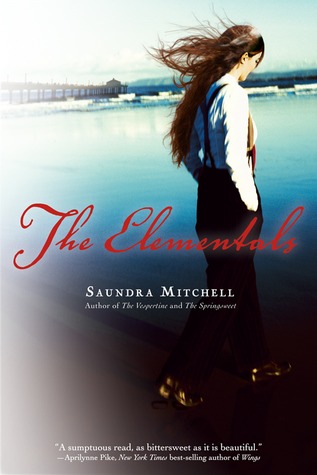
Title Doubles

July 17, 2013 |

As
the purchaser for all YA materials at my library, I become very
well-acquainted with the titles of recently-published books. Sometimes,
after reading page after page of (pretty dull) reviews or synopses, they
all seem to blend together. I’ll often think, “Haven’t I seen that one
before? Purchased it already?”
The answer is “Yes, kind of.”

I
took a look at a slew of YA books published within the past few years
and noticed that a remarkable number have the same or nearly identical
titles. I’m sure the list below is not exhaustive – what others do you
know of?

Both 2013


 Both 2013
 
 
 2013, 2011
 
 
 2011 (adult), 2013

 
 2012 (adult), 2013


 2012, 2011

 
2013, 2010
 
2012, 2012, 2009
 Both 2011
 2011, 2013
 2012, 2013
Both 2013
 2013, 2013
2012, 2013

Filed Under: Cover Doubles, Uncategorized, Young Adult

Over You by Amy Reed

July 11, 2013 |

Amy Reed’s latest novel Over You comes with everything readers who have been fans of Reed have come to expect: compelling characters, a strong back story to all of those characters, fluid and strong writing, and a story line that keeps you going through to the end, never wanting to set the book down. What Over You adds that takes this book from being a really good one to an outstanding one is how it goes from being a story about a friendship — an unhealthy one — to being a story about independence and, at heart, about feminism.

Sadie’s been kicked out of her house by her father for drinking too much, and she’s being sent to live with her mother Lark on her farm in rural Nebraska. Sadie, unable to do anything alone or for herself, begs her friend Max to join her on the trip. She agrees, and the story begins as both wait at a bus stop to be picked up by Sadie’s mother’s boyfriend/stepfather/romantic partner. 

Max is the one telling the story. Max lives for Sadie and would follow her anywhere. They’re best friends; they love each other; they’re connected at the hip. There have been times when Sadie’s been Max’s romantic interest, too, where the lines between best friend and romantic interest and the feelings therein have blurred a bit, and Sadie’s allowed Max to indulge in those feelings.

Allowed.

But once the two girls get to the farm and find they’re going to be housed together in a small trailer on a farm where sustainability and intentional living are the keys to success and happiness, Sadie contracts an illness that forces her to quarantine. Max can’t handle it — she can’t be away from Sadie, can’t be away from the girl who helped her find her way in the world. It’s especially distressing at the farm, since this is the place where Max didn’t necessarily want to fit in. She didn’t want to be separated from Sadie because Sadie is her best friend and the person who helps direct the course of her life.

Of course, that forced separation is what Max needs to realize that Sadie is no friend. 
Sadie is the kind of girl who needs to have power in a situation. Who needs to be doted upon. And Max realizes this when Sadie’s illness means that Max is good for nothing BUT giving into Sadie’s demands and wishes. Sadie doesn’t love her; Sadie uses her. 

There’s another element to this story, and that comes in the form of Dylan. He’s the boy Sadie had her eyes on when they first got to the farm, and he’s the boy who Max finds herself spending a lot of time with now, as Sadie’s taken sick. Slowly, Max finds herself falling for Dylan. He’s mysterious and dark and aloof — all of the things that Max found so compelling about Sadie. 

He’s her replacement, which means…he’s not going to be good for Max either. Though I saw it coming from miles away, he goes as far as Sadie does in abusing Max’s good nature and good will — but his advances are physical, and they are taunting in a very sexual and horrific manner.

So what’s the point when Max says enough is enough?

Well. That’s the farm. The point of the farm. It’s the state of Nebraska. It’s Max remembering her own passion for mythology. It’s the entire idea of the phoenix, destroying herself and then rebuilding herself from the ashes. 

Reed’s method of doing this is smart. It’s almost exceedingly simple and yet, it’s perfect. There are chapters interspersing the narrative which are tales of the different Greek myths and the writing in them is downright spectacular. It’s literary and engrossing and so perfectly captures Max’s struggle and her passion all at once.

One of the strongest elements of this story is that Max is bisexual. But this is never, ever the defining feature of her story. And where it would be so easy for the narrative to shift toward that, especially as Sadie herself blurts this out at a barn party in the middle of no where Nebraska (where you as a midwesterner bristle, worried about the reaction), you remember that teenagers are teenagers and that means sometimes their reactions to such heavy news about a person is no reaction at all because it is truly not a big deal. But of course, this is what Dylan uses against Max in a disturbing, painful scene near the end of the book. It is, though, Max’s decision to take ownership of her body, her decisions, her relationships, and her lifestyle back from any and everyone else. When she does that, even Dylan’s sickening abuse of her sexuality against her is not a big deal. It’s handled with such care. 

Max is one of my favorite YA characters in a long time. I loved experiencing the world through her eyes, and there were many times I completely related to a lot of her struggle about identity and what it means to be a good person, what it means to love and express that, and what it means to be a good friend. It’s not about narrating someone’s story for them; it’s about narrating your own. She also has a strong back story, which is one we don’t get to know at all until we finally get to see the world through her eyes. It takes her a long time to open it up, and when she does, things only snap further into place.

Reed is a gem in contemporary ya. This is the kind of book I can see teens I work with loving, especially as it’s set in the midwest, as it’s infused with life on a farm/in a small town, and yet it doesn’t fall into the easy trappings or stereotypes of those sorts of teen lives at all. Readers who have read Reed before will be eager for this book, and those who love stories about friendship — and those looking for a nice feminist novel — will do well with Over You. Hand this over, too, to fans of Kirsten Hubbard’s Like Mandarin. 

Over You is available now. Review copy picked up at ALA Midwinter.

Filed Under: Reviews, Uncategorized, Young Adult

Vortex by S. J. Kincaid

July 5, 2013 |

In Vortex, Tom Raines is now a Middle Company cadet, having passed his first year as a plebe in the Pentagonal Spire and judged worthy to continue his training as a combatant in the Intrasolar Forces. As his training continues, he learns more about the combatant system: how to be a tactical fighter as well as how the powers-that-be (the corporations) run it all. He also hopes to make amends with Medusa. Amid all of this, he must contend with some old enemies, as well as some new ones, as he gets drawn into some bigger fights that are well over his head.
One of the things that really impresses me about these books is Kincaid’s way of writing about the corporation-run world, which is more believable in this installment than the last. It’s an easy step for me as a reader to get from the covert power that many companies exercise upon our political process now to the overt power they have in Tom’s future world. I wouldn’t call this series a dystopia, but it does a much better job than a lot of dystopias do at postulating a believable future world built upon problems in the current one.
And because it’s explained through action, not infodumps, it’s quite chilling to read about. It’s also not done in a heavy-handed way, in a way that makes you feel like you’re Learning a Lesson. The issue can be quite complex, but Kincaid writes about it in a way that is accessible and understandable. (For more science fiction that addresses this topic, I’d recommend the excellent tv series Continuum, which is appropriate for teens as well, and even features one rather prominently.) It’s also a nice change from a future world that’s controlled by an authoritarian government, which is a little tired by now.
Tom is a great character. He’s quite smart, but he also misses so many obvious things, making huge mistakes in the process. He’s not always nice, either, even to his friends. He lets his emotions get the better of him. He chooses sometimes to exact some petty revenge instead of taking the high road, shooting himself in the foot in the process. It’s all very authentic. I feel like I know kids like Tom. I feel like I was him sometimes as a teen.
Vortex tackles a lot of tough issues, but it’s also very, very funny. Tom and his friends have great repartee. They prank each other constantly. At one point, another Middle company cadet gives Tom’s neural processor a computer virus that makes him see imaginary gnomes everywhere. All Middle company cadets learn how to hook into a system that allows them to communicate to each other via thought, and the results are hilarious, since all thoughts are communicated, not just those they intend to send.
This is a terrific second book in the series, and just a terrific book overall. It’s funny, meaningful, exciting, and well-written. I want to push these books (beginning with Insignia) into the hands of anyone who’s looking for a good SF read. It’s much better than most, with a fully-realized world and a unique concept. Highly recommended.
Review copy provided by the publisher. Vortex is available now.

Filed Under: Reviews, Science Fiction, Uncategorized, Young Adult

Thousand Words by Jennifer Brown

July 4, 2013 |

Ashleigh’s boyfriend Kaleb is going to college at the end of summer, leaving her behind to get through two more years of high school. She’s worried, though, his leaving means he’ll be suddenly interested in other girls. More mature girls. Girls who will distract Kaleb and tear him away from her.

It’s at a party when Ashleigh’s friends convince her to send him a nude photo. No way would Kaleb forget her then. But when that photo gets around, Ashleigh finds she’s going to lose more than just her boyfriend.

Thousand Words by Jennifer Brown explores sexting and the consequences thereof. It reminded me a lot of Susan Vaught’s Going Underground (reviewed here) and for sure, it’s a very contemporary topic with very real consequences for today’s teens.

Brown’s novel alternates in its timeline. It’s set in the present during Ashleigh’s court-required community service, and between these chapters are those set as flashbacks to when she chooses to send the message and how it transports through the school. Through to getting her in trouble, too. Brown masterfully weaves the backstory in with the current time and she does so while building tension in the story. It never feels like information dropping but instead, the backstory informs the place Ashleigh is in now. It’s also clear early on that the romance is long gone, and it was worthwhile to see how the relationship between Ashleigh and Kaleb ended through this storytelling method, rather than getting something short and snipped about it being over.

Ashleigh’s punishment is for her to do a set number of hours of research on the issue of sexting and develop pamphlets and posters to educate other students about the consequences of it. Even though it’s a creative punishment and allows for Brown to offer a pat conclusion to the story, it’s also sort of boring and unrealistic. See, Ashleigh has quite a bit of privilege, even if it’s not acknowledged through the story. This privilege is a double-edged sword though. Her dad is a superintendant in the school distract she attends, so when the news breaks about the sexting issue, suddenly, her father’s job is in jeopardy. There’s a subplot about whether or not the community will push for her father to resign, but I think because of his position, Ashleigh’s punishment is less severe than it could have been (and thus, less interesting to read about). Maybe that’s an unfair assessment, but because this plot has been done before and done quite well in Vaught’s book, there’s been a standard set.

There is, of course, a budding romance in this novel, and it happens between Ashleigh and another teen who is spending time in community service. Except, Mack won’t let on why he’s doing time in service. Eventually he does let Ashleigh in, but even that feels a little underwhelming in execution. He offers Ashleigh a way to reconsider her position and even forces her to check her privilege, which was what she needed in order to carry on with her life. It hadn’t been easy to go back to school and deal with being called a slut and a whore, of course.

Thousand Words certainly has appeal and it’s well-written. It’s another addition to the shelf of quality books tackling important and everyday challenges of being a teen which readers have come to expect of Jennifer Brown. That said, it didn’t have quite the sparkle to it that Susan Vaught’s title did, and maybe it comes down to the fact that Ashleigh never quite had a voice of her own. It’s not that she’s dependent upon the actions of everyone else in the book — she’s not — but rather, she’s not entirely memorable as a character. All we know of her is that she runs periodically, that she spends time in thrift stores once in a while, that she’s an athlete, and that, yeah, she’s the girl who send a naked photo of herself to her boyfriend. Beyond that, we don’t get to know her on a deeper level, nor do we come away with a bigger picture of what her future may hold, other than she’s willing to stand up for herself. In the end, I wanted a better sense of who this girl was, but instead, I was left with a little bit of a didactic message about how one mistake doesn’t ruin your life. Also, of course, the message about how many teens participate in sexting and how it’s going to be an issue infiltrating teen lives as long as cell phones with camera capabilities exist.

Thousand Words is available now from Little, Brown. Review copy received from the publisher.

Filed Under: Reviews, Uncategorized, Young Adult

What I’m Reading Now

June 28, 2013 |

For you this Friday, a few quick snapshots of the books I’m currently reading.

The Originals by Cat Patrick
I dug Forgotten, plot holes and all, and I had high hopes for this one, too.  Alas, I think Patrick’s exhausted her ability to make me see past plot issues by now. The Originals features three girls who are clones of each other, but fool the world into thinking they’re a single person. One girl goes to school in the morning, another in the afternoon, and the third goes out in the evening for any extracurriculars and social engagements. It’s strange, and it’s frustrating that I have no idea why such a charade is necessary. Identical triplets would be completely plausible. I can only hope the answer is revealed further in the book.

Maid of Secrets by Jennifer McGowan
This is normally the kind of book I love – spies, intrigue, secrets, set in one of the few historical periods I always find interesting (Tudor England). But it’s so slow. So, so slow. I’m halfway through and have only barely begun to learn about the secret goings-on in Queen Elizabeth’s court. If it doesn’t pick up sometime soon, this may be a do-not-finish for me. (Incidentally, if you’ve read this one, please let me know if I should persevere.)

Tumble and Fall by Alexandra Coutts
This is a little different from the usual post-apocalyptic fare because it’s not actually post. An asteroid is about to hit the earth, and Coutts tells the stories of a few teens as they prepare to be obliterated. I expected to read an adventure story (I admit that images of Armageddon flashed through my mind), but that’s not what this is at all. Rather than focusing on a desperate attempt to save the world, Coutts seems to be telling a story about how to live when your days are numbered – lots of personal stories about family and friendship and love. I can’t blame the book for not being exactly what I wanted, but still…it’s not exactly what I wanted.

Vortex by S. J. Kincaid
Insignia was a surprise hit for me last year, so the sequel is a must-read. So far, I have not been disappointed – Tom’s voice is still wonderful, Kincaid’s world is still fascinating, and I was hooked on page 1. Vortex follows Tom and his friends as they become mid-level cadets, encountering new challenges and uncovering more secrets about the Intrasolar Forces and the corporations who bankroll their activities.

Three of the four books above have been tough going for me, and it’s been a bit of a struggle lately to get through the books that I normally enjoy. So I’ve actually mixed it up and have been re-reading the Bridgerton romance series by Julia Quinn. I first read these as a teenager; they were in many ways my entree to the romance genre. They’re funny, fast-paced, and sexy, and I’ve been flying through them. If you are a historical romance fan and haven’t read them (hardly likely), I recommend them heartily. (And I may risk the wrath of many readers by saying this, but you really don’t need to read them in order.)

Filed Under: Uncategorized, What's on my shelf, Young Adult

  • « Previous Page
  • 1
  • …
  • 125
  • 126
  • 127
  • 128
  • 129
  • …
  • 237
  • Next Page »
  • Facebook
  • Instagram
  • Pinterest
  • Twitter

Search

Archives

We dig the CYBILS

STACKED has participated in the annual CYBILS awards since 2009. Click the image to learn more.

© Copyright 2015 STACKED · All Rights Reserved · Site Designed by Designer Blogs