• STACKED
  • About Us
  • Categories
    • Audiobooks
    • Book Lists
      • Debut YA Novels
      • Get Genrefied
      • On The Radar
    • Cover Designs
      • Cover Doubles
      • Cover Redesigns
      • Cover Trends
    • Feminism
      • Feminism For The Real World Anthology
      • Size Acceptance
    • In The Library
      • Challenges & Censorship
      • Collection Development
      • Discussion and Resource Guides
      • Readers Advisory
    • Professional Development
      • Book Awards
      • Conferences
    • The Publishing World
      • Data & Stats
    • Reading Life and Habits
    • Romance
    • Young Adult
  • Reviews + Features
    • About The Girls Series
    • Author Interviews
    • Contemporary YA Series
      • Contemporary Week 2012
      • Contemporary Week 2013
      • Contemporary Week 2014
    • Guest Posts
    • Link Round-Ups
      • Book Riot
    • Readers Advisory Week
    • Reviews
      • Adult
      • Audiobooks
      • Graphic Novels
      • Non-Fiction
      • Picture Books
      • YA Fiction
    • So You Want to Read YA Series
  • Review Policy

STACKED

books

  • STACKED
  • About Us
  • Categories
    • Audiobooks
    • Book Lists
      • Debut YA Novels
      • Get Genrefied
      • On The Radar
    • Cover Designs
      • Cover Doubles
      • Cover Redesigns
      • Cover Trends
    • Feminism
      • Feminism For The Real World Anthology
      • Size Acceptance
    • In The Library
      • Challenges & Censorship
      • Collection Development
      • Discussion and Resource Guides
      • Readers Advisory
    • Professional Development
      • Book Awards
      • Conferences
    • The Publishing World
      • Data & Stats
    • Reading Life and Habits
    • Romance
    • Young Adult
  • Reviews + Features
    • About The Girls Series
    • Author Interviews
    • Contemporary YA Series
      • Contemporary Week 2012
      • Contemporary Week 2013
      • Contemporary Week 2014
    • Guest Posts
    • Link Round-Ups
      • Book Riot
    • Readers Advisory Week
    • Reviews
      • Adult
      • Audiobooks
      • Graphic Novels
      • Non-Fiction
      • Picture Books
      • YA Fiction
    • So You Want to Read YA Series
  • Review Policy

Looking Ahead to Science Fiction and Fantasy in 2014: Part Two

December 20, 2013 |

Today I focus on 2014 science fiction trends (mostly), though many titles are crossovers between SF and fantasy. Descriptions are from Goodreads and Worldcat, and titles with an asterisk are either standalones or first in a series (no catchup reading necessary).

Read up on Part 1, which focuses on fantasy titles, here.

Steampunk & Historical Fantasy
I keep hoping that Robin LaFevers’ His Fair Assassin series will spark an historical fantasy trend, but a lot of the historical fantasy and SF coming out in 2014 is steampunk, which has been trending for a while now. Not a bad thing if you like steampunk!

Rise of the Arcane Fire by Kristin Bailey (February)
As the first female member of the Amusementists, an elite secret society
in Victorian England dedicated to discovery, Margaret Whitlock is
determined to prove her worth–but someone is trying to sabotage the
society by altering their inventions to make them dangerous, and it is
up to Meg to expose the plot. Set in a steampunk Victorian London.

The Tinker King by Tiffany Trent (February)
With rebellion brewing in the far-off city of Scientia and dark
Elementals plotting war in the ruins of New London, Vespa, Syrus and
their friends are plunged into a new swamp of intrigue, deception, and
magic.

Emilie and the Sky World by Martha Wells (March)
When Emilie and Daniel
arrive in Silk Harbor, Professor Abindon, an old colleague of the
Marlendes, warns them that she’s observed something strange and
potentially deadly in the sky, a disruption in an upper air aether
current. But as the Marlendes investigate further, they realize it’s a
ship from another aetheric plane. It may be just a friendly explorer, or
something far more sinister, but they will have to take an airship into
the dangerous air currents to find out. 

*The Inventor’s Secret by Andrea Cremer (April)
In an alternate nineteenth-century America that is still a colony of
Britain’s industrial empire, sixteen-year-old Charlotte and her fellow
refugees’ struggle to survive is interrupted by a newcomer with no
memory, bearing secrets about a terrible future.


The Girl With the Windup Heart by Kady Cross (May)
London’s underworld is
no place for a young woman, even one who is strong, smart and
part-automaton like Mila. But when master criminal Jack Dandy
inadvertently breaks her heart, she takes off, determined to find an
independent life, one entirely her own. Her search takes her to the
spangled shadows of the West End’s most dazzling circus. (no cover image available)

There are a few historical fantasy titles that aren’t steampunk.

*The Falconer by Elizabeth May (May)
Lady Aileana Kameron,
the only daughter of the Marquess of Douglas, was destined for a life
carefully planned around Edinburgh’s social events – right up until a
faery killed her mother. Now it’s the 1844 winter season and
Aileana slaughters faeries in secret, in between the endless round of
parties, tea and balls. Armed with modified percussion pistols and
explosives, she sheds her aristocratic facade every night to go hunting.
She’s determined to track down the faery who murdered her mother, and
to destroy any who prey on humans in the city’s many dark alleyways.

Bad Luck Girl by Sarah Zettel (May) 
After rescuing her
parents from the Seelie king at Hearst Castle, Callie is caught up in
the war between the fairies of the Midnight Throne and the Sunlit
Kingdoms. By accident, she discovers that fairies aren’t the only
magical creatures in the world. Set in 20th century America. 

*Deception’s Princess by Esther Friesner (April)
Maeve, princess of
Connacht, was born with her fists clenched. And it’s her spirit and
courage that make Maeve her father’s favorite daughter. But once he
becomes the High King, powerful men begin to circle—it’s easy to love
the girl who brings her husband a kingdom. Yet Maeve is more than
a prize to be won, and she’s determined to win the right to decide her
own fate. In the court’s deadly game of intrigue, she uses her wits to
keep her father’s friends and enemies close—but not too close. When she
strikes up an unlikely friendship with the son of a visiting druid,
Maeve faces a brutal decision between her loyalty to her family and to
her own heart.

Witchfall by Victoria Lamb (April)
London, 1554. At the
court of Mary Tudor, life is safe for no one. The jealous, embittered
queen sees enemies all around her, and the infamous Spanish Inquisition
holds the court in its merciless grip. But Meg Lytton has more reason to
be afraid than most – for Meg is a witch, and exposure would mean
certain death. Even more perilous, Meg is secretly betrothed to the
young priest Alejandro de Castillo; a relationship which they must hide
at all costs.

Mortal Heart by Robin LaFevers is also expected out sometime in 2014.

Futures That Suck
Some are dystopian, some are post-apocalyptic, but none of these books seem to postulate a future that is generally OK. Because this still seems to be the biggest thing in YA SF, I’ve opted to only include standalones, new series, and series continuations that I find particularly noteworthy.

*Divided We Fall by Trent Reedy (January)
Danny Wright never
thought he’d be the man to bring down the United States of America. In
fact, he enlisted in the National Guard because he wanted to serve his
country the way his father did. When the Guard is called up on the Idaho
governor’s orders to police a protest in Boise, it seems like a routine
crowd-control mission … but then Danny’s gun misfires, spooking the
other soldiers and the already fractious crowd, and by the time the
smoke clears, twelve people are dead. The president wants the
soldiers arrested. The governor swears to protect them. And as tensions
build on both sides, the conflict slowly escalates toward the
unthinkable: a second American civil war.

*Landry Park by Bethany Hagen (February)
In a fragmented future
United States ruled by the lavish gentry, seventeen-year-old Madeline
Landry dreams of going to the university. Unfortunately, gentry decorum
and her domineering father won’t allow that. Madeline must marry, like a
good Landry woman, and run the family estate. But her world is turned
upside down when she discovers the devastating consequences her
lifestyle is having on those less fortunate. As Madeline begins to
question everything she has ever learned, she finds herself increasingly
drawn to handsome, beguiling David Dana. Soon, rumors of war and
rebellion start to spread, and Madeline finds herself and David at the
center of it all. Ultimately, she must make a choice between duty – her
family and the estate she loves dearly – and desire.

The Treatment by Suzanne Young (April)
Sloane and James are on
the run after barely surviving the suicide epidemic and The Program.
But they’re not out of danger. Huge pieces of their memories are still
missing, and although Sloane and James have found their way back to each
other, The Program isn’t ready to let them go. Escaping with a
group of troubled rebels, Sloane and James will have to figure out who
they can trust, and how to take down The Program.

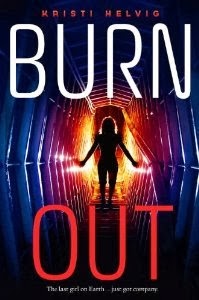
*Burn Out by Kristi Helvig (April)
In the future, when the Earth is no longer easily habitable,
seventeen-year-old Tora Reynolds, a girl in hiding, struggles to protect
weapons developed by her father that could lead to disaster should they
fall into the wrong hands.

While We Run by Karen Healey (May)
Abdi Taalib thought he
was moving to Australia for a music scholarship. But after meeting the
beautiful and brazen Tegan Oglietti, his world was turned upside down.
Tegan’s no ordinary girl – she died in 2027, only to be frozen and
brought back to life in Abdi’s time, 100 years later. Now, all they want is for things to return to normal (or as normal as they can be), but the government has other ideas.

Raging Star by Moira Young (May)
Saba is ready to seize
her destiny and defeat DeMalo and the Tonton…until she meets him and
he confounds all her expectations with his seductive vision of a healed
earth, a New Eden. DeMalo wants Saba to join him, in life and work, to
create and build a healthy, stable, sustainable world…for the chosen
few. The few who can pay. 

Guardian by Alex London (May)
In the new world led by
the Rebooters, former Proxy Syd is the figurehead of the Revolution,
beloved by some and hated by others. Liam, a seventeen-year-old
Rebooter, is Syd’s bodyguard and must protect him with his life. But
armed Machinists aren’t the only danger. People are falling
ill—their veins show through their skin, they find it hard to speak, and
sores erupt all over their bodies. Guardians, the violent enforcers of
the old system, are hit first, and the government does nothing to help.
The old elites fall next, and in the face of an indifferent government,
Syd decides it’s up to him to find a cure . . . and what he discovers
leaves him stunned. 

*After the End by Amy Plum (May)
World War III has left
the world ravaged by nuclear radiation. A lucky few escaped to the
Alaskan wilderness. They’ve survived for the last thirty years by living
off the land, being one with nature, and hiding from whoever else might
still be out there. At least, this is what Juneau has been told her entire life. When
Juneau returns from a hunting trip to discover that everyone in her
clan has vanished, she sets off to find them. Leaving the boundaries of
their land for the very first time, she learns something horrifying:
There never was a war. Cities were never destroyed. The world is intact.
Everything was a lie. 

Graduation Day by Joelle Charbonneau (June)
In book three of the
Testing series, the United Commonwealth wants to eliminate the rebel
alliance fighting to destroy The Testing for good. Cia is ready to lead
the charge, but will her lethal classmates follow her into battle?

*Hungry by H. A. Swain (June)
In Thalia’s world,
there is no need for food—everyone takes medication (or “inocs”) to ward
off hunger. It should mean there is no more famine, no more obesity, no
more food-related illnesses, and no more war. At least that’s what her
parents, who work for the company that developed the inocs, say. But
when Thalia meets a boy who is part of an underground movement to bring
food back, she realizes that most people live a life much different from
hers. Worse, Thalia is starting to feel hunger, and so is he—the inocs
aren’t working. Together they set out to find the only thing that will
quell their hunger: real food.

*The Young World by Chris Weitz (July)
New York City is now run by tribes of teenagers, survivors of a mysterious Sickness that wiped out all adults and little kids. But they’re only survivors to a point—as soon as they get too old, the Sickness kills them, too. The teens who remain are left in possession of the bones of a modern world that doesn’t work. With resources scarce, conflict is inevitable, and the teens make sure they are armed to the hilt. The Young World follows Jefferson, the reluctant leader of the Washington
Square tribe, and Donna, his secret crush, as they rally teens around
them in an effort to find the cure to the Sickness, and change the world
forever.

*Some Fine Day by Kat Ross (July)
Sixteen-year-old Jansin
Nordqvist is on the verge of graduating from the black ops factory known
as the Academy. She’s smart and deadly, and knows three things with
absolute certainty: 1. When the world flooded and civilization retreated deep underground, there was no one left on the surface. 2. The only species to thrive there are the toads, a primate/amphibian hybrid with a serious mean streak. 3. There’s no place on Earth where you can hide from the hypercanes, continent-sized storms that have raged for decades. Jansin has been lied to. On all counts. (no cover image available)

Technology Gone Wrong
Within the Futures That Suck trend, there seems to be another mini-trend that explores the repercussions of advanced technology that either malfunctions or is ill-used.

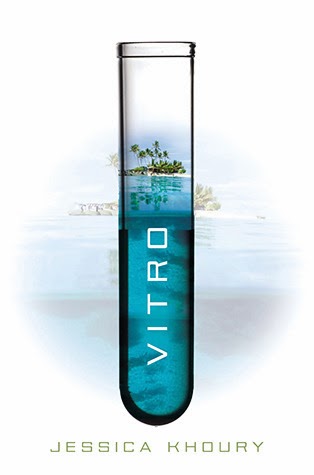
*Vitro by Jessica Khoury (January)

On a remote island in the
Pacific, Corpus scientists have taken test tube embryos and given them
life. These beings—the Vitros—have knowledge and abilities most humans
can only dream of. But they also have one enormous flaw.

Enders by Lissa Price (January)
With the Prime
Destinations body bank destroyed, Callie no longer has to rent herself
out to creepy Enders. But Enders can still get inside her mind and make
her do things she doesn’t want to do. Like hurt someone she loves.
Having the chip removed could save Callie’s life – but it could also
silence the voice in her head that might belong to her father. Callie
has flashes of her ex-renter Helena’s memories, too …and the Old Man
is back, filling her with fear. Who is real and who is masquerading in a
teen body? 

*Elusion by Claudia Gabel & Cheryl Klam (March)
Teens uncover the dangerous secrets of a virtual reality program that’s taking the country by storm.

*Free to Fall by Lauren Miller (May) 
Fast-forward to a time
when Apple and Google have been replaced by Gnosis, a monolith
corporation that has developed the most life-changing technology to ever
hit the market: Lux, an app that flawlessly optimizes decision making
for the best personal results. Just like everyone else,
sixteen-year-old Rory Vaughn knows the key to a happy, healthy life is
following what Lux recommends. When she’s accepted to the elite
boarding school Theden Academy, her future happiness seems all the more
assured. But once on campus, something feels wrong beneath the polished
surface of her prestigious dream school. 

Space Travel
There are a few books coming out in 2014 featuring space travel – perhaps following in the same vein as Amy Kathleen Ryan’s Glow and Beth Revis’ Across the Universe. While they’re set in the future, that future isn’t necessarily a terrible one – but it’s not utopian, either. Most of these books are sequels, but I’d really like to see this trend take off with some new standalones and series starters.

*Avalon by Mindee Arnett (January)
Seventeen-year-old Jeth Seagrave, the leader of a ragtag team of teenage
mercenaries, skirts the line between honor and the law in an attempt to
win freedom for his sister and himself in the form of their parents’
old spaceship, Avalon.

Under Nameless Stars by Christian Schoon (April)
After barely surviving a
plot to destroy her school and its menagerie of alien patients, could
things at the Ciscan cloister get any worse? Yes. Yes they could: Zenn’s
absent father Warra Scarlett has suddenly ceased all communication with
her. Desperate to learn what’s become of him, Zenn stows away aboard
the Helen of Troy, a starliner powered by one of the immense,
dimension-jumping beasts known as Indra.

Starbreak by Phoebe North (July)
The Asherah has finally
reached Zehava, the long-promised planet. There, Terra finds harsh
conditions and a familiar foe—Aleksandra Wolff, leader of her ship’s
rebel forces. Terra and Aleksandra first lock horns with each other . . .
but soon realize they face a much more dangerous enemy in violent alien
beasts—and alien hunters. 

Unravel by Imogen Howson (July)
After Elissa and Lin exposed the government’s secret experiments in Linked,
their home planet Sekoia is thrown into chaos. Determined to do their
part to help the planet they’ve hurt, they return to Sekoia only to
discover that things are far worse that they imagined.

Time Travel
Time travel doesn’t appear to be as big in 2014 as I expected. I only found a few titles.

*The Fifty-Seven Lives of Alex Wayfare by M. G. Buehrlen (March) 
For as long as
17-year-old Alex Wayfare can remember, she has had visions of the past.
Visions that make her feel like she’s really on a ship bound for
America, living in Jamestown during the Starving Time, or riding the
original Ferris wheel at the World’s Fair. It isn’t until she
meets Porter, a stranger who knows more than should be possible about
her, that she learns the truth: Her visions aren’t really visions. Alex
is a Descender – capable of traveling back in time by accessing Limbo,
the space between Life and Afterlife. Alex is one soul with fifty-six
past lives, fifty-six histories.

The Klaatu Terminus by Pete Hautman (April)
In a far distant future,
Tucker Feye and the inscrutable Lia find themselves atop a crumbling
pyramid in an abandoned city. In present-day Hopewell, Tucker’s uncle
Kosh faces armed resistance and painful memories as he attempts to help a
terrorized woman named Emma, who is being held captive by a violent
man. And on a train platform in 1997, a seventeen-year-old Kosh is given
an instruction that will change his life, and the lives of others,
forever. 

Starlight’s Edge by Susan Waggoner (August)
Zee has given up her
entire world to be with David, confident that love and their desire to
be together will overcome all obstacles. But is love enough? Beneath
its lustrous surface and dazzling technology, New Earth is full of
challenges, including David’s wealthy, powerful and highly competitive
family, whose plans for David’s future don’t include anyone like Zee. As
Zee struggles to adapt to her new life, she must also find a way to
re-establish her career as an Empath and fledgling Diviner. And then
when David vanishes on a mission to Pompeii on the eve of the Vesuvius
eruption, Zee realises that he is in mortal danger. Will she be able to rescue
him in time?

Aliens
Aliens are the best, aren’t they? Except maybe when they’re trying to kill you. This seems to be a trend going strong, as many of these titles are new series starters.

*Alienated by Melissa Landers (February)
High school senior Cara Sweeney gets more than she bargained for when
she agrees to participate in earth’s first intergalactic high school
exchange program

*Where the Rock Splits the Sky by Philip Webb (March)
The moon has been
split, and the Visitors have Earth in their alien grip. But the captive
planet? That’s not her problem. Megan just wants to track down her
missing dad…

*Scan by S. E. Fine & Walter Jury (May)
Tate Archer outruns armed government officials as he tries to keep his
now dead father’s strange invention out of the wrong hands – alien hands.

Starbreak by Phoebe North (July)
The Asherah has finally
reached Zehava, the long-promised planet. There, Terra finds harsh
conditions and a familiar foe—Aleksandra Wolff, leader of her ship’s
rebel forces. Terra and Aleksandra first lock horns with each other . . .
but soon realize they face a much more dangerous enemy in violent alien
beasts—and alien hunters. (Also a space travel title)

The Infinite Sea by Rick Yancey (September)
Surviving the first
four waves was nearly impossible. Now Cassie Sullivan finds herself in a
new world, a world in which the fundamental trust that binds us
together is gone. As the 5th Wave rolls across the landscape, Cassie,
Ben, and Ringer are forced to confront the Others’ ultimate goal: the
extermination of the human race. (no cover image available)

Viruses
Viruses – and related maladies – seem to be a thing for 2014. Perhaps people are still nervous about the H1N1 flu from a few years ago. What I find noteworthy about this trend is that not all of these books are set in the future.

The Worlds We Make by Megan Crewe (February)
When Kaelyn and her
friends reached Toronto with a vaccine for the virus that has ravaged
the population, they thought their journey was over. But now they’re
being tracked by the Wardens, a band of survivors as lethal as the virus
who are intent on stealing the vaccine no matter what the cost. (Also a futures that suck title)

*Fire and Flood by Victoria Scott (February)
Tella’s brother Cody is sick and getting worse, so when she finds
instructions on how to become a contender in the dangerous Brimstone
Bleed race where she can win a cure for him, she jumps at the
chance–but there is no guarantee that she will win, or even survive.

Guardian by Alex London (May)
In the new world led by
the Rebooters, former Proxy Syd is the figurehead of the Revolution,
beloved by some and hated by others. Liam, a seventeen-year-old
Rebooter, is Syd’s bodyguard and must protect him with his life. But
armed Machinists aren’t the only danger. People are falling
ill—their veins show through their skin, they find it hard to speak, and
sores erupt all over their bodies. Guardians, the violent enforcers of
the old system, are hit first, and the government does nothing to help.
The old elites fall next, and in the face of an indifferent government,
Syd decides it’s up to him to find a cure . . . and what he discovers
leaves him stunned. (Also a futures that suck title)

*The Young World by Chris Weitz (July)
New
York City is now run by tribes of teenagers, survivors of a mysterious
Sickness that wiped out all adults and little kids. But they’re only
survivors to a point—as soon as they get too old, the
Sickness kills
them, too. The teens who remain are left in possession of the bones of a
modern world that doesn’t work. With resources scarce, conflict is
inevitable, and the teens make sure they are armed to the hilt. The
Young World follows Jefferson, the reluctant leader of the Washington
Square tribe, and Donna, his secret crush, as they rally teens around
them in an effort to find the cure to the Sickness, and change the world
forever. (Also a futures that suck title)

No Dawn Without Darkness by Dayna Lorentz (July)
First–a bomb released a deadly flu virus and the entire mall was quarantined. Next–the medical teams evacuated and the windows were boarded up just before the virus mutated. Now–the
power is out and the mall is thrown into darkness. Shay, Marco, Lexi,
Ryan, and Ginger aren’t the same people they were two weeks ago. Just
like the virus, they’ve had to change in order to survive.

*Conversion by Katherine Howe (July)
First it’s the school’s
queen bee, Clara Rutherford, who suddenly falls into uncontrollable tics
in the middle of class. Her mystery illness quickly spreads to her
closest clique of friends, then more students and symptoms follow:
seizures, hair loss, violent coughing fits. St. Joan’s buzzes with
rumor; rumor blossoms into full-blown panic. Soon the media
descends on Danvers, Massachusetts, as everyone scrambles to find
something, or someone, to blame. Only Colleen—who’s been reading The Crucible for extra
credit—comes to realize what nobody else has: Danvers was once Salem
Village, where another group of girls suffered from a similarly bizarre
epidemic three centuries ago.

Earthquake by Aprilynne Pike (July)
Tavia Michaels has
discovered that she’s an Earthbound—a fallen goddess with the power to
remake the Earth—and that a rival faction of Earthbounds, the Reduciata,
has created a virus that is literally wiping swaths of the planet out
of existence. 

Alternate History, Alternate Universes & Parallel Worlds
I’m happy that this trend is continuing into 2014. I think there’s a lot of possibilities in this subgenre and am eager to see how creative the authors can be.

*The Almost Girl by Amalie Howard (January)
Seventeen-year-old Riven
is as tough as they come. Coming from a world ravaged by a devastating
android war, she has to be. There’s no room for softness, no room for
emotion, no room for mistakes. A Legion General, she is the right hand
of the young Prince of Neospes, a parallel universe to Earth. In
Neospes, she has everything: rank, responsibility and respect. But when
Prince Cale sends her away to find his long-lost brother, Caden, who has
been spirited back to modern day Earth, Riven finds herself in
uncharted territory.

Neverwas by Kelly Moore (January)
At her family’s Maryland home, in a world where colonists lost the 1776
Insurrection, Sarah Parsons and her friend Jackson share visions of a
different existence and, having remembered how things ought to be, plan a
daring mission to set them right.

*The Inventor’s Secret by Andrea Cremer (April)
In an alternate nineteenth-century America that is still a colony of
Britain’s industrial empire, sixteen-year-old Charlotte and her fellow
refugees’ struggle to survive is interrupted by a newcomer with no
memory, bearing secrets about a terrible future. (Also a steampunk title)

*Plus One by Elizabeth Fama (April)
In an alternate United States where Day and Night populations are
forced to lead separate–but not equal–lives, a desperate Night girl
falls for a seemingly privileged Day boy and places them both in danger
as she gets caught up in the beginnings of a resistance movement. (no cover image available)

*Dissonance by Erica O’Rourke (July)
Every time someone makes a choice, a new, parallel world is spun off the
existing one, and Del’s job is to keep the dimensions in harmony.

Robots, Androids & Clones
One of the few places where Kelly’s and my interests intersect, these books all explore what it means to be truly human.

*The Almost Girl by Amalie Howard (January)

Seventeen-year-old Riven
is as tough as they come. Coming from a world ravaged by a devastating
android war, she has to be. There’s no room for softness, no room for
emotion, no room for mistakes. A Legion General, she is the right hand
of the young Prince of Neospes, a parallel universe to Earth. In
Neospes, she has everything: rank, responsibility and respect. But when
Prince Cale sends her away to find his long-lost brother, Caden, who has
been spirited back to modern day Earth, Riven finds herself in
uncharted territory. (Also a parallel world title)

*Expiration Day by William Campbell Powell (April)
It is the year 2049, and humanity is on the brink of extinction. Tania
Deeley has always been told that she’s a rarity: a human child in a
world where most children are sophisticated androids manufactured by
Oxted Corporation.

Mila 2.0: Renegade by Debra Driza (May)

With General Holland
and the Vita Obscura scouring the earth for her whereabouts, Mila must
rely on her newfound android abilities to protect herself and Hunter
from imminent harm. Still, embracing her identity as a machine leads her
to question the state of her humanity—as well as Hunter’s real motives.
Emergent by Rachel Cohn (September)
When Zhara plays, she
plays to win. She thought she had escaped the horrors of Doctor
Lusardi’s cloning compound. But the nightmare is just beginning. Elysia
has taken everything from Zhara-a softer, prettier version of herself
and an inescapable reminder of all she’s failed at in her life. Now the
man Zhara loves has replaced her with Elysia. Zhara will get her clone out of the way, no matter the cost. 
Gothic & Ghost Stories
Setting and mood are paramount in these stories, often featuring ghosts, spirits, or some other connection with the dead.

Fragile Spirits by Mary Lindsey (January)

Paul has been training his whole life to be a Protector. Together he and
his assigned Speaker will help lingering souls move from our world to
the next. But no amount of training has prepared him for Vivienne–a
Speaker with hot pink hair, piercings, and a blatant disregard for rules.
Lych Way by Ari Berk (February)
Silas Umber has
returned from Arvale, his family’s ancestral home, having disturbed the
tormented spirits of his ancient line. Frantic to retrieve the shade of
his beloved Beatrice, he turns his back on the spectral chaos he has
left behind, unaware that the malevolence he unleashed has followed him
back to Lichport.

*Teen Spirit by Francesca Lia Block (February)

Julie wanted nothing more than to feel connected to her deceased
grandmother, but when she actually makes contact with the other side
it’s not her grandmother that responds, but a spirit that has its own
sinister agenda.
Between the Spark and the Burn by April Genevieve Tucholke (August)
The crooked-smiling liar
River West Redding, who drove into Violet’s life one summer day and
shook her world to pieces, is gone. Violet and Neely, River’s other
brother, are left to worry—until they catch a two a.m. radio program
about strange events in a distant mountain town. They take off in search
of River but are always a step behind, finding instead frenzied towns,
witch hunts, and a wind-whipped island with the thrum of something
strange and dangerous just under the surface. It isn’t long before
Violet begins to wonder if Neely, the one Redding brother she thought
trustworthy, has been hiding a secret of his own.

*Servants of the Storm by Delilah S. Dawson (August)

After her best friend dies in a hurricane, high schooler Dovey discovers
something even more devastating–demons in her hometown of Savannah.
  
*Of Metal and Wishes by Sarah Fine (August)
There are whispers of a
ghost in the slaughterhouse where sixteen-year-old Wen assists her
father in his medical clinic—a ghost who grants wishes to those who need
them most. When one of the Noor, men hired as cheap factory labor,
humiliates Wen, she makes an impulsive wish of her own, and the Ghost
grants it. Brutally.
Criminals & Criminal Behavior
Thieves, assassins, mobsters…you know, your usual teen acquaintances. 

Perfect Lies by Kiersten White (February)

Sisters Annie and Fia have had their abilites manipulated by the Keane
Foundation for too long–and now they’re ready to fight back against the
twisted organization that has been using them as pawns.
The Lost Mission by Allen Zadoff (June)
Teen assassin Boy Nobody is sent on a mission to assassinate the head of
a domestic terrorism cell, but his mission turns up more questions
about his job than answers. (no cover image available)
*Illusive by Emily Lloyd-Jones (July)
After a vaccine accidentally creates superpowers in a small percentage
of the population, seventeen-year-old Ciere, an illusionist, teams up
with a group of fellow high-class, super-powered thieves to steal the
vaccine’s formula while staying one step ahead of mobsters and deadly
government agents.

Embers & Ash by T. M. Goeglein (July)

Sara Jane Rispoli is on
the wrong side of the Russian mob, but closer to finding her family than
ever. And she’s willing to do whatever it takes to finally end this
terrible journey even if the price is her own life. The very
cold fury that has seen her through the worst of her troubles is now
killing her; she knows the cure, but she can’t sacrifice the deadly
electricity until she’s rescued her family.

*Some Fine Day by Kat Ross (July)
Sixteen-year-old
Jansin
Nordqvist is on the verge of graduating from the black ops factory known
as the Academy. She’s smart and deadly, and knows three things with
absolute certainty: 1. When the world flooded and civilization retreated
deep underground, there was no one left on the surface. 2. The only
species to thrive there are the toads, a primate/amphibian hybrid with a
serious mean streak. 3. There’s no place on Earth where you can hide
from the hypercanes, continent-sized storms that have raged for decades.
Jansin has been lied to. On all counts. (no cover image available)

Waistcoats and Weaponry by Gail Carriger (2014)
The third book in the Finishing School series featuring a private academy that teaches its pupils etiquette and spycraft in equal measure. (no cover image available)

Mortal Heart by Robin LaFevers (2014)
Annith has watched her
gifted sisters at the convent come and go, carrying out their dark
dealings in the name of St. Mortain, patiently awaiting her own turn to
serve Death. But her worst fears are realized when she discovers she is
being groomed by the abbess as a Seeress, to be forever sequestered in
the rock and stone womb of the convent. Feeling sorely betrayed, Annith
decides to strike out on her own. She has spent her whole life training to be an assassin. Just because the convent has changed its mind doesn’t mean she has. (no cover image available)

Filed Under: Science Fiction, Uncategorized, Young Adult

Looking Ahead to Science Fiction and Fantasy in 2014: Part One

December 19, 2013 |

If you’re at all like me, adding books to your to-read list is almost as fun as the reading itself. Therefore, I present to you: upcoming 2014 YA SFF releases. I’ve combed through publisher catalogs for 2014 science fiction and fantasy titles and grouped them into a few categories that stuck out to me. It’s a great way to add titles to my TBR pile and pick up on trends at the same time. Today’s post, part 1, will focus on fantasy titles (mostly), and tomorrow’s post, part 2, will focus on science fiction titles (mostly).

And because I love all of you, dear readers, I’ve put an asterisk next to each title that is either a standalone or the start of a new series (no catch-up reading required). Most descriptions are pulled directly from Goodreads, but a few come from Worldcat.

Witches
If you like reading about witches, you’re in luck in 2014. There’s nearly a book each month for you.


The Witch is Back by Brittany Geragotelis (January)

After leading her coven into battle against the Parrishables,
teenaged witch Hadley Bishop is looking forward to a relaxing,
love-filled summer with boyfriend Asher, until his ex-girlfriend,
Brooklyn, shows up and a power struggle ensues.

*Half Bad by Sally Green (March)
In modern-day England, where witches live alongside humans, Nathan, son
of a White witch and the most powerful Black witch, must escape
captivity before his seventeenth birthday and receive the gifts that
will determine his future.

*Stolen Songbird by Danielle Jensen (April)
For five centuries, a
witch’s curse has bound the trolls to their city beneath the ruins of
Forsaken Mountain. Time enough for their dark and nefarious magic to
fade from human memory and into myth. But a prophesy has been spoken of a
union with the power to set the trolls free, and when Cécile de Troyes
is kidnapped and taken beneath the mountain, she learns there is far
more to the myth of the trolls than she could have imagined.
*The Wizard’s Promise by Cassandra Rose Clark (May)
All Hanna Euli wants is
to become a proper witch – but unfortunately, she’s stuck as an
apprentice to a grumpy fisherman. When their boat gets caught up in a
mysterious storm and blown wildly off course, Hanna finds herself
further away from home than she’s ever been before. As she tries
to get back, she learns there may be more to her apprentice master than
she realized, especially when a mysterious, beautiful, and very
non-human boy begins following her through the ocean, claiming that he
needs Hanna’s help. (no cover image available)

*Hexed by Michelle Krys (June)
Popular cheerleader Indigo Blackwood, sixteen, finds her perfect life
threatened when Bishop, a tattooed, leather-clad stranger, tells her the
family Bible just stolen from the attic of her mother’s occult shop
could mean the end to all witches, including, he says, Indigo herself.

Witchfall by Victoria Lamb (July)
London, 1554. At the court of Mary Tudor, life is safe for no one. The
jealous, embittered queen sees enemies all around her, and the infamous
Spanish Inquisition holds the court in its merciless grip. But Meg Lytton has more reason to be afraid than most – for Meg is a witch, and exposure would mean certain death.

Sisters’ Fate by Jessica Spotswood (August)
A fever ravages New
London, but with the Brotherhood sending suspected witches straight to
the gallows, the Sisters are powerless against the disease. They can’t
help without revealing their powers—as Cate learns when a potent display
of magic turns her into the most wanted witch in all of New England. 

Other Paranormal/Supernatural Creatures & Human Hybrids
2014 continues the YA love affair with all sorts of creatures from the imagination: fairies, vampires, mermaids, angels, demons, shapeshifters, and even genies. Included are a slew of novels about human/creature hybrids.

*White Hot Kiss by Jennifer L. Armentrout (February)

Seventeen-year-old
Layla just wants to be normal. But with a kiss that kills anything with a
soul, she’s anything but normal. Half demon, half gargoyle, Layla has
abilities no one else possesses. Raised among the Wardens—a race
of gargoyles tasked with hunting demons and keeping humanity safe—Layla
tries to fit in, but that means hiding her own dark side from those she
loves the most. Especially Zayne, the swoon-worthy, incredibly gorgeous
and completely off-limits Warden she’s crushed on since forever.  


*Fates by Lanie Bross (February)
Corinthe, a former Fate and now Executor, responsible for carrying out
unfulfilled destinies on Earth, finds herself falling for Lucas, a human
boy whose death she is supposed to enact as her last act before
returning to Pyralis.

Feral Curse by Cynthia Leitich-Smith (February)
The adopted daughter of
two respectable human parents, Kayla is a werecat in the closet. All she
knows is the human world. When she comes out to her boyfriend, tragedy
ensues, and her determination to know and embrace her heritage grows.
 
Dreams of Gods and Monsters by Laini Taylor (April)
By way of a staggering
deception, Karou has taken control of the chimaera rebellion and is
intent on steering its course away from dead-end vengeance. The future
rests on her, if there can even be a future for the chimaera in
war-ravaged Eretz.


*Rebel Belle by Rachel Hawkins (April)

Seventeen-year-old Harper Price’s charmed life is turned upside down
when she discovers she’s been given magical powers in order to protect
her school nemesis David Stark, who’s an Oracle.

The Forever Song by Julie Kagawa (April)
Allie will embrace her
cold vampire side to hunt down and end Sarren, the psychopathic vampire
who murdered Zeke. But the trail is bloody and long, and Sarren has left
many surprises for Allie and her companions—her creator, Kanin, and her
blood brother, Jackal. The trail is leading straight to the one place
they must protect at any cost—the last vampire-free zone on Earth, Eden.
And Sarren has one final, brutal shock in store for Allie. (no cover image available)

*Stolen Songbird by Danielle Jensen (April)
For five centuries, a
witch’s curse has bound the trolls to their city beneath the ruins of
Forsaken Mountain. Time enough for their dark and nefarious magic to
fade from human memory and into myth. But a prophesy has been spoken of a
union with the power to set the trolls free, and when Cécile de Troyes
is kidnapped and taken beneath the mountain, she learns there is far
more to the myth of the trolls than she could have imagined.

*A Creature of Moonlight by Rebecca Hahn (May)
As the only heir to the
throne, Marni should have been surrounded by wealth and privilege, not
living in exile-but now the time has come when she must choose between
claiming her birthright as princess of a realm whose king wants her
dead, and life with the father she has never known: a wild dragon who is
sending his magical woods to capture her.

Of Neptune by Anna Banks (May)
Emma, who is half human and half Syrena, and her Syrena love, Galen, need time together. Alone. Away from the kingdoms of Poseidon and Triton. Emma’s grandfather, the Poseidon king, suggests the two visit a small town called Neptune.

*The Dark World by Cara Lynn Schultz (May)

Paige Kelly is used to
weird–in fact, she probably corners the market on weird, considering
that her best friend, Dottie, has been dead since the 1950s. But when a
fire demon attacks Paige in detention, she has to admit that things have
gotten out of her league. Luckily, the cute new boy in school, Logan
Bradley, is a practiced demon slayer-and he isn’t fazed by Paige’s
propensity to chat with the dead. (no cover image available)

*Feather Bound by Sarah Raughley (May)
When Deanna’s missing
friend Hyde turns up at his father’s funeral to claim his corporate
empire and inheritance, she is swept into his glittering world of
paparazzi and wealth. But re-kindling her friendship and the
dizzying new emotions along for the ride are the least of her concerns.
Because Deanna has a secret – and somebody knows. Someone who is out to
get Hyde. And if she doesn’t play along, and help the enemy destroy
him…she will be sold to the highest bidder in the black market for human
swans. 

*An Angel Torched My Homework and Other Lies by Miche Sipes (June)
Imagine if vampires,
werewolves, angels and zombies were merely humans with a genetic
mutation . . . could Norms and Differents ever get along? (no cover image available)
 
The Fourth Wish by Lindsay Ribar (July)

When eighteen-year-old Margo McKenna becomes a genie, she must figure
out how her new powers work, deal with having a master who attends her
high school, and try to graduate with her secret under wraps–all while
learning what “forever” really means when your boyfriend is a centuries
old genie.

Sinner by Maggie Stiefvater (July)

Everybody thinks they
know Cole’s story. Stardom. Addiction. Downfall. Disappearance. But only
a few people know Cole’s darkest secret — his ability to shift into a
wolf. One of these people is Isabel. At one point, they may have even
loved each other. But that feels like a lifetime ago. Now Cole is back.
Back in the spotlight. Back in the danger zone. Back in Isabel’s life.
Can this sinner be saved?  


Battle Angel by Scott Speer (August)
With Maddy torn between
two loves, Guardian Jackson and heroic pilot Tom, and Angels and humans
on the brink of an epic war, the Immortal City is more vulnerable than
ever. And when demons descend upon Angel City with the intent to
destroy, the humans don’t stand a fighting chance without the Angels on
their side. 

Teens With Superpowers 
These books feature teens who are fully human, but can do extraordinary things. Some are fantasy, some science fiction.

*Vitro by Jessica Khoury (January)
On a remote island in the
Pacific, Corpus scientists have taken test tube embryos and given them
life. These beings—the Vitros—have knowledge and abilities most humans
can only dream of. But they also have one enormous flaw.

Invisible by Dawn Metcalf (April)
Joy Malone wants it all:
power, freedom and the boyfriend who loves her. Yet when an unstoppable
assassin is hired to kill her, Joy learns that being the girl with the
Sight comes with a price that might be too high to pay. Love will be
tested, lives will be threatened, and everyone Joy knows and cares about
will be affected by her decision to stand by Ink or to leave the Twixt
forever. (no cover image available)

*Sleep No More by Aprilynne Pike (April)
Oracles see the future
but are never supposed to interfere. Charlotte learned that the hard
way. If she hadn’t tried to change one of her childhood visions, her
father would still be alive. Since the accident, Charlotte has
suppressed her visions to avoid making the same mistake. But when she
receives a premonition of a classmate’s murder, she can no longer ignore
her powerful gift. 

 Hunter by Michael Carroll (May)
The defeat of the
near-invincible villain Krodin has left a void in the superhuman
hierarchy, a void that two opposing factors are trying to fill. The
powerful telepath Max Dalton believes that the human race must be
controlled and shepherded to a safe future, while his rival Casey Duval
believes that strength can only be achieved through conflict.

Gasp by Lisa McMann (June)
After narrowly surviving
two harrowing tragedies, Jules now fully understands the importance of
the visions that she and people around her are experiencing. She’s
convinced that if the visions passed from her to Sawyer after she saved
him, then they must now have passed from Sawyer to one of the people he
saved. 

 *Illusive by Emily Lloyd-Jones (July)
After a vaccine accidentally creates superpowers in a small percentage
of the population, seventeen-year-old Ciere, an illusionist, teams up
with a group of fellow high-class, super-powered thieves to steal the
vaccine’s formula while staying one step ahead of mobsters and deadly
government agents.
  

Lair of Dreams by Libba Bray (August)

After a supernatural
showdown with a serial killer, Evie O’Neill has outed herself as a
Diviner. Now that the world knows of her ability to “read” objects, and
therefore, read the past, she has become a media darling, earning the
title, “America’s Sweetheart Seer.” But not everyone is so accepting of
the Diviners’ abilities.

High Fantasy
2014 brings us a good crop of new worlds full of wizards, princesses, kingdoms, political intrigue, and battles.

*Defy by Sara B. Larson (January)
Seventeen-year-old Alexa’s parents were killed by a sorcerer during a
raid, so she has disguised herself as a boy, joined Antion’s army, and
earned a place on Prince Damian’s guard–but Antion is ruled by an evil
king, and “Alex” must find a way to defeat him and protect her prince.

The Queen’s Choice by Cayla Kluver (January)
When sixteen-year-old
Anya learns that her aunt, Queen of the Faerie Kingdom of Chrior, will
soon die, her grief is equaled only by her despair for the future of the
kingdom. Her young cousin, Illumina, is unfit to rule, and Anya is
determined not to take up the queen’s mantle herself. Convinced
that the only solution is to find Prince Zabriel, who long ago
disappeared into the human realm of Warckum, and persuade him to take up
his rightful crown, Anya journeys into the Warckum Territory to bring
him home.

  
The Shadow Throne by Jennifer A. Nielsen (February)

Young King Jaron has had nothing but trouble with his advisors and
regents since he ascended the throne of Carthya, and now King Vargan of
Avenia has invaded the land and captured Imogen–and Jaron must find
some way to rescue her and save his kingdom.
*Stolen Songbird by Danielle Jensen (April)
For five centuries, a
witch’s curse has bound the trolls to their city beneath the ruins of
Forsaken Mountain. Time enough for their dark and nefarious magic to
fade from human memory and into myth. But a prophesy has been spoken of a
union with the power to set the trolls free, and when Cécile de Troyes
is kidnapped and taken beneath the mountain, she learns there is far
more to the myth of the trolls than she could have imagined. [This book is clearly leading the trend pack.]

*Allies and Assassins by Justin Somper (May)
Sixteen-year-old Jared inherits the throne of Archenfield after his
older brother, Prince Anders, is murdered. He relies on the twelve
officers of the court to advise him but soon suspects one of them could
be responsible for his brother’s death and vows to hunt down the killer,
who may be after Jared as well.

Chantress Alchemy by Amy Butler Greenfield (May)
Lucy, a chantress who works magic by singing, is called to court to find
a lost instrument of Alchemy. But her magic isn’t working properly.

Ruin and Rising by Leigh Bardugo (June)
The capital has fallen. The Darkling rules Ravka from his shadow throne. Now
the nation’s fate rests with a broken Sun Summoner, a disgraced
tracker, and the shattered remnants of a once-great magical army. Deep
in an ancient network of tunnels and caverns, a weakened Alina must
submit to the dubious protection of the Apparat and the zealots who
worship her as a Saint. Yet her plans lie elsewhere, with the hunt for
the elusive firebird and the hope that an outlaw prince still survives. (no cover image available)

*The Kiss of Deception by Mary E. Pearson (July)
In a society steeped in
tradition, Princess Lia’s life follows a preordained course. As First
Daughter, she is expected to have the revered gift of sight—but she
doesn’t—and she knows her parents are perpetrating a sham when they
arrange her marriage to secure an alliance with a neighboring kingdom—to
a prince she has never met. On the morning of her wedding, Lia
flees to a distant village. She settles into a new life, hopeful when
two mysterious and handsome strangers arrive—and unaware that one is the
jilted prince and the other an assassin sent to kill her. (no cover image available) [I am so incredibly excited about this one.]

Mythology/Retellings/Classically Inspired
These appear to be perennial favorites: retellings of fairy tales, new twists on ancient legends, stories inspired by myth, and other similar tales with older roots.

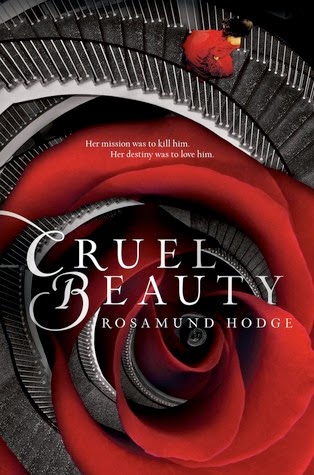
*Cruel Beauty by Rosamund Hodge (January)
Graceling meets
Beauty and the Beast in this sweeping fantasy about one girl’s journey
to fulfill her destiny and the monster who gets in her way-by stealing
her heart.

*Grim (February)
Inspired by classic fairy tales, but with a dark and sinister twist, Grim contains short stories from some of the best voices in young adult literature today: Ellen Hopkins, Amanda Hocking, Julie Kagawa, Claudia Gray, Rachel Hawkins, Kimberly Derting, Myra McEntire, Malinda Lo, Sarah Rees-Brennan, Jackson Pearce, Christine Johnson, Jeri Smith Ready, Shaun David Hutchinson, Saundra Mitchell, Sonia Gensler, Tessa Gratton, and Jon Skrovron.

Cress by Marissa Meyer (February)
Cinder and Captain Thorne are fugitives on the run, now with Scarlet and
Wolf in tow. Together, they’re plotting to overthrow Queen Levana and
prevent her army from invading Earth. Their best hope lies with Cress, a
girl trapped on a satellite since childhood who’s only ever had her
netscreens as company. Based on Rapunzel.

*The Shadow Prince by Bree Despain (March)
Haden Lord, the
disgraced prince of the Underrealm, has been sent to the mortal world to
entice a girl into returning with him to the land of the dead. Posing
as a student at Olympus Hills High—a haven for children of the rich and
famous—Haden must single out the one girl rumored to be able to restore
immortality to his race.

 *Dorothy Must Die by Danielle Page (April)
My name is Amy Gumm—and I’m the other girl from Kansas. I’ve been recruited by the Revolutionary Order of the Wicked. I’ve been trained to fight. And I have a mission: Remove the Tin Woodman’s heart. Steal the Scarecrow’s brain. Take the Lion’s courage. Then and only then—Dorothy must die!

Rain by Amanda Sun (June)
American Katie Green has
decided to stay in Japan. She’s started to build a life in the city of
Shizuoka, and she can’t imagine leaving behind her friends, her aunt and
especially Tomohiro, the guy she’s fallen in love with. But her return
is not as simple as she thought. She’s flunking out of Japanese school
and committing cultural faux pas wherever she goes. Tomohiro is also
struggling—as a Kami, his connection to the ancient gods of Japan and
his power to bring drawings to life have begun to spiral out of control. (no cover image available)

The Strange Maid by Tessa Gratton (June)
Signy Valborn was seven
years old when she climbed the New World Tree and met Odin Alfather, who
declared that if she could solve a single riddle, he would make her one
of his Valkyrie. For ten years Signy has trained in the arts of war,
politics, and leadership, never dreaming that a Greater Mountain Troll
might hold the answer to the riddle, but that’s exactly what Ned the
Spiritless promises her. 

The Island of Excess Love by Francesca Lia Block (August)
Pen has lost her
parents. She’s lost her eye. But she has fought Kronen; she has won back
her fragile friends and her beloved brother. Now Pen, Hex, Ash, Ez, and
Venice are living in the pink house by the sea, getting by on hard
work, companionship, and dreams. Until the day a foreboding ship appears
in the harbor across from their home. As soon as the ship arrives, they
all start having strange visions of destruction and violence.
Trance-like, they head for the ship and their new battles begin. Based on Virgil’s Aeneid. 

Which books are you looking forward to in 2014?

Filed Under: Fantasy, Uncategorized, Young Adult

Independent Study by Joelle Charbonneau

December 13, 2013 |

In The Testing, Cia underwent a series of grueling tests, ending in a Hunger Games-esque survival test that she and a few of her classmates made it through. Then, as is standard with the Testing, all of their memories were wiped, and they were simply told they had passed.

Cia is now a freshman at the university, having successfully passed the Testing, but she remembers nothing of it, at least initially. That means she remembers nothing of what she had to do to pass, and nothing of what her classmates did to each other, either. But she is not home-free yet. She still has rigorous classes which come with their own more standard tests, plus a series of more creative tests that will gauge her creativity, smarts, and ability to work with others. And then she’s assigned to the independent study of the title, which comes with its own surprises and challenges.

Meanwhile, Cia also has the nagging fear that not all is what it seems, and she slowly begins to take notice of an undercurrent of resistance – and it’s pulling her in.

While the first book was an edge-of-my-seat thriller, the sequel is more of a puzzle book. The stakes are still high, but Charbonneau focuses on a series of smaller puzzles rather than a large-scale survival trial. The puzzles are clever, too, both in the way they’re set up by the puzzle-makers and the way they’re solved by Cia and her comrades. Reading about these things is incredibly fun – I found myself thinking “oh, how cool (and also awful)!” several times. This series is full of terrible things happening to children, but I’d be lying if I said it didn’t make me miss school a little bit. (Honestly, I could have just as easily said “High school is full of terrible things happening to children” and it would be just as accurate.)

There’s a whole heck of a lot of dramatic irony in this volume, as Cia and her cohorts’ memories have been wiped, but the readers’ have not (obviously). We know all about the betrayals that went down in the first volume, so for a good portion of this sequel, I was holding my breath, just waiting for other similar betrayals to happen here. I was glad that Charbonneau didn’t give me exactly what I was expecting.

For all its positives, Independent Study requires a bit more suspension of disbelief than its predecessor. For example, instead of a recorder in the students’ ID bracelets (as in the first volume), the adults in charge of their education/tests opted for a simple tracker. This allows Cia and some other students to talk freely, which is necessary to the plot. The problem is it makes no sense for those in power to decide they only need to track the students’ movements and not their conversations. It’s such a blatant plot contrivance and it bothered me.

Independent Study wraps up the main plot points introduced in the book, but it does end on a cliffhanger, as many second volumes do. If this bothers you, I advise you to wait until the third and final volume, Graduation Day, is published in the summer.

Review copy received from the publisher. Independent Study will be available January 7.

Filed Under: Dystopia, Reviews, Uncategorized, Young Adult

“Best of 2013” and “Best of 2012” YA Lists Compared & What We Should Talk About

December 12, 2013 |

On Tuesday and yesterday, I looked at the data about this year’s “best of” lists, as tallied from School Library Journal, Kirkus, Horn Book, Publishers Weekly, and Library Journal’s “Best YA for Adults.” I used almost the exact same metrics as I did in 2012, adjusting a bit for new categories and removing a couple I didn’t necessarily find that interesting or have enough data to pull together into anything worth looking at.

Because I used the same tally sheet and looked at so many of the same factors, I thought it would be worthwhile to compare what the “best of” lists in 2012 looked like against this year’s “best of” lists. Were there any notable differences between the two years? Were there more books considered “best” one year than the other? Was there a big difference in gender representation? What about other factors? If “best of” lists give a snapshot of a year in YA, then what will comparing two consecutive years say about preferences in “best” books? Again, this is all data and nothing conclusive can be said about it, but it is interesting to look and speculate.

In both 2012 and 2013, I used the same criteria to define a YA book. I didn’t look at non-fiction, and I didn’t include graphic novels in the final results. In both years, I also took Amazon’s age rating of the book being for those 12 and older as a standard for “YA fiction.”

Range and Spread of Titles Selected


The first thing that caught my attention when looking at the 2013 data was that it seemed like there were far fewer books being labeled “best of” than there were in 2012. Turns out, my suspicions were correct.

Note that this bar chart begins at 50 and Google won’t let me change it to begin at 0. But it shouldn’t matter, as it’s pretty clear there’s a difference in titles selected: last year, there were 89 unique titles on the “best of” lists. This year, there were only 55.

I decided to look at each publication and compare their number of unique choices last year against this year. Every publication selected more YA fiction last year than they did this year, except for Publishers Weekly, which picked 16 titles this year and only 11 last year. There’s a big difference in Kirkus’s number of choices, where they had selected 82 last year and 42 this year. Repeated titles were included here, as long as it was a unique journal which selected it (in other words, every instance of Far, Far Away counted as an individual title, as long as it was a different journal that picked it).

Even accounting for the non-fiction and graphic novel selections — which were minimal this year, as well — there were definitely fewer books selected as “best of” this year.

Does the fewer number of titles being selected as “best of” suggest that maybe this was a weaker year for YA fiction? Or if that’s not the case, did fewer books stand out and resonate this year among editors tasked with selecting the bests? Most “best of” lists are decided by vote and by the editors of the journals, and I wonder if there’s any correlation between the number of “best of” titles selected and the number of starred reviews earned this year. In other words, did fewer books earn starred reviews in 2013 than in 2012?

Even with Kirkus’s more esoteric selections, as discussed yesterday, there seem to be surprisingly few bests this year. Is this a trend we’re going to continue to see in the coming years or will 2013 be sort of an outlier?

Author Gender and “Best of” Lists


I didn’t keep track of the gender of the main characters in 2012 the way I did in 2013 (part of it having to do with having way more books on the 2012 list), but I did look at the gender of the authors on both sets of lists. For 2012, there were a total of 90 authors and in 2013, there were a total of 55.

In 2012:

There were 72 females and 18 males.

In 2013:

There were 41 females and 14 males.

As can be seen, there was a smaller percentage of female authors in 2013 than there were comparatively in 2012. Eighty percent of the authors in 2012 were female, whereas about 75% were female in 2013.

Although there aren’t hard numbers to represent all of the YA books published as categorized by author gender in these years, it does make me wonder a little bit if there were fewer female authors in 2013. Or were there fewer female-written books that stood out as “best?” It’s a small percentage drop, of course, but it’s an interesting trend, especially when taken in light of the data about the New York Times gender split for their YA list.

Debut Novelists on the “Best of” Lists

Did debut novelists do better in 2012 than they did in 2013 when it comes to being on the “best of” lists? Let’s take a look.

In 2012:

There were a total of 18 debut novelists in 2012, which came to 20% of the total number of authors on the “best of” list.

Compare to 2013:

There were 11 debut novelists in 2013, which also equalled a total of 20% of the authors on this year’s “best of” lists. In other words, no difference in debut novelists on the lists in the last year.

Genre Representation in “Best of” Lists

I mentioned that this year, there was a rise in realistic fiction in frequency of appearance on the “best of” lists. I thought it was notable, as the last couple of years have mentioned that realistic fiction would become “the next big thing,” and the “best of” lists at least suggested that realistic fiction caught more critical attention this year.

But was there a rise in realistic fiction this year as compared to last year? And if so, what was in abundance last year that maybe didn’t show itself as popular among the “best of” lists this year?

Here’s the 2012 breakdown:

Fantasy took up the largest portion of the “best of” lists, though realistic held its own. Last year, when I did the genre breakdown, I made “mystery and thriller” a separate category, which I did not do this year. I suspect if I were to reconsider categories, many of those books would end up under realistic fiction, thus making it about the same size as fantasy in terms of appearances on the list. Historical and science fiction followed in popularity.

There were more historical novels on this year’s “best of” lists than there were in 2012, with roughly 24% of the books falling under that genre. Compare to last year’s 14%. But what’s most notable is that fantasy dropped sharply this year, at roughly 19%, while in 2012, fantasy occupied almost 40% of the “best of” lists. There were also fewer novels categorized as science fiction that appeared in 2013 than in 2012.

Realistic fiction’s presence on the “best of” lists definitely increased, even if the mystery/thriller category is rolled into realistic fiction for 2012’s counts. This year, realistic fiction was nearly 44% of the “best of” lists.

Best of by List Frequency

With the fact there were fewer books on this year’s “best of” list than in 2012, as well as a shift a bit in terms of genre representation, I thought it would also be worth looking at the frequency of titles appearing across multiple lists. There were 5 lists total, and I was curious whether more books would appear more frequently on lists in 2012 or in 2013.

In 2012, here’s what the frequency of books on the “best of” books looked like:

The vast majority of books only showed up on one list, though a good portion also showed up on two lists. Smaller numbers appeared on three and four lists, and there was a single book which appeared on all five of the lists (that went to Elizabeth Wein’s Code Name Verity). For the curious, the books which were on four lists each last year were Vaunda Nelson’s No Crystal Stair, Margo Lanagan’s Brides of Rollrock Island, AS King’s Ask the Passengers, John Green’s The Fault in Our Stars, and Libba Bray’s The Diviners.

Compare to 2013:

There were a smaller percentage of books appearing on a single list this year than last, but there was a pretty big increase in the percentage of books on two lists, as opposed to one list in 2012. That’s percentage-wise, though, of the total number of books across the five lists. Raw numbers show that it was actually only an increase of one book appearing on two lists this year — 11 in 2013, rather than 10 in 2012. Both years saw a total of five books on three lists, though because of the smaller number of books overall on this year’s list, the percentage appears larger.

As mentioned in a previous data post, there were no books this year that ended up on all five of the “best of” lists (except for Boxers and Saints, which was not included in any of the data because I didn’t include it in YA fiction but considered it a graphic novel instead).

So What Does This All Mean?


In the big context of “best of” lists and accolades at the end of any given year in YA fiction, the data doesn’t really say a whole lot. It does, however, give us a picture of what a year in YA looks like. This year, it appears we have fewer female authors penning books considered “best of” (though it’s still a larger percentage than male authors), and we have many more realistic fiction filling out the lists than other genres.

We have fewer books earning multiple spots on “best of” lists, but with fewer books overall, what does that say? Again, the question I keep circling back to and have from the beginning of looking at this data is how much one list impacts another list and how much marketing may influence these things.

This year felt like a noteworthy one when it came to books being sold to readers and sold to readers in a very big way. There appeared to be a lot more money spent on a lot fewer titles, and I wonder how much of that reflects in these “best of” lists. The more a book is sold as a great book, how much more likely are we to believe that?

Even the most objective readers can’t avoid hearing and seeing the buzz about certain books. I’m not suggesting that editorial boards choosing their “best of” are swayed by this kind of marketing, but rather, this kind of marketing really did stick out this year more than other years. Which then leads me to another set of questions that seem to be the ones authors and creative types deal with themselves: do these “best of” list creators stick to their purely objective “best of” picks or do they feel at times pressured to bend to what the popular opinion of the “best of” books might be?

The most popular book this year among the “Best of” selections this year was Rowell’s Eleanor & Park. It was a good book.

But this was also a book that received spectacular marketing and publicity. It got a review in the New York Times by John Green, along with five starred reviews. That wasn’t lost on the book’s marketing, either — how many places was the book heralded as one that John Green himself loved and that other readers would, too? It was SMART. It helped a new YA author, who had only published one book into the adult market prior, gain immense traction and attention very quickly (it didn’t hurt the attention Rowell’s second book out this year received, either, as we were reminded that Green loved her first book in the marketing there, too). Readers have fallen in love with Eleanor & Park over and over, and it showed up on nearly every list this year where adult readers were told it’s okay to read YA because of books like that.

Was it this year’s “best” book? Would this book be seen as this good were it not for all of the marketing behind it? What about without all of the adult praise it earned (you know, it’s a “YA book that is okay for grown ups to read”)? This book was impossible to avoid, whether you were a YA reader or you weren’t a YA reader.

It’s hard not to think about the other books that came out this year that were as good as Rowell’s. But what were they? Are they some of those books Kirkus called out that, yesterday, I questioned as to why they were on the list in the first place? Have I become accustomed to thinking that outliers on these lists indicate a poor choice? Or is Kirkus on to something I’m unaware of because those books have yet to be sold and marketed to me as a reader (or more accurately, as a librarian who buys these books and then sells them to teen readers)?

The smaller the field of “bests,” the more I wonder what was overlooked simply because a few big titles had so much weight behind them.

Of course I have no answers. I just have a lot more questions, and they’re the kinds of questions I like to end a year with because they make me reevaluate my own reading, my own means of book recommendation, and my own personal “favorite” or “best of” lists. How much farther out do I want to reach to find hidden gems? How many of the big books should I make sure I do read because maybe I am missing something big there, too?

As of this writing, I haven’t yet seen the Booklist nor the BCCB “best of” lists, and I’m curious how those will stack up against these lists. Likewise, what will YALSA committees select as best books with their Printz this year, their Quick Picks, or their Best Fiction for Young Adults?

I’d love thoughts and ideas regarding this year’s best of picks, especially as they compare to last year’s. Any thoughts? Do you have any books you wish had seen time on the “best of” lists that didn’t show up? What about books that appeared on the list that make you scratch your head a bit?

Filed Under: best of list, data, Data & Stats, Uncategorized, Young Adult

“Best of 2013” YA List Breakdown, Part 2

December 11, 2013 |

This is part two of this year’s “best of YA” list breakdown. Make sure you read yesterday’s post, or at least the introduction of it, to understand why and how this works. To summarize the key points and to make sense of today’s data, I’ll repeat some of the important details: none of the data presented here is meant to “prove” anything. It’s presented in order to offer some discussion points, to explore trends and themes within the books deemed as the “best” of this year’s YA fiction, and any errors in data tabulation are mine and mine alone (and hopefully, there are few, if none!).

All data is based on 55 book titles, 55 authors, and in situations where discussion turns to main characters in a book, there are 62 identified main characters. All of the data is pulled from five “best of” lists: School Library Journal, Kirkus, Horn Book, Library Journal’s “YA for Adults,” and Publishers Weekly. 
I thought it would be interesting to break down the lists into less “big picture” stuff and into smaller picture stuff. Where yesterday looked at things like presence of books featuring POC or LGBTQ characters, as well as gender breakdowns of both authors and main characters, today I wanted to look at more granular list data. All of my raw data can be accessed here. It’s not necessarily pretty, but I’m happy if people want to use it to draw additional connections between and among “best of” titles. Some of the information I included on the chart did not make my blog posts (there was too little to talk about in terms of print run, genre, and gender, especially compared to last year) and some of it will appear in tomorrow’s comparison post between 2012 “best of” lists and this year’s “best of” lists. 
So with that, let’s dig in.
Month of Publication


Were books published earlier in the year more likely than those published later in the year to make the “best of” lists? Or, because their newness and shininess wore off prior to decision-making time, were they less likely to make the lists?
When it came to books published in the first half of the year (January – June) against those which published in the second half of the year (July – December), here’s the breakdown:

“Best of” books published between January and June came to 25 total titles, while those published between July and December equalled 30. There’s not a major difference between representation of titles in the first half of the year and those in the second half. 
What about breaking it down more? Is there a month where more “best of” books were published? The answer to this one is yes.
The leader of the pack this year is September — thirteen of the books on this year’s “best of” lists were published that month. March had the second highest number of books on the lists, with 7, followed by October and April with six each.
Worth noting in this data is something I’m trying to better understand. On Kirkus’s list, one of the books listed (Nowhere to Run by Claire Griffin) appeared to have numerous publication dates, according to Amazon’s various listings. It was difficult to parse out whether this book was actually published this year or was published last year, since I saw a November 2012 date, as well as a March 2013 date. Kirkus made a handful of choices this year which didn’t make perfect sense to me, and I can’t help wonder if maybe that 2012 publication date was accurate. Either way, I operated as though the book was published in March of this year. 
What about the month of publication for those debut authors? Was there a better month to be a debut author and end up on the “best of” lists? 
There were four debut novels on the “best of” list published in March, followed by two in July and September. April, June, and October had one each. 
Publication Format

I’m always curious whether hardcovers or paperback originals do better on the “best of” lists. There seem to be fewer paperback originals published in YA than hardcovers, but it’s a category I still like looking at. If there is data on this at all, I would love to know about it. 
One thing I wanted to point out in this data was something that interested me with the Kirkus list. One of their titles, Outcast Oracle, appears not to be for sale in a non-e-book format in the general market. I checked both Amazon and Barnes and Noble and it’s only available for purchase as a Kindle or Nook book. I went to the publisher’s website to see if there was indeed a print run at all, and it appears you can buy a paperback copy from the publisher directly. I also hopped onto Baker & Taylor, which is where my library purchases its books (and where a large percentage of public libraries make their purchases) and the book is not available on there in any format. 
Which makes me wonder a little bit about how valuable that title being on the list is, since getting access to it is such a hurdle. You either need an ereader OR you need to purchase direct from the publisher. Will having it on this list give it a bump in sales or encourage an easy way to purchase it? I’ll talk a little bit more about this tomorrow, since it’s fascinating to me what including this particular title might suggest. 
But back to the category at hand: I looked at hardcover books, paperback originals (which is where I stuck the title above), and those books which feature a split run, where both a hardcover and a paperback are published simultaneously. 
There’s no question that hardcover format dominated the “best of” lists, with 52 of the titles published as hardcover. Two books were published as paperback originals, which included both the title noted above, as well as Kelsey Sutton’s Some Quiet Place. One book appeared to be a split run, which was the previously noted Nowhere to Run by Claire Griffin. 
Were there fewer paperback originals published this year? Fewer split runs? Of course, some publishers only do paperback originals (like Flux) and some publishers make it clear their “bigger” titles are hardcover. I’ve yet to figure out what it means when a book is published as split, if anything (this year, a few books that were published split run but weren’t on the “best of” lists include Jody Casella’s The Thin Space, Sarah McCarry’s All Our Pretty Songs, and Hannah Moskowitz’s Teeth). 
Publisher Representation on the “Best Of” Lists

Are there publishers which tend to do better on the “best of” lists? I’ve always had it in my mind that some publishers work on books that are less mainstream, a little riskier, and that those books do tend to be noticed on the end-of-year lists for those things. Candlewick is perhaps the one which stands out most in my mind for this, as well as Lerner/Carolrhoda LAB. 
I’ve flattened all of the imprints into their respective publishers for simplicity’s sake (so, St. Martin’s titles are under Macmillan), and because I wanted it to be readable, I broke it into two charts. Here’s a look at how the various publishers did on the “best of” lists:


I purposefully didn’t do it in a decline since that would mess up the scaling on the charts themselves and I wanted these to be as close to the same scale as possible. But as you can see, Candlewick led the publishers with the most books on the “best of” lists, with a total of 7 titles. Penguin had 6, with 5 titles from Scholastic, 4 from Little, Brown, and 3 each from Harper, Macmillan, Simon & Schuster, and Houghton Mifflin. 
As should be clear, there are a lot of titles on the “best of” list not published by a Big 6/5 publisher (so, not a book published by Harper, Little, Brown, Simon & Schuster, Macmillan, Penguin/Random House). Comparatively, mid/small/indie presses had more titles on these lists: 33 of the books on the “best of” list came from non-Big 6/5 publishers, while 22 did. 
I think this is pretty impressive, especially with Candlewick’s large presence. Carolrhoda LAB had two titles, which is also impressive given how small their seasonal lists are. 
“Best of” Lists and Starred Reviews Earned

Since we know the “best of” books now, is it fair to assume that books which appeared more frequently on the lists tended to have more starred reviews in the six major review journals? 
I pulled the starred reviews from ShelfTalker’s round up of “The Stars So Far” in November. I looked at stars earned from the following publications: BCCB, Booklist, Kirkus, SLJ, PW, and Horn Book. Of course, there’s a lot of leeway and error that can happen here. Not all journals will review all books. Not all journals review the books in a timely fashion, and so there’s a possibility that some of these books will earn stars later. 
Not a single one of the YA novels I looked at had earned stars from all six of those publications, either. 

Among the “best of” books, here’s how the starred reviews broke down:
  • Seven books earned 5 starred reviews
  • Four Books earned 4 starred reviews
  • Thirteen books earned 3 starred reviews
  • Fourteen books earned 2 starred reviews
  • Sixteen books earned 1 starred review 
The breakdown doesn’t surprise me a whole lot, especially because the majority of the books on the “best of” lists came from Kirkus’s list, and they tended to have earned a star from Kirkus. In other words, a lot of single-starred books were the books Kirkus selected as “best” (though certainly not all). 

So what about starred review frequency against the frequency to which books appeared on “best of” lists? Here’s the chart:
List Appearances vs. Star Earnings 5 lists 4 lists 3 lists 2 lists 1 list
6 stars 0 0 0 0 0
5 stars 0 1 2 3 1
4 stars 0 0 1 4 0
3 stars 0 0 1 2 10
2 stars 0 0 1 2 11
1 star 0 0 0 0 16
Again, no books made all five lists, and the bulk of the books fell into the category of landing on one list and earning one, two, or three stars. 


Eleanor & Park
, the book with the most placements on the “best of” lists this year, earned five starred reviews.

Series vs. Stand Alone Titles on the “Best of” Lists

To wrap up the data, let’s look at a simple but worthwhile aspect: do series books do better or worse than stand alone titles on the “best of” lists? This is, I think, impacted pretty significantly by genre of the “best of” books this year, since realistic fiction tends to produce fewer series books than other genres. 
In this data, I included companion and prequels as “series” books (so Rose Under Fire and Invasion were rolled into that data).

Roughly one quarter of the “best of” lists were series books, while three-quarters were stand alone titles. Of those books which were part of a series, there were:
  • two prequels
  • one companion
  • six were the first in a series
  • three were the second book in a series
  • two that were third books. 


Some Concluding Thoughts on the 2013 Data

While I’ve commented throughout on what I think the takeaways or questions are about the data and “best of” lists this year, I did have a couple of other thoughts to share, and I would love if anyone wanted to weigh in on what they’ve seen. I have one final post coming tomorrow that will compare this year’s data with last year’s, which I think will spark some interesting conversation. 
First, it’s worth noting that Kirkus’s list is the lengthiest again this year, and it’s also the most strange. I’m confused by their inclusion of a novel that has been categorized in numerous places, including the publisher’s own catalog, as “middle grade.” That’s Fireborn by Toby Forward. Because Amazon listed the age range as 12 and older, I did include it all of the data, but since it’s a book not published until after the “best of” appeared, I’ll be curious what readers and other critics say is the true age range. To me, it even looks middle grade.
Likewise, Kirkus included more indie press titles (note self-published, but actual indie press) than other publications did. This led me to some of the questions above about Outcast Oracle and it makes me question who their list might be intended for. Any reader who spent time with their list likewise probably noticed it was difficult to parse out their picks from the paid-for advertising of books between their selections, too. If there are more and more titles being selected as “best of” that are difficult to acquire for, say, purchasers at institutions, it makes me wonder how much value the list itself has for users like myself, a librarian who does sometimes supplement collections with titles I may have missed. If it’s a book I cannot get without jumping through hoops, though, why bother? 
On the other hand, the more esoteric choices make me wonder how many gems slip through the cracks each year because they are from smaller presses. Right now, I think we might have a dark horse for YALSA awards, as well as an under-sung gem Chris L. Terry’s Zero Fade.  
Overall, this year’s list had a much smaller range of titles than I thought. Is it because this is a weaker year for YA overall or do the lists have an unintentional (or intentional) impact on one another? Horn Book, for example, only had 5 YA titles included in their “best of,” and LJ’s “YA for Adults” only had three by the criteria I used.

There’s nothing that can be said conclusively, of course. But what makes “best of” lists interesting to look at as data, rather than as something more subjective, is that it lets you consider the year in a snapshot. This might have been a weaker YA year. It may have been the year that male main characters were stronger than female. It may have continued a trend of featuring a small number of LGBTQ characters. It’s also interesting to consider what this “best of” snapshot will indicate in the future, too. Will we have more books of a certain ilk because they’re more likely to perform better?

Stick around for tomorrow’s thoughts and comparisons between this year’s list and last year’s. Although again it won’t make any hard conclusions, it can shed some insight into some of these questions. 

Filed Under: best of list, data, Data & Stats, Uncategorized, Young Adult

  • « Previous Page
  • 1
  • …
  • 111
  • 112
  • 113
  • 114
  • 115
  • …
  • 237
  • Next Page »
  • Facebook
  • Instagram
  • Pinterest
  • Twitter

Search

Archives

We dig the CYBILS

STACKED has participated in the annual CYBILS awards since 2009. Click the image to learn more.

© Copyright 2015 STACKED · All Rights Reserved · Site Designed by Designer Blogs