• STACKED
  • About Us
  • Categories
    • Audiobooks
    • Book Lists
      • Debut YA Novels
      • Get Genrefied
      • On The Radar
    • Cover Designs
      • Cover Doubles
      • Cover Redesigns
      • Cover Trends
    • Feminism
      • Feminism For The Real World Anthology
      • Size Acceptance
    • In The Library
      • Challenges & Censorship
      • Collection Development
      • Discussion and Resource Guides
      • Readers Advisory
    • Professional Development
      • Book Awards
      • Conferences
    • The Publishing World
      • Data & Stats
    • Reading Life and Habits
    • Romance
    • Young Adult
  • Reviews + Features
    • About The Girls Series
    • Author Interviews
    • Contemporary YA Series
      • Contemporary Week 2012
      • Contemporary Week 2013
      • Contemporary Week 2014
    • Guest Posts
    • Link Round-Ups
      • Book Riot
    • Readers Advisory Week
    • Reviews
      • Adult
      • Audiobooks
      • Graphic Novels
      • Non-Fiction
      • Picture Books
      • YA Fiction
    • So You Want to Read YA Series
  • Review Policy

STACKED

books

  • STACKED
  • About Us
  • Categories
    • Audiobooks
    • Book Lists
      • Debut YA Novels
      • Get Genrefied
      • On The Radar
    • Cover Designs
      • Cover Doubles
      • Cover Redesigns
      • Cover Trends
    • Feminism
      • Feminism For The Real World Anthology
      • Size Acceptance
    • In The Library
      • Challenges & Censorship
      • Collection Development
      • Discussion and Resource Guides
      • Readers Advisory
    • Professional Development
      • Book Awards
      • Conferences
    • The Publishing World
      • Data & Stats
    • Reading Life and Habits
    • Romance
    • Young Adult
  • Reviews + Features
    • About The Girls Series
    • Author Interviews
    • Contemporary YA Series
      • Contemporary Week 2012
      • Contemporary Week 2013
      • Contemporary Week 2014
    • Guest Posts
    • Link Round-Ups
      • Book Riot
    • Readers Advisory Week
    • Reviews
      • Adult
      • Audiobooks
      • Graphic Novels
      • Non-Fiction
      • Picture Books
      • YA Fiction
    • So You Want to Read YA Series
  • Review Policy

Reality TV and Documentaries: A YA Book List

January 14, 2014 |

I teased about reality television being a microtrend last summer, but there are even more books that have a significant aspect to them relating to reality TV coming out this year. This is such an interesting trend to me since reality television seemed to have peaked in popularity….quite a while ago. It’s still popular, but it’s waned significantly, so it’s curious how it’s now peaking in YA fiction.

Here’s a look at teens and reality tv (with a side of teens and documentary films) past, present, and future. Not all of these are contemporary/realistic YA fiction — there’s a little bit of genre dipping, as well. In fact, of all the books tackling reality television, I think taking that to an alternate world could be most interesting and compelling.

All descriptions are from WorldCat, unless otherwise noted. If you know of others, either already out or to be published soon, feel free to add to this list. I didn’t limit my list to a time frame, since I think some of the older titles on this list could be really interesting to read and compare to more current offerings.
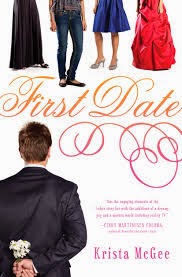
First Date by Krista McGee: Addy Davidson finds herself on a reality dating show with the first prize a prom date with the President’s son and, although initally not interested in winning, Addy finds herself increasingly drawn into the game.

Flash Point by Nancy Kress: Amy had dreams of going to college, until the Collapse destroyed the economy and her future. Now she is desperate for any job that will help support her terminally ill grandmother and rebellious younger sister. When she finds herself in the running for a slot on a new reality TV show, she signs on the dotted line, despite her misgivings. And she’s right to have them. TLN’s “Who Knows People, Baby–You?” has an irresistible premise: correctly predict what the teenage cast will do in a crisis and win millions. But the network has pulled strings to make it work, using everything from 24/7 hidden cameras to life-threatening technology to flat-out rigging. Worse, every time the ratings slip, TLN ups the ante. Soon Amy is fighting for her life–on and off camera.

Girl Out Loud by Emily Gale: Fifteen-year-old Kass is trying to resist her manic-depressive father’s attempts to make her try out for “The X Factor” while she also deals with her crush on the same older boy her best friend likes, her distant mother’s mysterious comings and goings, and her younger brother’s criminal activities.

How I Got Skinny, Famous, and Fell Madly in Love by Ken Baker (April 22): “Thick. Heavy. Big boned. Plump. Full figured. Chunky. Womanly. Large. Curvy. Plus-size. Hefty.” To sixteen-year-old Emery Jackson, these are all just euphemisms for the big “F” word—”fat.” Living on a Southern California beach with her workout fiend dad, underwear model sister, and former model mother, it is impossible for Emery not to be aware of her weight. Emery is okay with how things are. That is, until her “momager” signs her up for Fifty Pounds to Freedom, a reality show in which Emery will have to lose fifty pounds in fifty days in order to win the million dollars that will solve her family’s financial woes. Emery is skeptical of the process, but when the pounds start to come off and the ratings skyrocket, she finds it hard to resist the adoration of her new figure and the world of fame. Emery knows that things have changed. But is it for the better? (Description via Goodreads). 

Infamous by Lauren Conrad (“Fame Game” series): Kate and Carmen are about to become big stars, but they’re going to have to survive some backstage drama first. Madison is learning hard lessons about fame as she deals with backstabbing ‘friends’ and family, out-of-control paparazzi, and a scandal reported in every tabloid.

L. A. Candy by Lauren Conrad (“L. A. Candy” series): When nineteen-year-old Jane Roberts is cast in a new reality show, she discovers that the fame and fortune of her new life come at a high price to herself and her friendships. 

Lights, Camera, Quince by Veronica Chambers (“Amigas” series): Carmen is turning fifteen and her friends Sarita, Alicia, Jamie, and Gaz plan to throw her a quinceañera; but when the group decides to join a reality show competition, Carmen feels like her party is becoming less important.

Pizza, Love, and Other Stuff That Made Me Famous by Kathryn Williams: Although sixteen-year-old Sophie has grown up working in her family’s Mediterranean restaurant in Washington, D.C., she is not prepared to compete on the new reality show, Teen Test Kitchen, when her best friend Alex convinces her to audition.

Premiere by Melody Carlson (“On the Runway” series): When two sisters get their own fashion-focused reality television show, vivacious Paige is excited, but Erin, a Christian who is more interested in being behind the camera than in front of it, has problems with some of the things they are asked to do.

Reality Boy by A. S. King: An emotionally damaged seventeen-year-old boy in Pennsylvania, who was once an infamous reality television show star, meets a girl from another dysfunctional family, and she helps him out of his angry shell. 

Reality Check by Jen Calonita: When a television executive signs Long Island sixteen-year-old Charlie and her three best friends to be the stars of a new reality television show, their lives are suddenly not the same.

Rumor Central by Reshonda Tate Billingsley (series): After appearing on the reality show “Miami Divas,” Maya Morgan is offered her own television show, but stepping up to the fame means spilling secrets about her friends, and someone will do anything to shut her up. (This series, while new, does so well at my library with teens). 

Simply Irresistible by Jennifer Banash: With rivals Casey and Madison set to star in their own reality show, Madison ponders just how much of her life of privilege she wants to reveal, while Casey wonders how much of her luxurious New York City lifestyle is an illusion.

Something Real by Heather Demetrios (February 4): Since the cancellation of her family’s reality television show, seventeen-year-old Bonnie Baker, one of twelve siblings, has tried to live a normal life with real friends and a possible boyfriend, until her mother and the show’s producers decide to bring “Baker’s Dozen” back on the air.

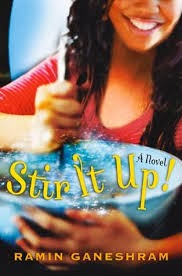
Stir It Up! by Ramin Ganeshram: Thirteen-year-old Anjali dreams of hosting a televised cooking show featuring foods based on her Hindu and Trinidadian heritage, but when an opportunity presents itself, she will have to defy her family to go to the audition. Includes recipes.

Taste Test by Kelly Fiore: While attending a New Hampshire culinary academy, North Carolina high schooler Nora suspects someone of sabotaging the academy’s televised cooking competition.

The Real Prom Queens of Westfield High by Layrie Boyle Crompton (February 4): High school senior Shannon Depola, who could use a popularity makeover, instead gets a beauty makeover as a contestant for a million dollars on the hidden-camera reality show, The Prom Queen Wannabees.

The Real Real by Emma McLaughlin and Nicola Kraus: When Hampton High senior Jesse is cast in a reality television show along with five other, more popular students, drama on and off screen reveals that what the audience and producers want is not the same as what Jesse wants.


Trash Talk by Cherie Bennett and Jeff Gottesfeld: Six girls and guys are invited to be part of a reality television program in New York but the real drama goes on behind the cameras.

The Vigilante Poets of Selwyn Academy by Kate Hattemer (April 8): When a sleazy reality television show takes over Ethan’s arts academy, he and his friends concoct an artsy plan to take it down

Watch Me by Lauren Barnholdt: When Ally Cavanaugh, a freshman at Syracuse University, gets picked to spend the year as part of a reality television show she soon learns that people are not always as they seem, and that love may not conquer all.


You Don’t Know Me by Sophia Bennett: Me and Rose. In a band. Singing together, all the way to the live finals of Killer Act. Only to be told one of them must go. But no girl would drop her best friend in front of millions…Would she? If this is fame, it sucks. Everybody is talking about us, but nobody knows the truth. It was all so good. Sasha and Rose. Best friends in a band, singing together. Right up to the finals of Killer Act when the judges tell them one of them must go. Suddenly their friendship is put to the ultimate test. On TV in front of millions . Two girls. One huge mistake. Can they ever forgive each other?

You Look Different in Real Life by Jennifer Castle: Five teens starring in a documentary film series about their ordinary lives must grapple with questions of change and identity under the scrutiny of the camera. 

For Real by Alison Cherry (December): Shy, cautious Claire has always been in her confident older sister’s shadow. While Miranda’s life is jam-packed with exciting people and whirlwind adventures, Claire gets her thrills vicariously by watching people live large on reality TV. When Miranda discovers her boyfriend, Samir, cheating on her just before her college graduation, it’s Claire who comes up with the perfect plan. They’ll outshine Miranda’s fame-obsessed ex while having an amazing summer by competing on Around the World, a race around the globe for a million bucks. Revenge + sisterly bonding = awesome. But the show has a twist, and Claire is stunned to find herself in the middle of a reality-show romance that may or may not be just for the cameras. This summer could end up being the highlight of her life… or an epic fail forever captured on film. In a world where drama is currency and manipulation is standard, how can you tell what’s for real? (Description via Goodreads). 

Filed Under: book lists, Uncategorized, Young Adult

YA Reissue Cover Makeovers — Updating for New Readerships

January 13, 2014 |

Reissues of older YA works — those that have gone out of print, as well as those still in print but dated — aren’t a new concept. But as YA continues to grow and authors who were publishing before things heated up find themselves becoming more well-known, more older titles are seeing their covers getting facelifts. Sometimes, the reissue/redesigns come at a key anniversary for the book, as a means of introducing it to new audiences, and other times, these can come when a related book to a series appears, and the new look is meant to revive interest in it.

These reissues and redesigns typically fit newer trends in design and appeal to today’s market. Unlike mid-series redesigns, where the second book in a trilogy gets a new look and that new look carries throughout the rest of the series, these books are titles that have been out already but are getting entirely new looks through and through. An example of reissue and redesigned books you might be familiar with are the reworked Ellen Hopkins books, which maintain a lot of elements of the initial book covers, but they also appear new and fresh.

I find knowing about redesigns is helpful and worthwhile because it can help me make a decision when I’m weeding and updating the YA collection at work; if I know something is being redesigned and will have a wider appeal than the books I have, I might choose to weed and replace. Likewise, it’s helpful when I’m missing book two in a trilogy, as I might then choose to weed them all and replace with the updated look. It seems like 2014 is a big year for these reissue redesigns, so I thought it’d be interesting to round up a bunch of ones I’ve noticed recently and talk about whether they hit the mark or miss it.

Did you know this year marks the 40th anniversary of Robert Cormier’s The Chocolate War? You might remember last year’s read along, and one of the things I talked about was the evolution of the book’s cover. I think the reissue for the 40th anniversary on the right is excellent. It captures the mood and spirit of the book and doesn’t date it in the least. I love the font treatment for the title especially. The reissued cover will be out in late spring this year.

Though I think that Philip Pullman’s “His Dark Materials” series might be more middle grade than YA, I wanted to include this series in my post because the redesign it’s getting this spring ages it up a bit. The original covers above are illustrated and look quite juvenile. While they look appropriate for the readership, they also look dated. They look like books from the late 1990s (and early 2000s).

This isn’t the first redesign for the series, but another one done to keep it fresh and of interest to readers. But this one certainly looks current and maybe helps age up the series too. The lack of illustrations and focus instead on an iconic image helps that. These covers will hit shelves in April.

Did you know that Lauren Myracle’s ttyl turns ten years old this year? It doesn’t seem like they came out that long ago, but they did. The above are the original covers, and this year, in honor of the tenth anniversary, they’re being reissued with new covers. And I think the new covers are excellent.

The covers are nearly identical to the originals — right down to the color — but they’ve been updated to look more clean and modern. The emoticons are in today’s style, and the font used for the titles is much more in line with today’s design trends. The biggest change is that Myracle’s name is much larger, but it makes sense: she’s really become a well-known name in YA since these books came out. Perhaps due in part to these very books.

The original coves of Garth Nix’s Abhorsen series are above. They’ve changed a little bit over the years, though these are the covers which stick out in my mind whenever I think about them — the series came out when I was in high school.

In June, these are the covers the series will be getting. They’re not bad, but they remind me a lot of the “iconic” covers of Suzanne Collins’s The Hunger Games series. It’s a smart move since the covers might be more timeless and they certainly fit a trend going on right now, though they might also blend in because of that. I do think it’d introduce the series to new readers since they look fresher than the originals.

If you remember these covers for Ann Brashares’s Sisterhood of the Traveling Pants series, you’re probably of a certain generation. They’re illustrated with nary a real girl on them.

A few years ago, they got a facelift to include actual girls with pants that look like this:

These redesigns looked like a lot of other contemporary books featuring female main characters of the time. They also looked a lot older than the original covers, which I think was — and is — on trend with how a lot of YA books are designed.

This series is getting another new look this April, as the paperbacks are being relaunched in anticipation of Brashares’s new YA book.

The redesigns are certainly in line with current cover trends: we have a font-driven design. Aside from the bright colored font, though, I think the new covers are really boring. They’re minimalist, which I tend to like, but I think they blend too much into the landscape. There’s nothing that makes them stand out (that could be said about the second set of covers I linked to, too, which I think still are appealing to teen readers). Is it me or is there some weird photoshopping going on in the third cover with the butt of that girl’s jeans?

What’s most interesting to me is that the author is introduced as the author of The Here and Now. She’s no longer called the New York Times Bestselling author of this very series (as she was in the first set of covers).

The last series of redesigning come from Tom and Laura McNeal. Tom McNeal, as you may or may not know, wrote Far, Far Away last year, which garnered quite a bit of attention. I like the way they’re going to recover and reissue his and Laura’s backlists. The new looks are much fresher and appealing to today’s readers — older covers are on the left with the new covers on the right.

I especially like the new look to Zipped — it has an entirely different vibe and I want to pick it up.

The reissued covers will be available June 10.

These aren’t the only redesigned/reissued covers we’ll be seeing in the new year. Keep an eye out for even more of Judy Blume’s books to be redesigned (the first two have been revealed already over here) and Maggie Stiefvater’s Shiver series is getting a bit of a facelift (it’s primarily in color saturation, and you can see those redesigns here).

If you’re a fan of the Anne of Green Gables series, you might already know that Sourcebooks will be reissuing those, as well. It’s worth checking out the covers they’re using, too, which you can see the first two covers of here.

Any of these stand out to you as winners? Any you think were better in their original looks? I’d love to know, too, if you know of other reissues coming out this year.

Filed Under: aesthetics, cover designs, Uncategorized, Young Adult

One Old, One New, and One Coming Soon: Three Recent Contemporary Realistic YA Reads

January 10, 2014 |

Since I’ve finished my committee reads, I’ve had time to finally read for me. I could write lengthy reviews on each of these, but sometimes that feels like more pressure than enjoyment. And my idea of short is longer than most people’s anyway. In this set of reviews, I’ve got a book coming out today, a book that’s been out for a few years, and a book that’ll be out next month. They’re very different in topic, but all are contemporary/realistic YA.

The Impossible Knife of Memory by Laurie Halse Anderson (out this week)

Like you’d expect of Anderson’s work, this is well-written, compelling, and tackles the issue of the impact of PTSD not only on the sufferer — who happens to be the father character — but also on those who are related to or have a relationship to the sufferer. This is emotionally-gripping, and I thought that Anderson really knocked it out of the park with Hayley’s snarky yet pained voice at the beginning of the book. That voice made the book for me, and it gave a real sense of the anguish she felt as her father’s primary caregiver. But when Hayley met Finn and began a relationship with him, her edge dulled significantly. In many ways, this makes perfect sense: she finally has someone she can talk to, relate to, and having that romance is an anchor for her. I found myself less invested in Hayley and more invested in her father’s well-being when it seemed like her voice shrunk.

Some of the plot points in the story were a little underexplained for me, as well. I needed to know more about the step-mother/not-a-step-mother who had been part of the reason Hayley and her father chose a life on the road in the first place. Was she an enemy? Was she to be trusted? Because by the end of the story, Hayley herself wasn’t entirely sure, but she was almost too willing to trust. Given the anger which Hayley had described their relationship, it seemed too easy and convenient, and I think part of that goes back to Hayley’s voice being tamped down.

The biggest let down, though, was the ending. It wrapped up far too quickly, far too easily, and the pacing in the final 15 pages of the book was way off. While the story itself spanned a few months at the beginning of the school year, once the Big Event happened at the end of the story (one that ultimately changes Hayley and her father’s relationship and both of their relationships with his PTSD), nearly a year blows by in just a few pages.

The Impossible Knife of Memory has a lot of tragedy in it, and at times, it felt a little bit too much. Hayley also abandons her best friend when she’s in need — her parents are going through a big divorce — and she does so not to help her father, but in favor of strengthening her relationship with Finn. It felt a little bit out of character for her, and given how much time speeds by in those last pages, I never got to know what happened with that plot thread nor if their relationship ever came back together. That said, it’s Laurie Halse Anderson, and it’s a solid contemporary YA novel. Readers who love her will pick this up and enjoy it, despite the weaknesses. Those who are new to Anderson, though, may want to start somewhere else. This is a nice addition to stories of PTSD, and interesting to me is that it publishes at the same time as Lucy Christopher’s The Killing Woods, which also tackles a father’s PTSD on his daughter. They’re nice companions to one another.

Making the Run by Heather Henson

I decided to pick this one up after reading through this list of YA recs and realizing I’d never even heard of it. It’s been out for a little over ten years, but topically, it’s as relevant as ever.

Lu’s mother died too young, and she’s been grieving that loss for a long time. It’s the end of her senior year and she cannot wait to leave her small town of Rainey, Kentucky, but when her older brother’s best friend Jay returns to town after his own leaving-after-high-school trip, Lu begins to fall for him. Add to that a best friend whose life is changed dramatically by one bad decision and then changed even further by an accident, Lu wonders if she’s destined to ever get out of Rainey or not.

Henson created a really angry girl in this story, and I thought that anger came through brilliantly. Jay says to her at one point that she either needs to use her anger or her anger will use her, and I felt that summed up the trajectory of Lu’s journey. The setting was palpable, and I appreciated that Henson allowed Lu to have hopes and dreams of getting out of Rainey that weren’t dependent upon her getting a scholarship and going to college. Lu’s only an okay student, and she doesn’t want to do that. She puts her passion into her photography, and while she doesn’t know if there’s a future in it, she’d rather spend time in her basement studio than hitting the books. It was refreshing to read a story where “the future” and “getting out” weren’t bound up entirely in the idea of college.

I didn’t feel like the rest of the characters were fleshed out quite enough, though. I never found what made Jay attractive, and while I felt bad for what happened to Lu’s best friend, I found all of the ancillary characters to be merely filler. None of them felt like they had lives of their own but were instead names. In context, it made sense since that’s all they were to Lu, but it made for a bit of a drag on the story.

This felt very real to me, in a way that I think a lot of current stories about middle class or lower middle class teens don’t. There’s not always a golden ticket out. Kids who want out have to consciously choose to do that sometimes, and I felt Lu’s struggles at the end about whether she could do it or not do it were authentic. I’d pass this book off to teens who love photography, who might not be the kinds of kids who are university-bound but still have dreams and aspirations, and it’s definitely the kind of story teens who live in similar towns and want nothing more than to get out will completely get.  I could see readers who dig gritty stories in the vein of Gail Gailes, Heidi Ayarbe, or maybe even Ellen Hopkins. It’s older, but it is definitely not dated.


Faking Normal by Courtney Stevens (available February 25)

The reviews are likening this to Anderson’s Speak or to Sarah Dessen, but I had a lot of issues with this tackling of rape What could have been a powerfully rendered story about secrets, lies, and the long-term effects of being a rape victim were instead marred by the fact this book was much more a whodunit than it was a fully-fleshed, rich, pained account of the after effects of what Alexi went through. Readers are lead astray more than once on who the criminal was here, and it was unnecessary because it removed the power and immediacy of what happened to Alexi away from her. Readers instead wonder if it was this football player, that football player, or someone else entirely. Alexi knows fully who it was, so this isn’t about her figuring it out.

More than that, it became far too obsessed with Kool Aid boy and Captain Lyric (who are the same person, which is a spoiler but not a spoiler than anyone who reads a few pages wouldn’t guess), and the story ends up allowing Alexi’s new romantic interest to steal her story of survival. He even takes the opportunity to tell her best friend what happened, despite the fact Alexi herself hadn’t felt comfortable doing so.

The story is set in the south, and it reads with that very southern feel in terms of some of what the characters say and how they act. There’s nothing wrong with it, and it in fact enriches a lot of the story and characters. I forgave some of the weirdness the teens had around Kool Aid boy, who liked to dye his hair with Kool Aid, as simply something that teens where they lived did. Perhaps it was weird to them a boy would want to color his hair in weird ways (I grew up in the Chicago suburbs and teens did it every day so it was never noteworthy — perhaps here it was).

However, there are a lot of awkward turns of phrase, and there are entire passages that needed some tighter editing. Again, I think a lot of this happened because this book didn’t know what it wanted to be. Was it meant to be an exploration of the way a survivor survives? If that’s the case, I never got to know what it was Alexi was really thinking or feeling. There was a lot of talking around how things were or talking through how things were, rather than talking about the things themselves. For example, Alexi took out her pain by scratching the back of her neck, but as readers, we’re never privy to how that felt or the things Alexi experienced prior to doing it or in the moments while it happened. She simply told us she did it and she worried about having blood found somewhere or being discovered with her hair pulled up. There’s not an immediacy to it.

What bothered me was that Alexi didn’t get her own story here — it kept being moved or displaced or handed over to someone else. And when she did get her own story, it didn’t always make sense. The first football player she went on a date with also tried to assault her and she left the situation very angry about it. After accepting an apology, she then later thought that he was Captain Lyric and then changed her mind about his intentions all along. I had a hard time suspending disbelief about the relationship dynamics between Alexi’s sister and fiance, especially at the end of the story. Moreover, I thought that when the reveal happened and we learn the identity of Alexi’s rapist. I had an even harder time buying that the criminal had never done anything in the prior ten years that would have roused suspicions where they should have been roused. It’s not that Alexi is being blamed here — far from it. It’s simply a matter of actual statistics.

I wanted more from this book and I needed less, too. Faking Normal had some charm to it, and I thought that Kool Aid boy was pretty interesting. His backstory was compelling, despite the fact I thought it was convenient how he and Alexi ended up spending so much time together. I thought Alexi herself really was pained and that what happened to her hurt her not only on a personal level but it hurt her because of the implications it would have for other people. She cared deeply about other people in a way that I think many readers will relate to — you can’t always stand up for yourself when you worry about the repercussions for other people not directly involved with something.

This is a worthwhile book because of what it tackles, but it’s not the best in the field. I think the comparisons to Anderson and Dessen are a little heady, and part of me wonders if those comparisons are based because of topic more than the actual exploration of story or the writing itself.

Review copies of The Impossible Knife of Memory and Faking Normal from the publisher. I purchased my copy of Making the Run. 

Filed Under: Reviews, Uncategorized, Young Adult

Get Genrefied: Short Stories

January 6, 2014 |

Every month last year we featured a genre or a format of YA fiction, talked about the defining characteristics, resources for learning more about them, and then a book list of current titles. If you go back and check out last month’s guide on humor, you can get through to all of the guides before. Because we enjoyed writing the series, we’re continuing it this year, and we have twelve new genres and/or formats to tackle. To kick it off, we’re going to start with the short story.

Like graphic novels, short stories are a format, rather than a genre, since they can be written in any genre. Short stories can be fiction or non-fiction; there are short stories that are more about personal experiences (think very short memoirs) and they’re non-fiction. They may also be written and illustrated in graphic format. 

Short stories are shorter in length than a novel or a novella, though the word counts on what defines each of those varies. The Science Fiction Writers of America define a short story as being under 7,500 words, a novelette as a story between 7,500 and 17,500 words, a novella as a story between 17,500 and 40,000 words and a novel as something over 40,000 words in length. These aren’t strict rules or laws, and there’s a lot of flexibility and leeway, but they give a general idea of how short stories differ from novels.

There’s not a huge market for short stories in the YA world. The bulk of YA short stories are published in anthologies, which contain stories written by more than one author and they either revolve around a theme, a mood, or a genre. There are a few notable authors who write entire books of short stories, as well — Margo Lanagan quickly comes to mind. Over the last few years, there’s been a trend toward more publishers having authors of well-known and popular series write short story companions set within the worlds of their books. The bulk of these have been produced as e-originals, releasing at various times during the first runs of the series; most of the time, they’re meant to be extras and aren’t essential to understanding or enjoying the series. Veronica Roth’s Divergent series, for example, has a handful of short stories and all of them are e-only. Lauren Oliver’s Delirium series included a handful of short stories, but rather than keep them exclusively electronic, they were bound up and republished in print form.

Sometimes short stories can be published entirely online, as a means of giving fans a bit more or as a way of getting those who haven’t read the author’s work to try it — for example, there’s an e-short story by Courtney Summers to her book Fall for Anything told from the perspective of the main character’s best friend available on the publisher’s webpage. Other times, short stories can be included as a bonus in a release of a new print edition of a book — the paperback editions of Malinda Lo’s Huntress and Marissa Meyer’s Cinder, as well as the paperback of Kiersten White’s Mind Games include extra material in them. The paperback of Tiffany Schmidt’s Send Me A Sign will include a bonus story told from the point of view of one of the main male characters. Sara Ryan’s Empress of the World included bonus short stories in comic form, as well as other extras, and those were included in the book’s reissue, rather than in its initial paperback release.

The YA novella arena has been growing, thanks in part to these digital companions to popular series books. Harper Teen Impulse is an entire line of YA novellas written by well-known YA authors that are either somehow related to the author’s novels, re-worked pieces from prior anthology inclusions, or are entirely brand new material. Bloomsbury published a series of e-novellas that coincided with Sarah J. Maas’s Throne of Glass series. These were originally e-only, but they will be put to print later on this year. Penguin did a prequel novella to Marie Lu’s Legend series, too, which is an e-only title.

YA short stories can also be found in other places, as well. One Teen Story is a journal dedicated to exactly what it says: publishing one teen short story. The journal publishes one issue — and one story — nine times a year. It’s very much like a zine in shape, size, format, and appearance. Cicada, as well as Sucker Literary, also publish YA short stories. There are also places like the Young Adult Review Network (YARN) that publish short stories. YARN is particularly interesting because readers may be familiar with some of the names of authors who publish short stories or poetry there; many have also published novels that are familiar.

All of these sources vet their submissions and the stories go through some sort of editorial process, so not just anyone can share something they’ve written. I recommend spending some time reading YA Highway’s post about literary journals, as they offer even more outlets for finding YA short stories.

For readers who are eager to read short stories, there are many places and outlets in which to find them. It’s a format that’s adaptable to print, to digital, and to books, as well as magazines and online journals, publishers websites, and more. For books which are doing exceptionally well with readers, it’s more than worthwhile to develop a reading guide to places where fans can find more stories. Perhaps noting this in a circulating copy of the book would help guide readers to more work they’d enjoy. If you work in a library that circulates e-readers to teens, one way to offer those e-original short stories or novellas would be to purchase them for that device and catalog the titles as being available on the e-reader.

There aren’t any specific short story writers associations, though there are awards and honors for well-done short stories offered through many outlets. Likewise, there aren’t a lot of solid short story resources which include reviews or discussions of the format for YA. Bloggers who review short stories tend to review anthologies as they’re published, often discussion the individual stories on their own and within the bigger context. Books of short stories tend to be reviewed in traditional sources, as well. It’ll be interesting to see what happens as e-only novellas and short stories continue to emerge: it’s a trend that I see value in but question audience for (teens who have the technology and teens who have access to credit cards to use aren’t necessarily large nor overlapping groups).

Here’s a look at a number of YA short story collections from the last few years, as well as a preview of a few to come soon. All descriptions are from WorldCat, though much of the description of the anthologies are pretty straightforward from the titles. If you know of others published in the last five or so years, feel free to add them to the comments! 

Defy the Dark edited by Saundra Mitchell: Seventeen original stories that take place in the absence of light.

Extremities by David Lubar: A group of high school girls takes revenge on their sadistic gym teacher in the most fitting way possible. Two stowaways find themselves on a ship for the dead. An ancient predator stalks the wrong victim. Here are thirteen tales of death, murder, and revenge. 

Shards & Ashes edited by Melissa Marr and Kelley Armstrong: Original stories of dystopian worlds from New York Times bestselling authors.

After edited by Ellen Datlow and Terri Windling: An anthology of nineteen tales by well-known authors of young adult and adult literature which explore the lives of teens raised after a catastrophe, either in the first few years after the change or in the distant future.

Unnatural Creatures edited by Neil Gaiman: A collection of sixteen stories introduces a host of strange, wondrous beings that have never existed anywhere but in the imagination, with stories from Neil Gaiman, Diana Wynne Jones, and E. Nesbit.

Yellowcake by Margo Lanagan: A collection of ten short stories of unusual people, places, and events, including reimagined classic tales and original works, most of which were previously published.

Brave New Love edited by Paula Guran: Presents a collection of fifteen stories about finding romance and danger in repressive, futuristic societies by such authors as Steve Berman, Jesse Karp, Diana Peterfreund, and Amanda Downum.

Cornered: 14 Stories of Bullying and Defiance edited by Rhoda Belleza: An anthology of fourteen stories illuminates the experiences of being bullied in today’s world, in a volume that includes contributions from such established writers as Kirsten Miller, Jennifer Brown, and James Lecesne.


The Curiosities by Maggie Stiefvater, Tessa Gratton, and Brenna Yovanoff: An anthology of darkly paranormal stories, with comments by the authors on their writing process. 

Faery Tales & Nightmares by Melissa Marr: A collection of short stories featuring tales of characters from the Wicked Lovely novels that mix with accounts of new characters.

Guys Read: Funny Business edited by Jon Scieszka: A collection of humorous stories featuring a teenaged mummy, a homicidal turkey, and the world’s largest pool of chocolate milk. (“Guys Read” is an entire series of short story anthologies). 

Starry, Starry Night by Lurlene McDaniel: A collection of three stories in which teenagers face life-altering situations. (This is an older anthology but it recently got a facelift). 

Geektastic: Stories from the Nerd Herd edited by Holly Black and Cecil Castellucci: A collection of twenty-nine short stories about geeks.

Owning It: Stories About Teens with Disabilities edited by Donald Gallo: Presents ten stories of teenagers facing all of the usual challenges of school, parents, boyfriends and girlfriends, plus the additional complications that come with having a physical or psychological disability.

There is No Long Distance Now by Naomi Shihab Nye: Forty short stories by an award-winning author and poet.

Diverse Energies edited by Tobias S. Buckell and Joe Monti: In this collection of original and rediscovered stories of tragedy and hope, the diverse stars are students, street kids, “good girls,” kidnappers, and child laborers pitted against their environments, their governments, and sometimes one another as they seek answers in their dystopian worlds. 

Steampunk edited by Kelley Link and Gavin J. Grant: A collection of fourteen fantasy stories by well-known authors, set in the age of steam engines and featuring automatons, clockworks, calculating machines, and other marvels that never existed.

Tortall and Other Lands by Tamora Pierce: A collection of fantasy stories by Tamora Pierce that are set in her created land of Tortall and feature a range of familiar and unknown characters. 

Free? Stories About Human Rights edited by Amnesty International: An anthology of fourteen stories by young adult authors from around the world, on such themes as asylum, law, education, and faith, compiled in honor of the sixtieth anniversary of the Universal Declaration of Human Rights.

Kiss Me Deadly edited by Trisha Telep and Michelle Zink: A collection of short stories combining dark seduction and modern romance presents a variety of tales featuring the romantic lives of humans and werewolves, ghosts, fallen angels, zombies, and shape-shifters.

Zombies vs. Unicorns edited by Holly Black and Justine Larbalestier: Twelve short stories by a variety of authors seek to answer the question of whether zombies are better than unicorns. 

Lips Touch Three Times by Laini Taylor and illustrated by Jim di Bartolo: Three short stories about kissing, featuring elements of the supernatural.

The Poison Eaters by Holly Black: A girl wagers her soul in a sour-gummy-frog-eating contest with the devil. Love and a homemade coat rescue a boy from his fairyland jailers. A newly bitten teenage vampire uses the Internet to show the world just how uncool the “cold” life is. In this collection of stories, the supernatural intersects with everyday life in surprising and dangerous ways.

You Don’t Even Know Me by Sharon G. Flake: Tow-Kaye just learned that the love of his life is pregnant–and though he knows what the right thing to do is, he’s scared to death to do it. Jeffrey hates having a mom who dresses like a teenager, but when another sexy mom moves in next door–well, that’s a different kind of problem. In these and twenty-two other short stories and poems, readers plumb the inner lives of African American teenage boys. 

Open Mic: Riffs on Life Between Cultures edited by Mitali Perkins: Shares stories about growing up in diverse homes or communities, from an Asian youth who gains temporary popularity by making up a false background, to a biracial girl whose father clears subway seats by calmly sitting between two prejudiced women.

Dear Teen Me edited by E. Kristin Anderson and Miranda Kenneally: How many times have you looked back on your teenage years and cringed, wishing you could offer your younger self some guidance? This book of nearly 70 letters by top young adult authors — including bestselling writers Lauren Oliver, Ellen Hopkins, and Nancy Holder — does just that, and today’s teens will benefit.

Girl Meets Boy edited by Kelly Milner Halls: Twelve authors of young adult fiction collaborate on this collection of paired stories told alternately from the point of view of the boy and the girl.

Fear: 13 Stories of Suspense and Horror edited by RL Stine: A collection of thirteen horror stories.

Enthralled edited by Melissa Marr and Kelley Armstrong: A collection of sixteen original short stories by writers of paranormal tales, featuring journeys made by teens and magical beings.

Rags & Bones: New Twists on Timeless Tales edited by Melissa Marr and Tim Pratt: In this collection, award-winning and bestselling authors reimagine their favorite classic stories, the ones that have inspired, awed, and enraged them, the ones that have become ingrained in modern culture, and the ones that have been too long overlooked.  

Foretold: 14 Stories of Prophecy and Prediction edited by Carrie Ryan: Collects fourteen stories that delve into the obsession with life’s unknowns and the prospect of altering the future, by such authors as Meg Cabot, Diana Peterfreund, and Michael Grant.

Break These Rules: 35 YA Authors on Speaking Up, Standing Out, and Being Yourself edited by Luke Reynolds: Middle grade and young adult authors speak candidly on the unspoken “rules” of adolescence in this collection of moving, inspiring, and often funny essays. This unique volume encourages readers to break with conformity and defy age-old, and typically inaccurate, orthodoxy–including such conventions as Boys can’t be gentle, kind, or caring; One must wear Abercrombie & Fitch in order to fit in; Girls should act like girls; and One must go to college after finishing high school. With contributions from acclaimed, bestselling, and award-winning young adult authors–including Gary D. Schmidt, author of The Wednesday Wars; Matthew Quick, author of The Silver Linings Playbook; Sara Zarr, author of Story of a Girl; and Wendy Mass, author of A Mango-Shaped Space–this collection encourages individuality by breaking traditionally held norms, making it an ideal resource for tweens and teens. 

Losing It edited by Keith Gray: An anthology of ten stories about teens losing their virginity.

Starry-Eyed: 16 Stories that Steal the Spotlight edited by Ted Michael and Josh Pultz: Sixteen star-studded YA voices explore the glamour, struggles, and backstage chaos of the performing arts, while some of the biggest stars of stage and screen share their real-life stories of how they achieved their dreams–including American Idol finalist, Broadway star, and recording artists Clay Aiken.

Grim edited by Christine Johnson (February 2014): Inspired by classic fairy tales, but with a dark and sinister twist, Grim contains short stories from some of the best voices in young adult literature today. (Description via Goodreads).

Slasher Girls & Monster Boys edited by April Genevieve Tucholke (forthcoming 2015):  Tales of gritty girls fighting back, seeking revenge, and claiming their victims. (Description via Goodreads). 

Filed Under: genre fiction, Get Genrefied, short stories, Uncategorized, Young Adult

Roomies by Tara Altebrando and Sara Zarr

December 23, 2013 |

When New Jersey girl Elizabeth gets her rooming assignment for her freshman year at Berkeley, she’s comping at the bit to get in touch with this girl named Lauren who lives in San Francisco. But when she reaches out, she’s met with short, clipped responses that raise Lauren’s worries about what this year of living together would be like. Thus begins the relationship between two soon-to-be roommates in Tara Altebrando and Sara Zarr’s Roomies. 

Little by little over the course of the summer between the end of high school and beginning at Berkeley, though, the girls exchange more and more with one another and find themselves revealing some of their deepest secrets with one another. How do you make the transition from high school to college? How do you — if you do at all — break up with friends? What about boyfriends? Do you take a chance on a guy who you know you’ll only be able to be with for a couple of months? The girls grapple with these challenging questions via email and while it all seems peachy, things take a turn south when Elizabeth reveals one of the biggest reasons she wants to go to Berkeley: the long lost hope she’ll be able to reconnect with her gay father, who left her and her mother when she was seven years old.

Elizabeth knows where her dad works, and when she slips that into an email to Lauren, Lauren does a little sleuthing — unintentionally — and while she hoped to keep it a secret from Elizabeth (who is under the belief her father can’t see her before college starts since he has to vacation in Italy), Lauren spills the beans. And Elizabeth is not happy. How dare a girl she doesn’t even know meddle in her affairs? 

This book is on the lighter side, but it explores SO much good stuff. It asks the hard questions about transitions and moving, as well as tough questions about what relationships are and how relationships develop. Both girls have really memorable voices and bring great back stories with them to their budding roommate relationship/friendship, and Zarr (who writes as Lauren) and Altebrando (who writes as Elizabeth) deliver incredibly authentic girls who experience the entire range of what anticipation feels like and looks like. There is a nice story about sexuality here, too, as well as budding romances for both girls — though that never takes a higher place in the story than THEIR friendship. Elizabeth gets to enjoy losing her virginity and she divulges that to Lauren in a very real, very positive manner that leaves Elizabeth not feeling like she’s missing out on something but that, instead, she gets to be there for her friend for HER big, life-changing-to-her moment. 

There’s also a well-drawn pair of stories about family here. Lauren comes from a massive family with little privacy, whereas Elizabeth comes from a family of just her and her mother where privacy is achieved through secrecy and deceit. Thus why both act and react as they do. 

Many books that are worked through email feel like they’re trying too hard, but it never felt that way here. It’s very authentic — and the way that Elizabeth and Lauren learn to trust and care for one another comes through these emails. Little by little they test the waters of how much they can share and how much they can pry, and they both put themselves out there as givers and takers. It’s one of — if not the — most fascinating and true means of how friendships happen and grow. I love that Zarr and Altebrando weren’t afraid to show that sometimes the most VALUABLE relationships are those which are the ones you get to create this way. And more than that, the way you nurture it is not any different than those you have in your every day, in person interactions. 

Hand Altebrando and Zarr’s Roomies off to readers eager for that next chapter in their lives, as well as those who love a good story about friendship or family. I see this being a great book for graduation presents for girls who will be heading off to college after high school, but I also see it as the kind of book for any reader worries about changes in his or her life, period. This is a book about transitions and about the anticipation therein, which transcends the roommate situation. 

Review copy received from the publisher. Roomies is available tomorrow.

Filed Under: Reviews, Uncategorized, Young Adult

  • « Previous Page
  • 1
  • …
  • 110
  • 111
  • 112
  • 113
  • 114
  • …
  • 237
  • Next Page »
  • Facebook
  • Instagram
  • Pinterest
  • Twitter

Search

Archives

We dig the CYBILS

STACKED has participated in the annual CYBILS awards since 2009. Click the image to learn more.

© Copyright 2015 STACKED · All Rights Reserved · Site Designed by Designer Blogs