• STACKED
  • About Us
  • Categories
    • Audiobooks
    • Book Lists
      • Debut YA Novels
      • Get Genrefied
      • On The Radar
    • Cover Designs
      • Cover Doubles
      • Cover Redesigns
      • Cover Trends
    • Feminism
      • Feminism For The Real World Anthology
      • Size Acceptance
    • In The Library
      • Challenges & Censorship
      • Collection Development
      • Discussion and Resource Guides
      • Readers Advisory
    • Professional Development
      • Book Awards
      • Conferences
    • The Publishing World
      • Data & Stats
    • Reading Life and Habits
    • Romance
    • Young Adult
  • Reviews + Features
    • About The Girls Series
    • Author Interviews
    • Contemporary YA Series
      • Contemporary Week 2012
      • Contemporary Week 2013
      • Contemporary Week 2014
    • Guest Posts
    • Link Round-Ups
      • Book Riot
    • Readers Advisory Week
    • Reviews
      • Adult
      • Audiobooks
      • Graphic Novels
      • Non-Fiction
      • Picture Books
      • YA Fiction
    • So You Want to Read YA Series
  • Review Policy

STACKED

books

  • STACKED
  • About Us
  • Categories
    • Audiobooks
    • Book Lists
      • Debut YA Novels
      • Get Genrefied
      • On The Radar
    • Cover Designs
      • Cover Doubles
      • Cover Redesigns
      • Cover Trends
    • Feminism
      • Feminism For The Real World Anthology
      • Size Acceptance
    • In The Library
      • Challenges & Censorship
      • Collection Development
      • Discussion and Resource Guides
      • Readers Advisory
    • Professional Development
      • Book Awards
      • Conferences
    • The Publishing World
      • Data & Stats
    • Reading Life and Habits
    • Romance
    • Young Adult
  • Reviews + Features
    • About The Girls Series
    • Author Interviews
    • Contemporary YA Series
      • Contemporary Week 2012
      • Contemporary Week 2013
      • Contemporary Week 2014
    • Guest Posts
    • Link Round-Ups
      • Book Riot
    • Readers Advisory Week
    • Reviews
      • Adult
      • Audiobooks
      • Graphic Novels
      • Non-Fiction
      • Picture Books
      • YA Fiction
    • So You Want to Read YA Series
  • Review Policy

Recent YA Reads

February 28, 2014 |

I’m in the midst of a reading slump. It’s not surprising me or frustrating me much, though, because I know it’s related to having finished a year of non-stop reading, and I know it’s also related to what happens when I find myself wanting to blog and write a lot more. Sometimes, my energy can only go so far, and when I’ve put in hours of writing, reading isn’t always the most appealing to me after.

That said, I have gotten a few reads in recently, and I’ve been rearranging my to-read pile so I can get excited again when the time comes. Here’s a look at two books I read recently that didn’t wow me but I also didn’t dislike entirely, which I guess makes this post two “eh, they’re okay” reviews. 

Grasshopper Jungle by Andrew Smith — available now

I didn’t love this book. In fact, I’m not sure I enjoyed the reading experience at all. But I kept reading it and finished it because it’s kind of like abstract art: you look at it to appreciate how it comes together but that doesn’t mean you have to appreciate it beyond the way it was constructed. There’s a story about bisexuality here, and it’s woven into a story about the end of the world, about world history, about local history, and about family history. There are also giant grasshoppers and there is non-stop talk from Austin about how horny he is and how everything turns him on.

Is it well-written? Yes. Is it weird and different? Yes.

The thing is, beyond the fact this story tackles so much — and it does tackle some hugely important issues — I didn’t necessarily think it was all that risky or interesting. Austin being a boy allowed him to do and say and act upon a lot of things that, were Austin a female character, would have never happened and would have been a lot more risky and interesting to me as a reader. That’s not to undermine the really powerful story of sexuality here. But I couldn’t help thinking about the fact no female character could have Austin’s story, either. A girl who would dare talk about her physical needs this much wouldn’t be embraced in the same way Austin is. Perhaps this was an unfair thought to keep having, but I also don’t think it’s a thought unmerited by the story itself. A lot of what Austin does and says and observes about the females in this book made me uncomfortable. They were true to his voice, but the fact there is not one girl in the story who isn’t either a middle age woman on drugs to make her happy OR an object of sexual fascination to him left me feeling a little cold and tired. Not to mention she had no agency herself. I know it’s Austin’s perspective and how skewed that is, but I really wanted more of Shann than I got. 

There were also times when author voice insert became too obvious for me. Austin was smart and funny, but I had a hard time buying Austin would so remove himself from his situation to make observations that certain names were “very Iowa.” That was author humor over character humor and those moments pulled me out of the story a bit.


The Truth About Alice by Jennifer Mathieu — available June 3

This review contains spoilers, and I know that reviewing this early out isn’t always the most helpful thing in the world. But again, reading slump, and I picked this one up because it was a shorter read. Feel free to skip this and come back since it’ll spoil much of the book.

This is a book about how Alice was branded a slut because a few nasty people in small town Healy, Texas decided to spread rumors to save themselves and their own reputation. It’s all done without giving Alice a voice, which is effective in being a he said-she said story. But it’s all telling with little showing. Yes, you see cruelty (like when Kelsie, Alice’s former best friend, chooses to sharpie the walls of a bathroom stall calling Alice a variety of names), but you are also told repeatedly things that would be better serviced by stronger writing, more development of characters, and deeper investment in the story in and of itself. Because in every chapter, rather than seeing how Healy was a small town, we were reminded that Healy was a small town. You could walk from x place to y place. Healy was a small town. This person knew this person. While fine and great, actually reading it on the page, with some detail, would have actually shown the reader this sufficiently enough not to need to be reminded. And I think part of the dependence upon that was because there wasn’t a whole lot of story here to be told. 

Is this effective in showing how awful people are? Absolutely. It does to the reader pretty much what happened to Alice. She has no voice and no control, and we as readers see no voice and have no control over what happens. 

But why do I CARE about Alice? I do because other people are awful and that’s it. Because Kurt, the nerdy boy who wants to get close to Alice because of a long-time crush, is the only okay character in the story. But because his interest in her is romantic, and unabashedly so, I’m still not keen on his motivations or his own character. In the end, when the revelation is that Alice kept seeing him for tutoring and forgave him for keeping a secret from her emerges, we’re supposed to buy that this is meant to be a new, fresh friendship for her. But I don’t buy it: Kurt was in it from the start because of romantic feelings. So as much as it looks like it’s FRIENDSHIP in the end, Alice’s lack of voice throughout and Kurt’s lack of voice following her one opportunity to talk, I still see it as a boy saving a girl in a way that’s cast as romantic. It’s a trope that appears again and again, and it’s not fresh here.

Also, the abortion storyline with Alice’s former best friend didn’t work for me. It actually painted Alice in a poor light, since she is the reason Kelsie tells us she decided to sleep with that boy one time and wound up pregnant in that one sexual encounter. But again — Alice’s lack of voice lets this happen. There was also a weird message there with the pregnancy/abortion storyline and how it butts up against Kelsie’s mother’s devotion to faith.

There are better bullying books. There are better books about girls shamed for their sexuality. There are better books about small towns and rumors. At times the writing feels a little too adult-trying-to-write-teens and at times when the writing is just…Kurt uses the phrase “rear end” to describe a part of Alice’s body which even for someone as nerdy and intelligent as he tells us he is, I have a hard time thinking a 16 or 17 year old boy with a raging crush on her would say.

Had Alice had a voice in this book, it would have been more compelling, with more depth, and probably could have gone from an okay read to a great one. But in many ways, as much as it’s often smart to have the reader’s experience mirror Alice’s, it also feels a little manipulative and co-opts her story here. 

Review copies received from the publisher. 

Filed Under: review, Reviews, Uncategorized, Young Adult

Enders by Lissa Price

February 26, 2014 |

You may recall that I really enjoyed Lissa Price’s debut Starters. It’s a fast-paced, well-plotted, and exciting futuristic story that takes a lot of liberties with science, but is fun nonetheless. I looked forward to reading its sequel (it’s a duology, so this book is the final in the series), Enders, for quite some time.

Alas, Enders is a mess. While it thankfully addresses the fact that all people over 60 in this world where people live to be 200+ are not, in fact, called enders (some of them are called middles), that’s about the only satisfying aspect I found.

The plot involves Callie trying to rescue a number of other teens who were at the body bank and have chips implanted in their heads. The Old Man has found a way to control these teens (called Metals) via the chips – he can actually speak to Callie in her mind by using her chip as well as control her body movements at times. Callie isn’t sure what the Old Man’s end game is, but she’s found an ally in his son, Hyden (no, not Hayden. Hyden, and yes, he does seem to just appear out of nowhere), plus her friend Michael.

The main issue is that Enders just doesn’t seem to know what exactly it should be doing. Where Starters was tightly-plotted, Enders just meanders. Action isn’t driven by character or plot. The characters themselves seem to just sort of wander around too, until they finally all come together in a skeezy climax that is only mildly interesting. It also involves two major pieces of wish-fulfillment that are difficult to believe.

Readers of Starters will recall that the Old Man was a creepy, deliciously villainous bad guy. Without spoiling anything, I can say that the way his character is developed in Enders feels like a giant cheat – like Price was trying to have her cake and eat it too. As a result, there is a huge disconnect between his character in the first book and his character in the second book. They may as well be different people. It feels a bit like a retcon of the first book, actually.

Furthermore, I was never quite sure what Callie and her group of Metals
intended to do once they all got together, and I don’t think Callie knew
either. Motivations are so murky, the character of Hyden is so forced (and contradictory),
and other ancillary characters are so underdeveloped as to be forgotten. (What was Michael doing the duration of the story? I couldn’t even recall most of the time whether he was with Callie or away babysitting Tyler.) The difference between Starters and Enders is like night and day.

Diehard fans of the first book will want to pick this up, but otherwise, you can give it a miss.

(I don’t often disagree this strongly with major review publications. I suppose you may like to know that both Booklist and Kirkus gave this book fairly positive reviews. This mainly just makes me think “Huh.” To each their own.)

Review copy provided by the publisher. Enders is available now.

Filed Under: Reviews, Science Fiction, Uncategorized, Young Adult

YA Adaptations of Adult Novels

February 25, 2014 |

I’m not a huge YA non-fiction reader, despite really enjoying adult non-fiction. I’m not sure why that is, but after this last year on committee reading and talking about non-fiction, I’ve been thinking a lot more about YA non-fiction. During one of our meetings, I brought up the topic of YA adaptations of adult non-fiction titles, and a number of people didn’t know that it was a thing that happened. In light of that, I thought it would be worthwhile to put together a list of non-fiction titles that began as adult books but then were rewritten and adapted for YA audiences.

Not every adult non-fiction title gets a YA adaptation, and in fact, I don’t think it’s a particularly big phenomenon. The books that seem to be adapted tend to be ones with high YA interest, gauged either through them being read or assigned in school, through them featuring primarily teen or younger main characters, or they’re books teens have been picking up and talking about all their own. Part of me wonders if sometimes adaptations happen when the title isn’t working for adults and there’s a decision to repackage and remarket for younger readers instead. Sometimes, the books that adapted for younger readers are surprising choices and other times, they’re natural fits. The sports adaptations to me are pretty obvious choices, especially for popular athletes, and the historical or cultural adaptations seem natural, too. 

It’s interesting, too, to think about the adult non-fiction teens love that was never reworked as a YA non-fiction (say, for example, Dave Pelzner books, Alexandra Robbins books, or titles like Ophelia Speaks or Queen Bees and Wanna Bes, which have good appeal and readership to teens) against those which have. 

YA adaptations of adult non-fiction are interesting. Sometimes, they present the material in a way that’s stronger and more engaging than the adult version of the novels. Other times, they’re weaker because of how the adaptation was presented — too much information was cut or the writing itself is taken to a level that doesn’t engage the reader. It is entirely dependent upon the writer and his or her ability to write for the YA audience or work with someone who is comfortable in doing so themselves, as not all adaptations are written by the original author. 

One example standing out to me is I Am Malala by Malala Yousafzai. The book came out at the end of last year, written by Malala and Christina Lamb. Malala’s voice really comes through in the book, but it’s also clear she’s not a writer herself. The story told was important, but the book never fully engaged me because it wasn’t consistent nor fluid in execution. The narrative thread was weak, and that’s one of the most important elements of non-fiction: it was much more of a straight sharing of events that happened, rather than a working through of events that happened tied either to a bigger point or event (think about the best memoirs you’ve read — they aren’t timelines of events but a story around a grander theme or idea). 

Coming this summer is a YA adaptation of the story. It’s written by Malala, but in the young reader edition, Patricia McCormick will be co-authoring. Knowing McCormick has written fiction tackling many of the things that have been a part of Malala’s life in her country, it seems not only a natural choice but suggests that perhaps the adaptation will be a stronger, more compelling read (at least to me!). Thinking about McCormick’s Sold especially, I suspect she’ll be a really smart and solid writer able to help Malala’s writing come across stronger, but it’ll make her voice ring even louder. 

Here’s a look at a pile of other YA adaptations of adult non-fiction books. All descriptions are from WorldCat. As always, this is not comprehensive, so if there are other titles I should know about, I’d love to hear in the comments so they can be added. 

Chew On This by Eric Schlosser and Charles Wilson: A behind-the-scenes look at the fast food industry. Adapted from Fast Food Nation. 

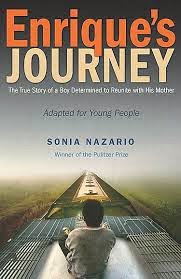
Enrique’s Journey by Sonia Nazario: When Enrique was five, his mother, too poor to feed her children, left Honduras to work in the United States. The move allowed her to send money back home so Enrique could eat better and go to school past the third grade. She promised she would return quickly, but she struggled in America. Without her, he became lonely and troubled. After eleven years, he decided he would go find her. He set off alone, with little more than a slip of paper bearing his mother’s North Carolina telephone number. Without money, he made the dangerous trek up the length of Mexico, clinging to the sides and tops of freight trains. He and other migrants, many of them children, are hunted like animals. To evade bandits and authorities, they must jump onto and off the moving boxcars they call the Train of Death. It is an epic journey, one thousands of children make each year to find their mothers in the United States. Adapted from Enrique’s Journey. 

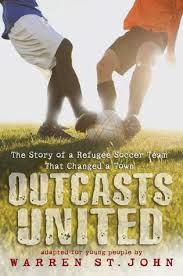
Outcasts United by Warren St. John: American-educated Jordanian Luma Mufleh founds a youth soccer team comprised of children from Liberia, Iraq, Afghanistan, and the Balkan states, and elsewhere in the refugee settlement town of Clarkston, Georgia, bringing the children together to discover their common bonds as they adjust to life in a new homeland. Adapted from Outcasts United. 

Bloody Times by James Swanson: On the morning of April 2, 1865, Jefferson Davis received a telegram from General Robert E. Lee. There is no more time–the Yankees are coming, it warned. That night Davis fled Richmond, setting off an intense manhunt for the Confederate president. Two weeks later, President Lincoln was assassinated, and the nation was convinced that Davis was involved in the conspiracy that led to the crime. Lincoln’s murder, autopsy, and White House funeral transfixed the nation. His final journey began when soldiers placed his corpse aboard a special train that would carry him home to Springfield, Illinois. It was the most magnificent funeral pageant in American history. Adapted from Bloody Crimes. 

Chasing Lincoln’s Killer by James Swanson: Recounts the escape of John Wilkes Booth, Abraham Lincoln’s assassin, and follows the intensive twelve-day search for him and his accomplices. Adapted from Manhunt: The 12-Day Chase for Lincoln’s Killer. 

Mountains Beyond Mountains by Tracy Kidder: Traces the efforts of Dr. Paul Farmer to transform healthcare on a global scale, documenting his visits to some of the world’s most impoverished regions and the unconventional methods that enabled him to improve and save lives. Adapted from Mountains Beyond Mountains. 

Lincoln’s Last Days by Bill O’Reilly with Dwight John Zimmerman: Describes the events surrounding the assassination of Abraham Lincoln and the hunt to track down John Wilkes Booth and his accomplices. Adapted from Killing Lincoln. 

What the World Eats by Peter Menzel and Faith D’Aluisio: A photographic collection exploring what the world eats featuring portraits of twenty-five families from twenty-one countries surrounded by a week’s worth of food. Adapted from Hungry Planet. 

The Omnivore’s Dilemma by Michael Pollan: What’s for dinner?’ seemed like a simple question -until journalist and supermarket detective Michael Pollan delved behind the scenes. From fast food and big organic to small farms and old-fashioned hunting and gathering, this young readers’ adaptation of Pollan’s famous food-chain exploration encourages kids to consider the personal and global health implications of their food choices. Adapted from The Omnivore’s Dilemma. 

Discovering Wes Moore by Wes Moore: The author, a Rhodes scholar and combat veteran, analyzes factors that influenced him as well as another man of the same name and from the same neighborhood who was drawn into a life of drugs and crime and ended up serving life in prison, focusing on the influence of relatives, mentors, and social expectations that could have led either of them on different paths. Adapted from The Other Wes Moore: Two Names, One Fate. 

The Mayflower and the Pilgrims’ New World by Nathaniel Philbrick: After a journey across the Atlantic, the Mayflower’s passengers were saved from destruction with the help of the natives of the Plymouth region. For fifty years, peace was maintained as Pilgrims and Natives worked together. But that trust was broken with the next generation of leaders, and conflict erupted that nearly wiped out English and natives alike. Adapted from Mayflower: A Story of Courage, Community, and War. 

The Warrior’s Heart by Eric Greitens: Shares the author’s adventures as a young man that led him to a life of service as both a humanitarian and a Navy SEAL. Adapted from The Heart and the Fist. 

Believe by Eric LeGrand: In this uplifting memoir, now adapted for young readers, Eric LeGrand tells the amazing story of how he rebuilds his life, continues his college education, and pursues a career in sports broadcasting following the injury that paralyzed him from the neck down. His belief in a grand plan and his hope for the future make him a model for anyone who has experienced tragedy or faced obstacles. Adapted from Believe: My Faith and the Tackle That Changed My Life. 

Flags of Our Fathers by James Bradley with Ron Powers and Michael French: A true story behind the immortal photograph that has come to symbolize the courage and indomitable will of America. Adapted from Flags of Our Fathers. 

Hope Solo: My Story by Hope Solo: Hope Solo, Olympic gold medalist and goalie for the US women’s national soccer team, tells the exciting insider details of her life on and off the field, in her own words. Adapted from Solo: A Memoir of Hope. 

Filed Under: book lists, Non-Fiction, Uncategorized, Young Adult

February Debut YA Novels

February 24, 2014 |

February may be the shortest month of the year, but there is a nice selection of debut YA novels coming out this month. I find pulling these lists together each month is helpful for me not only as a reader, but also for me as a librarian to get some new voices and titles on my radar. You can see January’s debuts here, with a nice series of additional titles to the list in the comments. 

All of the books in this roundup are debuts in the truest sense of the word — these are the first books published by the author in any category. Descriptions come from WorldCat unless otherwise noted, and please feel free to let me know if I’ve missed any for this month in the comments. 

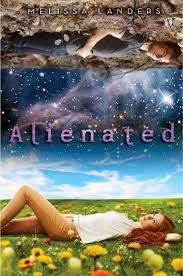
Alienated by Melissa Landers: High school senior Cara Sweeney gets more than she bargained for when she agrees to participate in earth’s first intergalactic high school exchange program. 

Faking Normal by Courtney C. Stevens: Alexi Littrell hasn’t told anyone what happened to her over the summer. When Bodee Lennox, the quiet and awkward boy next door, comes to live with the Littrells, Alexi discovers an unlikely friend in “the Kool-Aid Kid,” who has secrets of his own. As they lean on each other for support, Alexi gives him the strength to deal with his past, and Bodee helps her find the courage to finally face the truth. Reviewed here. 

Fates by Lanie Bross: Corinthe, a former Fate and now Executor, responsible for carrying out unfulfilled destinies on Earth, finds herself falling for Lucas, a human boy whose death she is supposed to enact as her last act before returning to Pyralis.

Landry Park by Bethany Hagen: In a futuristic, fractured United States where the oppressed Rootless handle the raw nuclear material that powers the Gentry’s lavish lifestyle, seventeen-year-old Madeline Landry must choose between taking over her father’s vast estate or rebelling against everything she has ever known, in the name of justice.

Road Rash by Mark Huntley Parsons: When teen drummer, Zach, signed up to spend the summer on tour with a rock band, he didn’t realize the stairway to heaven was such a bumpy ride. 

Something Real by Heather Demetrios: Since the cancellation of her family’s reality television show, seventeen-year-old Bonnie Baker, one of twelve siblings, has tried to live a normal life with real friends and a possible boyfriend, until her mother and the show’s producers decide to bring “Baker’s Dozen” back on the air. Other reality television inspired YA novels. 

The Well’s End by Seth Fishman: 16-year-old Mia Kish and her friends search for answers when a mysterious illness brings their Colorado community to its knees. 

Filed Under: debut authors, Uncategorized, Young Adult

Cruel Beauty by Rosamund Hodge

February 19, 2014 |

From the time Nyx was a small child, not even ten years old, she knew she would marry the Gentle Lord, the terrible master of demons who has ruled Arcadia for the past 900 years. Before Nyx’s birth, her father made a bargain with the Gentle Lord. He and his wife, Nyx’s mother, hoped so desperately for children. The Gentle Lord told him they could have them – two children, though girls. In return, the Lord required one of the girls to become his bride at seventeen.

But the Gentle Lord always deceives, even while speaking words that have the ring of truth. Nyx’s mother died in childbirth, and in his grief, Nyx’s father decided that Nyx – the girl who looked most like him – would be sacrificed to the Gentle Lord upon her seventeenth birthday, marrying him in hopes of killing him and avenging the mother she never knew. It is also hoped that by killing him, Arcadia will return to its former splendor, that the sun and stars will return, that the demons who came with the Gentle Lord will be forever banished.

So Nyx has been trained her whole life on how to kill the Gentle Lord. Her twin sister, born mere seconds after her, has been coddled and lied to, told that Nyx’s mission is achievable, even easy. Nyx knows better. She knows that she’s being sent as a sacrifice and that her mission is a fantasy. Her resentment is powerful. She hates her father for his choice, she hates her mother for dying, and she hates her sister for her smiles and her optimism and the fact that she will live a long, long life.

Nyx’s story begins the day before her wedding, and the anticipation leading up to her first meeting with the Gentle Lord is almost excruciating. As readers, we know that this is a re-telling of Beauty and the Beast, but we don’t know how Hodge is shaking things up. She masterfully builds the tension and doesn’t let it snap until the very end.

I’m kind of amazed this is a debut. The writing is so polished, almost always lovely. I was engaged the entire time and read it in a single sitting. (This is something I very rarely do.) The pacing is excellent, which really sets this a notch above many other debuts; uneven pacing is often a hallmark of a first novel.

What I may have liked most about Cruel Beauty is how Hodge turns the idea of a pure, innocent, and good-hearted fairy tale heroine completely on its head. I don’t mean that Hodge’s heroine is a girl who “doesn’t allow herself to be victimized,” which is actually a rather common trope and a problematic one at that. Instead, Hodge has created in Nyx a character – a protagonist, importantly – who is cruel. Not all the time, of course. Not even most of the time, but sometimes. And it’s not passing cruelty. She hates her sister – not the kind of hate that washes over you and passes quickly, but the kind of hate that lingers, that takes root in your heart and lives there for years. It’s not the only emotion Nyx feels for her sister. Like in most of us, intense hatred commingles with intense love. It’s human. Nyx is painfully human.

It’s important to see characters like this in our novels, but it’s especially well-done here because Nyx’s cruelty – her impure heart, as it’s often described in a fairy tale – is what makes her a match for the Gentle Lord, who is more overtly cruel. Their shared cruelty is even more important, plot-wise, near the end of the story. This is how Hodge simultaneously honors fairy tales and subverts them, and it’s incredibly effective.

Stories inspired by Beauty and the Beast are always in danger of dipping into abusive relationship territory. A lot of re-tellings ask the reader to excuse abusive behavior – both physical and psychological – on the part of the hero by giving him a tragic backstory. They disguise the abuse as exaggerated misunderstandings. That’s not how it’s done here. To reveal too much would ruin some of the discovery of the novel, but I can say that one of the main reasons this book is different is there is no threat of sexual violence from the Gentle Lord. The other characters expect it, certainly, but that implication comes from them.

What else do I love about this book? I love how it incorporates Greek mythology in a way that makes it fresh again. I love that it sneaks in bits of other fairy tales, like Easter eggs for the reader to discover. I love how creative the plot is, how it uses something almost all of us recognize and gives us something completely new at the same time. I love how all the myths and stories and little details come together at the end, making this such a smart book. I love the ever-changing castle of the Gentle Lord, and how clearly Hodge is able to describe it to her readers, inspiring interest and awe. I love that its conflict, while magical, is rooted in complex humans. I love its magic, too, which has rules and is used as something more than a convenient plot device or deus ex machina. I love that it’s full of how the things we say can be misunderstood, how our words can have double meanings, purposeful or not. I loved nearly all of it.

I did have quibbles with the very end. There’s a huge plot twist, which does make sense and is true to the rest of the book, but its effects seem rushed. I feel like Hodge was trying to cram a whole new book into the last 40 pages. There was enough story there to cover an entirely new book, though I don’t think that would have been a wise decision either. This weakness is not enough to erase everything that came before, though, and Hodge still brings her story to a thoroughly satisfying conclusion – tender and true to her cruel/kind characters.

Review copy provided by the publisher. Cruel Beauty is available now.

Filed Under: Fantasy, Reviews, Uncategorized, Young Adult

  • « Previous Page
  • 1
  • …
  • 105
  • 106
  • 107
  • 108
  • 109
  • …
  • 237
  • Next Page »
  • Facebook
  • Instagram
  • Pinterest
  • Twitter

Search

Archives

We dig the CYBILS

STACKED has participated in the annual CYBILS awards since 2009. Click the image to learn more.

© Copyright 2015 STACKED · All Rights Reserved · Site Designed by Designer Blogs